“ And, above all and beyond all, the valour of the American army, the bravery of the American navy, and the majesty of the American name, stand forth in unsullied glory, while the humanity of our purposes and the magnanimity of our conduct have given to war, always horrible, touches of noble generosity, Christian sympathy and charity, and examples of human grandeur, which can never be lost to mankind. Passion and bitterness formed no part of our impelling motive, and it is gratifying to feel that humanity triumphed at every step of the war’s progress. ”
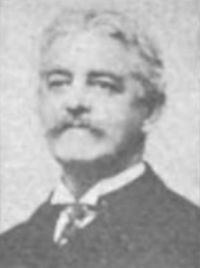
Frederick A. Ober
Summary
Frederick A. Ober’s Spain examines the nation’s turbulent history, focusing on its imperial decline, military conflicts, and the impact of the Spanish-American War. The text critiques Spain’s colonial legacy, its struggles with rebels, and the moral contradictions of its rule, while emphasizing the United States’ role as a transformative force.
Through references to figures like Ferdinand and Isabella, the Moors, and Cuba, Ober explores themes of conquest, sovereignty, and the transition from war to peacetime development. The work combines historical narratives with reflections on Spain’s post-conflict reorientation, portraying its past as a cautionary tale of ambition and human cost.
Quotes from Spain (Frederick A. Ober)
“ No longer compelled to maintain a large standing army, or to send abroad the flower of her young manhood, Spain can devote to agriculture and manufactures, to art and literature, the forces that were worse than wasted in camp and on the battlefield.She has no worse enemies than those of her own household; but still on her borders rises the fateful apparition of Don Carlos the pretender. In time, perhaps, if the lessons of the war are heeded, the Spaniard may be able to perceive the absurdity of that boastful Spanish proverb, “Whoever says Spain, says everything!” ”
“ He reminds us of nothing so much as of a vile and venomous spider intrenched in his web at Madrid, whence radiate threads of communication to the confines of his realm—to Naples and the Netherlands, to Africa and the Americas—all connecting with the capital where sits this arch-enemy of mankind, absorbing the life-blood of his innumerable victims. This human spider rioted in scenes of blood, yet rarely shed blood directly by his own hand ”
