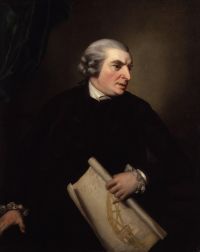
James Bramston

Biographical details

James Bramston,  The Man of Taste

“ But Addison's prescription for the cultivation of taste was a laborious one, involving prolonged reading and study. The wealthy, and especially the newly wealthy, were tempted to confuse the correct appreciation of the objects of taste with the mere possession of them; so that, as with Pope's Timon in the Epistle to Burlington (1731) , owning a library became a substitute for reading books. This false taste for ostentation—especially in buildings—is a frequent target of contemporary satire. ”
Source: Gutenberg

James Bramston,  The Art of Politicks

“ For Bramston, rhetoric should govern politics; the House of Commons is a reincarnation of a Roman senate or courtroom. Bramston's inclusion of political writing as well as politics itself in his poem also helps to keep him in Horace's orbit. On Horace's side, his conception of poetry is basically rhetorical and persuasive; it should instruct and delight, move to laughter or tears. Horace's readiness to digress into literary history gives Bramston many opportunities to bring in political history. The Ars Poetica is very much concerned with the world of men ”
Source: Gutenberg

James Bramston,  The Art of Politicks

“ Finally, Horace's urbane and chatty style is as suitable for other subjects as it is for poetry. To appreciate Horace's adaptability, one need only imagine the difficulty of writing an art of politics in imitation of Archibald MacLeish's "Ars Poetica" or Aristotle's Poetics.
Though he does not pretend to Pope's image of himself as a new Horace bringing the whole weight of Roman tradition to bear on contemporary society, Bramston is very clever on the local level at transposing Horace for his own purposes.
”
Source: Gutenberg

Get perspective with Kwize: daily news enlightened by great literature