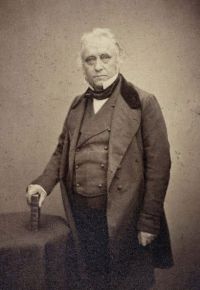
Thomas Babington Macaulay

Thomas Babington Macaulay

Summary

Portrait of Thomas Babington Macaulay Thomas Babington Macaulay Lays of Ancient Rome — Preface

Even in the age of Plutarch there were discerning men who rejected the popular account of the foundation of Rome, because that account appeared to them to have the air, not of a history, but of a romance or a drama. Plutarch, who was displeased at their incredulity, had nothing better to say in reply to their arguments than that chance sometimes turns poet, and produces trains of events not to be distinguished from the most elaborate plots which are constructed by art.
Source: Wikisource

Portrait of Thomas Babington Macaulay Thomas Babington Macaulay Lays of Ancient Rome — Preface

But there was an earlier Latin literature, a literature truly Latin, which has wholly perished, which had, indeed almost wholly perished long before those whom we are in the habit of regarding as the greatest Latin writers were born. That literature abounded with metrical romances, such as are found in every country where there is much curiosity and intelligence, but little reading and writing. All human beings, not utterly savage, long for some information about past times, and are delighted by narratives which present pictures to the eye of the mind.
Source: Wikisource

Portrait of Thomas Babington Macaulay Thomas Babington Macaulay Lays of Ancient Rome — Preface

The Latin ballads perished forever. Yet discerning critics have thought that they could still perceive in the early history of Rome numerous fragments of this lost poetry, as the traveller on classic ground sometimes finds, built into the heavy wall of a fort or convent, a pillar rich with acanthus leaves, or a frieze where the Amazons and Bacchanals seem to live. The theatres and temples of the Greek and the Roman were degraded into the quarries of the Turk and the Goth.
Source: Wikisource

Get perspective with Kwize: daily news enlightened by great literature