“ Making all allowance for borrowings and influences drawn from without, may we not still say that the Scottish ballad owes nearly all that is best in it—the sweetness not less than the strength of this draught of old poetry and passion—to the land and to the folk that gave it birth? A land thrust further into the gloom and cold of stormy seas than the Southern Kingdom; a land whose spare gifts are but the more esteemed by its children because they are given so grudgingly, whose high and bleak and stern features make the valleys they shelter the more lovely and loved from the contrast ”
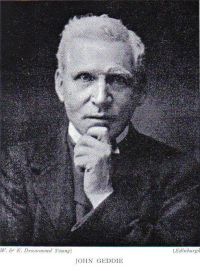
John Geddie
Summary
John Geddie’s The Balladists explores the rich tradition of Scottish ballad poetry, examining its roots in the rugged landscapes and folk culture of Scotland. Focusing on figures like Walter Scott and Robert Burns, the work highlights the lasting impact of balladry, marked by themes of romance, tragedy, and the powerful legacy of oral storytelling.
Geddie emphasizes how Scottish ballads, shaped by their surroundings, merge historical narrative with deep emotional resonance, frequently revolving around themes of love, destiny, and strife. Through analysis of places such as Yarrow Vale, the text underscores the unbreakable connection between the land’s austere beauty and the poetic imagination that flourishes within it, presenting these ballads as essential, authentic expressions of national identity and literary tradition.
Quotes from The Balladists (John Geddie)
“ Walter Scott, the last of the minstrels, to whom ballad literature owes more than to any who went before or who has come after him, was himself not above mending the strains gathered from the lips of old women, hill shepherds, and the wandering tribe of cadgers and hawkers, so that one is sometimes a little at a loss to tell what is original and what is imitation. But even the Wizard's hand is not cunning enough to patch the new so deftly upon the old that the difference cannot be detected. The genuine ballad touch is incommunicable; to improve upon it is like painting the lilies of the field. ”
“ To the fountainhead of our ballad-lore the great poets and romancists, from Chaucer to Shakespeare, and from Shakespeare to Wordsworth and Swinburne, and from Gavin Douglas to Burns and Scott and Stevenson, have gone for refreshment and new inspiration, when the world was weary and tame and sunk in the thraldom of the vulgar, the formal, and the commonplace; and never without receiving their rich reward and testifying their gratitude by fresh gifts of song and story, fresh harpings on the old lyre that moved the hearts of men to tears and laughter long before they knew of printed books. ”
