“ Making all allowance for borrowings and influences drawn from without, may we not still say that the Scottish ballad owes nearly all that is best in it—the sweetness not less than the strength of this draught of old poetry and passion—to the land and to the folk that gave it birth? A land thrust further into the gloom and cold of stormy seas than the Southern Kingdom; a land whose spare gifts are but the more esteemed by its children because they are given so grudgingly, whose high and bleak and stern features make the valleys they shelter the more lovely and loved from the contrast ”
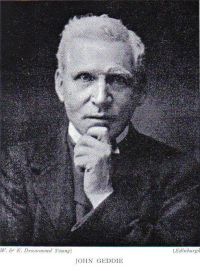
John Geddie
Biographical details

John Geddie (1846–1927), a British journalist and author, is best known for his vivid depictions of Edinburgh and its cultural landscape, though his early works examined foreign territories, often without verified personal travel. A prolific writer and editor, he contributed extensively to publications such as The Scotsman and Edinburgh Evening Dispatch, merging geographical exploration with literary artistry.
His major works, including The Balladists and The Scott Country, explore Scotland’s folk traditions and historical sites, highlighting the lasting bond between land and story. Through works like The Water of Leith and Romantic Edinburgh, Geddie immortalized the region’s natural and cultural terrain, presenting it as a crucible for poetic and historical significance. His body of work unites journalism, geography, and literary tribute, establishing his role as a guardian of Edinburgh’s heritage.
Quotes by John Geddie
“ Walter Scott, the last of the minstrels, to whom ballad literature owes more than to any who went before or who has come after him, was himself not above mending the strains gathered from the lips of old women, hill shepherds, and the wandering tribe of cadgers and hawkers, so that one is sometimes a little at a loss to tell what is original and what is imitation. But even the Wizard's hand is not cunning enough to patch the new so deftly upon the old that the difference cannot be detected. The genuine ballad touch is incommunicable; to improve upon it is like painting the lilies of the field. ”
 John Geddie,
The Scott Country
John Geddie,
The Scott Country
“ All roads in Teviotdale seem to lead to Hawick, the capital of its trade as well as a centre of its history. Proud as its citizens are of the leading position of the burgh in the tweed and hosiery manufacture of the South of Scotland, and of the undiminished importance of its great lamb and sheep fairs, they are prouder still of the prowess of its sons in the dark days that followed Flodden, and in other scenes of Border strife. Scott was familiar with its story, as with the streets and with the steep hills that surround this stirring little metropolis of industrial and pastoral life ”

