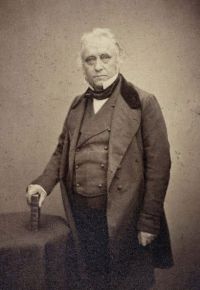
Thomas Babington Macaulay

Thomas Babington Macaulay

Summary

Portrait of Thomas Babington Macaulay Thomas Babington Macaulay 1911 Encyclopædia Britannica (1911)

The lofty and spirit-stirring eloquence which had made him supreme in the House of Commons often fell dead on the House of Lords. Chatham was only the ruin of Pitt, but an awful and majestic ruin, not to be contemplated by any man of sense and feeling without emotions resembling those which are excited by the remains of the Parthenon and of the Colosseum. In one respect the old statesman was eminently happy. Whatever might be the vicissitudes of his public life, he never failed to find peace and love by his own hearth.
Source: Wikisource

Portrait of Thomas Babington Macaulay Thomas Babington Macaulay 1911 Encyclopædia Britannica (1911)

Yet the almost unanimous judgment of those who were in the habit of listening to that remarkable race of men placed Pitt, as a speaker, above Burke, above Windham, above Sheridan and not below Fox. His declamation was copious, polished and splendid. In power of sarcasm he was probably not surpassed by any speaker, ancient or modern; and of this formidable weapon he made merciless use. In two parts of the oratorical art which are of the highest value to a minister of state he was singularly expert. No man knew better how to be luminous or how to be obscure.
Source: Wikisource

Portrait of Thomas Babington Macaulay Thomas Babington Macaulay 1911 Encyclopædia Britannica (1911)

The treaty of Amiens had scarcely been signed when the restless ambition and the insupportable insolence of the First Consul convinced the great body of the English people that the peace so eagerly welcomed was only a precarious armistice. As it became clearer and clearer that a war for the dignity, the independence, the very existence of the nation was at hand, men looked with increasing uneasiness on the weak and languid cabinet which would have to contend against an enemy who united more than the power of Louis the Great to more than the genius of Frederick the Great.
Source: Wikisource

Get perspective with Kwize: daily news enlightened by great literature