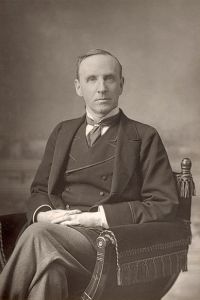
John Morley

John Morley

Summary

Portrait of John Morley John Morley 1911 Encyclopædia Britannica (1911)

They glow with passion, and yet with all their rapidity is such steadfastness, the fervour of imagination is so skilfully tempered by close and plausible reasoning, and the whole is wrought with such strength and fire, that we hardly know where else to look either in Burke’s own writings or elsewhere for such an exhibition of the rhetorical resources of our language. We cannot wonder that the whole nation was stirred to the very depths, or that they strengthened the aversion of the king, of Windham and other important personages in the government against the plans of Pitt.
Source: Wikisource

Portrait of John Morley John Morley 1911 Encyclopædia Britannica (1911)

Those who insist on charm, on winningness in style, on subtle harmonies and fine exquisiteness of suggestion, are disappointed in Burke: they even find him stiff and over-coloured. And there are blemishes of this kind. His banter is nearly always ungainly, his wit blunt, as Johnson said, and often unseasonable. As is usual with a man who has not true humour, Burke is also without true pathos. The thought of wrong or misery moved him less to pity for the victim than to anger against the cause.
Source: Wikisource

Portrait of John Morley John Morley 1911 Encyclopædia Britannica (1911)

The foes of the Mountain were the group of the Girondins,—eloquent, dazzling, patriotic, but unable to apprehend the fearful nature of the crisis, too full of vanity and exclusive party-spirit, and too fastidious to strike hands with the vigorous and stormy Danton. The Girondins dreaded the people who had sent Danton to the Convention; and they insisted on seeing on his hands the blood of the prison massacres of September.
Source: Wikisource

Get perspective with Kwize: daily news enlightened by great literature