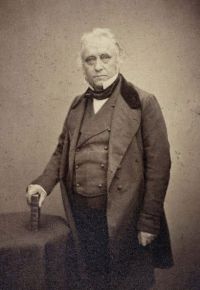
Thomas Babington Macaulay

Thomas Babington Macaulay

Summary

Portrait of Thomas Babington Macaulay Thomas Babington Macaulay Government of India (1833)

What is power worth if it is founded on vice, on ignorance, and on misery; if we can hold it only by violating the most sacred duties which as governors we owe to the governed, and which, as a people blessed with far more than an ordinary measure of political liberty and of intellectual light, we owe to a race debased by three thousand years of despotism and priestcraft? We are free, we are civilised, to little purpose, if we grudge to any portion of the human race an equal measure of freedom and civilisation.
Source: Wikisource

Portrait of Thomas Babington Macaulay Thomas Babington Macaulay Government of India (1833)

Sir, so far is it from being true that the character of the Supreme Court has deteriorated, that it has, perhaps, improved more than any other institution in India. But the evil lies deep in the nature of the institution itself. The judges have in our time deserved the greatest respect. Their judgment and integrity have done much to mitigate the vices of the system. The worst charge that can be brought against any of them is that of pertinacity, disinterested, conscientious pertinacity, in error. The real evil is the state of the law. You have two supreme powers in India.
Source: Wikisource

Portrait of Thomas Babington Macaulay Thomas Babington Macaulay Government of India (1833)

Here are a hundred millions of people under the absolute rule of a few strangers, differing from them physically, differing from them morally, mere Mamelukes, not born in the country which they rule, not meaning to lay their bones in it. If you require me to make this government as good as that of England, France, or the United States of America, I own frankly that I can do no such thing. Reasoning a priori, I should have come to the conclusion that such a government must be a horrible tyranny. It is a source of constant amazement to me that it is so good as I find it to be.
Source: Wikisource

Get perspective with Kwize: daily news enlightened by great literature