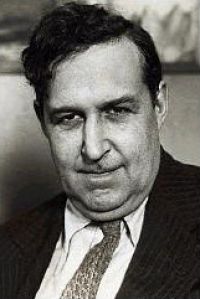
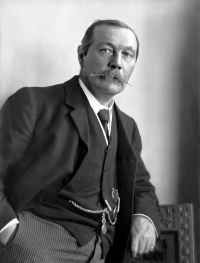
“ Later, she initiated an impromptu and unseemly campaign—beginning with a skirmish of whispers in the doorway, swelling uproariously to what sounded like a duet between a cockatoo and a bloodhound on the landing outside, and dying away to an irregular fire of personal innuendoes, which dropped over the banisters one by one, like the gentle dew of heaven, on to the head of the retreating foe beneath—with a kitchen-man over a thumb-mark on a pudding-plate.But fortunately for Hughie the company tacitly agreed to regard her as a form of comic relief ”
Ian Hay
Biographical details
Ian Hay, a distinguished British author, is celebrated for his incisive social commentary and narrative wit, evident in works such as A Knight on Wheels and The Lighter Side of School Life. His body of work explores human foibles, wartime experiences, and the intricacies of interpersonal relationships, as seen in The Oppressed English and The Times — America At War.
Through humorous yet perceptive prose, Hay dissects societal norms and individual resilience, exemplified in Pip and The Lucky Number — Natural Causes. His legacy lies in blending satire with poignant observation, offering readers both entertainment and reflection on the human condition.
Quotes by Ian Hay
“ Peggy laughed serenely."You may study me and consider me as much as you like, Mr. Theophilus," she said; "I shall enjoy it. But you won't ever understand me.""I would have a thundering good try, all the same," replied Philip doggedly. "I understood you once—when we were children together.""Yes," agreed Peggy more soberly, "I believe you did. Life was a simpler business then. As we grow up we grow more complicated—at least, women do. But you seem to be very much the same as when I first met you, Philip." ”
Ian Hay, The First Hundred Thousand: Being the Unofficial Chronicle of a Unit of "K(1…
“ A highly-strung youth, crouching in a field drain, has laid his hand upon what looks and feels like a clammy human face, lying recumbent and staring heavenward. Too late, he recognises a derelict scarecrow with a turnip head. Again, there is a pause while the extreme right of the line negotiates an unexpected barbed-wire fence. Still, we move on, with enormous caution. We are not certain where the trenches are, but they must be near. At any moment a crackling volley may leap out upon us. Pulses begin to beat.In the trench itself eyes are strained and ears cocked. ”
Ian Hay, A Safety Match — CHAPTER XX (1911)
“ A pit-bottom is an unexpectedly spacious place, more resembling the cellars of a ducal mansion, or a city station in the days of the old under-ground, than a burrow in the hidden places of the earth. Whitewashed brick archways open up long vistas, illuminated by electric lamps. Through an adjacent doorway streams the cheerful glow of the engine-room, from which the haulage of the trucks is controlled. Only in the "sump," below the level of the flooring at the foot of the shaft, the water gleams black and dismally."Is there any other road to explore, Mr Walker?" ”
Ian Hay, A Safety Match — CHAPTER XXIV (1911)
“ Time was when this husband of hers, at present eluding obstacles with uncanny facility and listening intently, with the youthful zest of a boy-scout, for the excited breathing of his quarry, found life a less hilarious business. There rises before her the picture of a man led from room to room, steered round corners, dressed like a child, fed like a baby—shattered, groping, gaunt, but pathetically and doggedly cheerful. ”
Ian Hay, The Last Million: How They Invaded France…
“ We hope to see the city once again crowded with traffic as thick as that on Fifth Avenue at Forty-second Street, and the uncanny silence of our present-day streets banished by the cheerful turmoil of automobiles and taxis. And above all we hope to see the air-raid shelters gone, and the hundreds of crippled men in hospital blue no longer visible in our streets, and the long lines of motor ambulances, which assemble every evening outside the stations to meet the hospital trains, swept away forever. ”
Ian Hay, Paid In Full — Chapter 8 (1925)
“ Conway's hands fell to his sides again, and he sank, like a man suddenly weary, into his chair, behind the flag-draped table. There were tears in his eyes.Next moment the audience were on their feet, cheering, waving, weeping. When the most impulsive and the warmest-hearted nation in the world is touched to the quick, it is not ashamed to say so. ”
Ian Hay, The Lucky Number — Natural Causes (1923)
“ The yacht—the tropical hurricane—the grinding crash in the dead of night—the trampling of feet overhead and the hoarse shouting of men—the heeling decks and flapping ropes—a pair of hands which had hurried her along the sloping alleyways and passed her down into a heaving cockleshell—finally, the great green wave which had swung up out of the darkness and fallen upon them all and carried her down, down, down, until she lost consciousness. ”
Ian Hay, The Right Stuff: Some Episodes in the Career of a North Briton
“ He proved to be that rarest of types—the man who has no fear of his fellow-creatures, male or female, singly or in battalions. Our sex is so accustomed to squaring its shoulders, pulling down its waistcoat, and assuming an engaging expression as a preliminary to an encounter with the fair, that the spectacle of a man who enters a strange drawing-room and shakes hands quietly and naturally all round, without twisting his features into an agreeable smile and mumbling entirely inarticulate words of rapture, always arouses in me feelings of envy and respect. ”
“ Should you play too strongly you will fly over the oasis of green turf and fall into a howling wilderness of bents, sand, and whins on the far side; should you play short, your ball will bury itself in the slopes of shifting sand that guard the approach, and your doom is sealed. It is credibly reported that all four players in a four-ball match—scratch men, every one—once arrived upon the Crater green, ball in hand, each having given up the struggle under the despairing impression that no opponent could possibly have played more strokes than himself. ”
Ian Hay, A Safety Match — CHAPTER X (1911)
“ He was a freckle-faced youth, with a frank smile of considerable latitude, and a boyish zeal for the healthy pursuits of life. He possessed brains and character, as any man must who served under Juggernaut; and like his master he was a shrewd judge of men. Of his capacity for dealing with women Daphne knew less; but she had already heard rumours—confidences exchanged over teacups and behind fans—of a certain Miss Nina Tallentyre, perhaps the acknowledged beauty of that season, at the flame of whose altar Jim Carthew was said to have singed his wings in a conspicuously reckless fashion. ”
Ian Hay, The Times — America At War
“ To-day the American nation, in the first year of its war, is divided (as was another country with which we are more familiar) into people who realize the war and people who do not. Those who do are contributing to the common cause a measure of effort and devotion out of all proportion to their numbers. In fact, it is not too much to say that every American to-day who does realize the war with the realization that goes deeper than flag-waving is straining every nerve to win it. ”
Ian Hay, The Times — The New America
“ A new spirit is abroad in America to-day. Her false gods we were worshipping the same ourselves not long ago are doomed. She can never go back to the old state of things. She may pay—she will pay—a heavy price for her share of victory, but every true American knows—and he hails the knowledge with sober joy—that his country is going to emerge from this supreme test better balanced, bigger hearted, and more united. ”
Ian Hay, Pip : A Romance of Youth
“ Now, roughly speaking, a man is in love from his fifteenth birthday onwards: nature has ordained it. But in most cases civilisation, convention, society—call it what you like—has ordained that he must not treat this, the most inspiring passion of human life, as anything more than a jest for another ten years or so. And therein lie more little tragedies—disintegrated castles-in-the-air, secret disappointments, and endless efforts of self-repression—than this world dreams of. The boy may keep the girl's photograph on his mantelpiece, and that is just about all he may keep. ”
Ian Hay, All in It : K(1) Carries On
“ You can't call your employer a tyrant and an extortioner after he has shared his rations with you and never spared himself over your welfare and comfort through weary months of trench-warfare; neither, when you have experienced a working-man's courage and cheerfulness and reliability in the day of battle, can you turn round and call him a loafer and an agitator in time of peace—can you? That is just what the Bandar-log overlook, when they jabber about the dreadful industrial upheaval that is coming with peace. ”
Ian Hay, The Lighter Side of School Life
“ So far then we are agreed—the great advantage of dogmatising in print is that one can take the agreement of the reader for granted—that a Headmaster must be a gentleman, but not necessarily a scholar—in the very highest sense of the word. What other virtues must he possess? Well, he must be a majestic figurehead. This is not so difficult as it sounds. The dignity which doth hedge a Headmaster is so tremendous that the dullest and fussiest of the race can hardly fail to be impressive and awe-inspiring to the plastic mind of youth. ”
Ian Hay, A Safety Match — CHAPTER XXII (1911)
“ They slept fitfully, but in the black darkness sleep seemed little removed from death, and time from eternity.Jim Carthew lay with his head upon a friendly lump of coal, pondering with his accustomed detachment upon the sundry and manifold changes of this world. He thought of Death. Plainly he and his companions were about to solve the mystery of what lay hidden round that corner which our omniscience is pleased to consider the end of all things. What would they find there? Another life—a vista more glorious and sublime than man in his present state could conceive? ”
Ian Hay, A Safety Match — CHAPTER VII (1911)
“ Daphne sat rather dizzily by her father's side, holding his hand tightly and gazing straight before her. A sudden turn, and lo! before her lay a great break in the road. She had arrived at one of life's jumping-off places. No wonder she gripped her father's hand.Now, for a young girl to consent to a marriage with a man considerably older than herself, a man whom she hardly knows and does not love, is rightly regarded as a most unromantic proceeding; and since romance is the sugar of this rather acrid existence of ours, we are almost unanimous in discouraging such alliances. ”
Ian Hay, A Safety Match — CHAPTER XVIII (1911)
“ That fine unreasoning human instinct which under a certain degree of pressure bids logic and argument go hang, and impels us to go forth and break some one else's windows, held the reins that evening. As the night-shift assembled at the pit-head, what time the day-shift was being disgorged, a cageful at a time, from the depths below, a great and magnificent project suddenly hatched itself in the fertile brain of Mr Tom Winch, who had been haunting the neighbourhood on business connected with the propaganda of his own particular revolutionary organisation for the past six weeks. ”
Ian Hay, The Lucky Number — Petit-Jean (1923)
“ At the eastern end of this loft, in the apex of the gable, glimmered a circular unglazed window. Through this drifted the never-ceasing, uneasy sounds of trench warfare. The wood at this point thinned to a mere belt, through which it was possible to see right to the trench-lines. Crombie cautiously turned on his electric torch. The only visible furniture of the loft was a pile of lumber in one corner, and a curious edifice, comprised of British Army ration boxes, standing up like a pulpit in the middle of the floor. ”
“ One fine morning a party consisting of Peggy, Miss Leslie, Philip, and Timothy set out to purchase household equipment of every kind. It was a disastrous expedition. All four were in a mood for enjoyment, and their high spirits, as very often happens when the young of the two sexes combine to transact business jointly, took the form of helpless, speechless, and unseemly laughter. If a majestic shop-walker, addressing the party as a whole, enquired what he might have the pleasure of showing to them, every one waited for some one else to reply: then, after a pause, every one replied at once. ”
Ian Hay, Paid In Full — Chapter 12 (1925)
“ If one takes porridge actually at breakfast, it cramps one’s style for the remainder of the meal; whereas if one takes it now, and then goes up to dress, it gives the porridge time to shake down, and so clears the track for more delectable fare.’‘It must be an awful thing,’ said Denny, smoothing his hair at the mirror over the mantelpiece, ‘to go through life soliloquising about food. And why don’t you sit down when you eat?’Leo, impervious to these criticisms, continued to stand at the sideboard, gulping down porridge and cream with a tablespoon. ”
Ian Hay, The First Hundred Thousand: Being the Unofficial Chronicle of a Unit of "K(1…
“ Day after day, after a sharp and frosty dawn, the sun swings up into a cloudless sky; and the hundred thousand troops that swarm like ants upon, the undulating plains of Hampshire can march, sit, lie, or sleep on hard, sun-baked earth. A wet autumn would have thrown our training back months. The men, as yet, possess nothing but the fatigue uniforms they stand up in, so it is imperative to keep them dry. ”
Ian Hay, The Last Million: How They Invaded France…
“ And at each street-crossing, upright, sunburned, and immensely alert, stands an American Military Policeman, directing the tide of country carts, errant cows, antediluvian street-cars, despatch-riders, motor-cycles, and marching troops, with all the solemn austerity of a New York Traffic Cop.If the American soldier has one characteristic which singles him out from the rest of the Allies, it is that Home is seldom absent from his thoughts—possibly because he is farther away from home than any one else. ”
“ But when—or rather if—she attains to the degree of a real golfer; if she can drive off before a crowd without giggling or blushing, and can be trusted not to shut her eyes when taking a full swing,—then she is indeed a pearl of price, for she is now a congenial companion, from the golfing as well as the other point of view. She is neither childishly frivolous nor grimly determined. She looks upon golf neither as a glorified form of croquet nor as woman's one mission in life. Behold her as she walks across the links to begin her morning round. ”
“ Hughie glowed foolishly. Her words did not mean anything, of course; still, they warmed him for the time being. He never thought of making capital out of Joan's impulsive outbursts of affection. He regarded them as a sort of consolation [pg 302] prize—nothing more. He had never attempted to make love to her since his first rebuff. The memory of that undignified squabble still made him tingle, and in any case it would never have occurred to him to renew the attack. Man-like, he had taken for granted the rather large proposition that a woman invariably means what she says. ”
Ian Hay, The Right Stuff: Some Episodes in the Career of a North Briton
“ He leaned back and surveyed the bemused Dubberley with complete and obvious satisfaction. We all sat round breathless, feeling much as Sidney Smith must have felt when some one spoke disrespectfully of the Equator. Great was the fall of Dubberley. He moved, perhaps instinctively, in a society where he was seldom contradicted and never argued with. One does not argue with a gramophone. And here this raw Scottish youth, with the awful thoroughness and relentless common-sense of his race, had taken the very words out of his mouth, torn them to shreds, and thrust them down his throat. ”
Ian Hay, The Lighter Side of School Life
“ He feels constrained to invite every boy in his House to a meal at least once a term, which means that he is almost daily deprived of the true-born Briton's birthright of being uncommunicative at breakfast. His life is one long round of colourless routine, tempered by hair-bleaching emergencies.But he loves it all. He maintains, and ultimately comes to believe, that his House is the only House in the School in which both justice and liberty prevail, and his boys the only boys in the world who know the meaning of hard work, good food, and esprit de corps. ”
Ian Hay, All in It : K(1) Carries On
“ With every desire to be generous to a fallen foe, it is quite impossible to describe them as a prepossessing lot. Not one man walks like a soldier; they shamble. Naturally, they are dirty and unshaven. So are the wounded men on the white ship: but their outstanding characteristic is an invincible humanity. Beneath the mud and blood they are men—white men. But this strange throng are grey—like their ship. With their shifty eyes and curiously shaped heads, they look like nothing human. They move like overdriven beasts. We realise now why it is that the German Army has to attack in mass. ”
“ For all her spinsterhood, Jean Leslie knew something of masculine nature. She knew that the shortest way to the heart of that self-centred creature Man is to let him talk about himself, and his work, and his ambitions. So Philip discoursed, with all his shyness and reticence thawed out of him, upon subjects which must have made his visitor's head ache, but which won her heart none the less. That is the way of a woman. She values the post of confidante so highly that she will endure a man's most uninteresting confidences with joy, because of the real compliment implied by their bestowal. ”
Ian Hay, The First Hundred Thousand: Being the Unofficial Chronicle of a Unit of "K(1…
“ He now polishes the buttons and washes the hose-tops of Captain Wagstaffe; and his elegant extracts amuse that student of human nature exceedingly.Then comes a dour, silent, earnest specimen, whose name, incredible as it may appear, is M'Ostrich. He keeps himself to himself. He never smiles. He is not an old soldier, yet he performed like a veteran the very first day he appeared on parade. He carries out all orders with solemn thoroughness. He does not drink; he does not swear. ”
Ian Hay, The Last Million: How They Invaded France…
“ Indeed, many of us never saw the ocean until last week. War and its appurtenances are for the present a game, full of interesting surprises and wonderful thrills. It is surprising, for instance, however good your appetite may have been in camp, to find how much more you can eat on board ship; and it is thrilling, if you happen to be a rustic beauty from a very small town in Central Iowa, to find yourself dancing the one-step, in a life-jacket, with a total stranger in uniform, upon an undulating deck to the music of a full military band. ”
“ What sticks in our throats is the enormous amount of make-believe and shilly-shallying that has to go on between the sexes before any definite business can be accomplished. Whenever I see a Marrable in a drawing-room, sitting on the edge of a chair and balancing a teacup, I always know exactly what he is there for, and I also know that he is dumbly resisting man's primitive instinct to pick up the right girl and run. When that feat, or its equivalent, has been accomplished, all is well: I have never known a Marrable who was not a complete success as a husband. ”
Ian Hay, The Right Stuff: Some Episodes in the Career of a North Briton
“ This document I left in the hands of Dolly, who promised faithfully to send for me, if—if necessary.Then, putting my paternal instincts into my pocket, I braced myself up and plunged into the vortex of polling-day.Truly, if Time is the healer, Work is the anesthetic. In the turmoil of the crowded streets and polling-booths, I found myself almost as enthusiastic and whole-hearted as if no little girl of mine were fighting for life in a darkened room not many streets away. ”
Ian Hay, The Lighter Side of School Life
“ Arthur Robinson was out of the room for perhaps three minutes. When he returned he was immediately conscious, from the guilty stillness which reigned, and the self-conscious air of detachment with which everybody was writing, that something was amiss. He glanced sharply at the little pile of money on his desk.It had grown from fourteen-and-ninepence to twenty-seven-and-sixpence.Life is full of compensations—even for schoolmasters. ”
Ian Hay, The First Hundred Thousand: Being the Unofficial Chronicle of a Unit of "K(1…
“ It would be an easy business to wipe out that working-party, over there by the barbed wire, with a machine-gun. It would be child's play to shell the road behind the enemy's trenches, crowded as it must be with ration-waggons and water-carts, into a blood-stained wilderness. But so long as each side confines itself to purely defensive and recuperative work, there is little or no interference. That slave of duty, Zacchaeus, keeps on pegging away; and occasionally, if a hostile patrol shows itself too boldly, there is a little exuberance from a machine-gun ”
Ian Hay, The Last Million: How They Invaded France…
“ Antonio’s views are the same.The affection of her children for America is a wonderful thing. Domestic or imported, it makes no matter. To the native-born American, America is still the little country—the little strip of coastline—which stood up successfully to a dunder-headed monarch in days when men did not govern themselves: to the naturalized American, America is the land which gave him his first real taste of personal liberty. Each cherishes America to-day—the one because he helped to make her free, the other because she has made him free. ”
“ The courts, with their monastic cloisters and inviolable grassplots, lie basking in a sunny obliviousness to the world outside. Their stately exclusiveness is accentuated rather than diminished by the glimpse of an occasional flying figure in a cap and gown, or the spectacle of a middle-aged female of a discreet and chastened appearance, who glides respectfully from one archway to another, carrying a broom and a tin pail, or—alas for the goings-on that a cloistered cell may conceal behind its art-muslin curtains!—a tankard containing some gentleman's morning ale. ”
“ Any one can be happy who has no doubts about the future; that is why children laugh and sing all day; but the man who can keep a stiff upper lip when there is no confidence in his heart can fairly count himself one of those who have graduated with honours in the school of adversity. During those months Philip acquired the priceless art of taking life as it came, and, abandoning the pernicious habit of drawing upon the bank of the Future,—his account was sadly overdrawn there already,—of living within the income that the Present supplied to him. ”
Ian Hay, The Right Stuff: Some Episodes in the Career of a North Briton
“ The library is regarded as my workroom—impregnable, inviolable; not to be rudely attempted by devastating housemaids. There is a sort of tacit agreement between Kitty and myself as regards this apartment. Fatima-like, she may do what she pleases with the rest of the house. She may indulge her passion for drawing-room meetings to its fullest extent. She may intertain missionaries in the attics and hold meetings of the Dorcas Society in the basement. She may give reformed burglars the run of the silver-closet, and allow curates and chorus-girls to mingle in sweet companionship on the staircase. ”
Ian Hay, The First Hundred Thousand: Being the Unofficial Chronicle of a Unit of "K(1…
“ To-morrow, when we steam out to face the tempest which is shaking the foundations of the world, we shall see what we shall see. Some of us, who at present are exalted for our smartness and efficiency, will indubitably be found wanting—wanting in stamina of body or soul—while others, hitherto undistinguished, will come to their own. Only War itself can discover the qualities which count in War. ”
Common terms
Works by Ian Hay
A Knight on WheelsThe Lighter Side of School LifeA Man's ManThe Oppressed EnglishGetting TogetherThe Lucky Number — Ocean AirThe Times — America At WarPipThe Lucky Number — Natural CausesThe Times — The New AmericaThe Widow's CruiseThe Times — What We Owe To FranceRadio Times — The CentipedeA Safety Match — BOOK TWOA Safety Match — BOOK THREEA Safety Match — BOOK ONEThe Last Million: How They Invaded France…The Right Stuff: Some Episodes in the Career of a North BritonPaid In Full — Chapter 8A Safety Match — CHAPTER IXPaid In Full — Chapter 4A Safety Match — CHAPTER XVIIIPaid In Full — Chapter 22"The Liberry"A Safety Match — CHAPTER IIIScally: The Story of a Perfect GentlemanPaid In Full — Chapter 15Paid In Full — Chapter 21A Safety Match — CHAPTER VIIA Safety Match — CHAPTER XIIThe Red Book Magazine, Volume 43…Paid In Full — Chapter 20Paid In Full — Chapter 6Paid In Full — Chapter 3Paid In Full — Chapter 7Paid In Full — Chapter 9Paid In Full — Chapter 5All in It : K(1) Carries OnThe First Hundred Thousand: Being the Unofficial Chronicle of a Unit of "K(1…