Summary

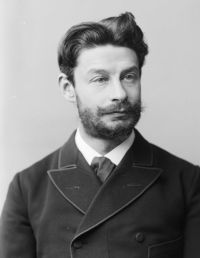
Portrait of Georg Brandes Georg Brandes Main Currents in Nineteenth Century Literature - 4…

Wordsworth had identified his Ego with England; Scott and Moore had given the feelings of Scotland and Ireland expression in their poetry; but Byron's Ego represents universal humanity; its sorrows and hopes are those of all mankind. After this Ego has, in manly, energetic style, withdrawn into itself and lived for a time absorbed in its solitary grief, that grief widens into compassion for all the sufferings and sorrows of humanity; the hard, selfish crust of the Ego is broken, and there issues forth the ardent love of liberty, to encompass and to elevate the poet's whole generation.
Source: Gutenberg

Portrait of Georg Brandes Georg Brandes Main Currents in Nineteenth Century Literature - 4…

There could not be a better example of the difference between the attitude towards nature of an all-embracing and an all-defying poetic intellect. Shelley does not, like Byron, desire to possess himself of her thunderbolts. He loves her, not as his weapon, but as his lyre; loves her, unappalled by her gigantic proportions, familiar with her prodigious forces, feeling that the universe is his home. His imagination delights in occupying itself with the heavenly bodies; he is fascinated by their beauty and life as others are by the beauty of the forget-me-not and the rose.
Source: Gutenberg

Portrait of Georg Brandes Georg Brandes Main Currents in Nineteenth Century Literature - 4…

The English poet has had before his eyes a higher ideal of independent manhood than has the German; Byron's hero is a typical man, Goethe's a typical human being. Alone in death as in life, Manfred has no more communion with hell than he has with heaven. He is his own accuser and his own judge. This is Byron's manly ethical standpoint. Not till he reaches the lonely heights above the snow-line, where human weakness and pliability do not thrive, does his soul breathe freely. And the Alpine landscape is the natural, inevitable background for his hero whose stern wildness is akin to such scenes.
Source: Gutenberg

Get perspective with Kwize: daily news enlightened by great literature