“ Palma, it is my mother. No other face ever looked like that, no other eyes except those in the Mater Dolorosa resemble these beautiful sad brown eyes, that rained their tears upon my head. Do you think a child ever mistook another for her own mother? Can the face I first learned to know and to love, the lovely—oh! how lovely—face that bent over my cradle ever—ever be forgotten? If I never saw her again in this world, could I fail to recognise her in heaven? ”
Mater Dolorosa
Definition and stakes
The theme of “Mater Dolorosa” has been addressed by authors such as James Lane Allen, Louisa May Alcott, Augusta J. Evans, Margaret Fuller and James De Mille. It is often associated with terms like mother, sorrow, grief, child and love.
Quotes about “Mater Dolorosa”
James De Mille, The Cryptogram: A Novel
“ Most of all was he moved by the sorrow of her face. She might serve for Niobe with her children dead; she might serve for Hecuba over the bodies of Polyxena and Polydore. The sorrows of woman have ever been greater than those of man. The widow suffers more than the widower; the bereaved mother than the bereaved father. The ideals of grief are found in the faces of women, and reach their intensity in the woe that meets our eyes in the Mater Dolorosa. This woman was one of the great community of sufferers, and anguish both past and present still left its traces on her face. ”
 Margaret Fuller,
Woman in the Nineteenth Century
(1845)
Margaret Fuller,
Woman in the Nineteenth Century
(1845)
“ The lovely little girl, pure in instinct, ignorant in mind, is misled and profaned by man abusing her confidence. [14] To the Mater Dolorosa she appeals for aid. It is given to the soul, if not against outward sorrow; and the maiden, enlightened by her sufferings, refusing to receive temporal salvation by the aid of an evil power, obtains the eternal in its stead. ”
 Louisa May Alcott,
Aunt Jo's Scrap-Bag
(1873)
Louisa May Alcott,
Aunt Jo's Scrap-Bag
(1873)
“ Matilda lost her head entirely, and had silent raptures over the old pictures. Amanda said her prayers, looked up her dates, and imparted her facts in a proper,and decorous manner, while Lavinia went up and down, finding for herself little pictures not painted by hands, and reading histories more interesting to her than those of saints and martyrs. In one dim chapel, with a single candle lighting up the divine sorrow of the Mater Dolorosa, knelt a woman in deep black, weeping and praying all alone. ”
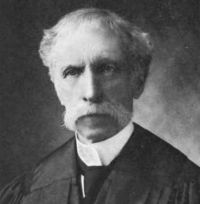 Charles Cooper Nott,
The seven great hymns of the mediaeval church
(1902)
Charles Cooper Nott,
The seven great hymns of the mediaeval church
(1902)
“ The Mater Speciosa is a Christmas hymn, and sings the overflowing joy of Mary at the cradle of the new-born Saviour. The Mater Dolorosa is a Good Friday hymn, and sings the piercing agony of Mary at the cross of her divine human Son. They breathe the same love to Christ, and the burning desire to become identified with Mary by sympathy in the intensity of her joy as in the intensity of her grief. ”
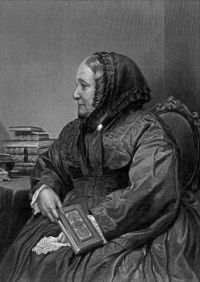 Mrs. Jameson,
Legends of the Madonna as Represented in the Fine Arts
Mrs. Jameson,
Legends of the Madonna as Represented in the Fine Arts
“ Madonna.MATER DOLOROSA. In the first she appears alone, a seated or standing figure, often the head or half length only; the hands clasped, the head bowed in sorrow, tears streaming from the heavy eyes, and the whole expression intensely mournful. The features are properly those of a woman in middle age; but in later times the sentiment of beauty predominated over that of the mother's agony; and I have seen the sublime Mater Dolorosa transformed into a merely beautiful and youthful maiden, with such an air of sentimental grief as might serve for the loss of a sparrow. ”
 Oswald Spengler,
The Decline of the West
(1926)
Oswald Spengler,
The Decline of the West
(1926)
“ But the nursing Mother points into the future, and she is just the figure that is entirely missing in the Classical art. She could not possibly be rendered in the style of Phidias. One feels that this form is opposed to the sense of the phenomenon.But in the religious art of the West, the representation of Motherhood is the noblest of all tasks. As Gothic dawns, the Theotokos of the Byzantine changes into the Mater Dolorosa, the Mother of God. ”
A Popular Handbook to the National Gallery…
“ He gave the populace of his day something to look at—and something to love. "Is she not beautiful," asks a critic before this picture, "in simplicity and solemn majesty? Is she not a real mother with a half sad and foreboding wistful look that goes straight to the heart?" Cimabue's Madonna is still a Mater Dolorosa—"our Lady of Pain," but there is an attempt alike in her and in the child, and in the attendant angels, to substitute for the conventional image of an ideal personage the representation of real humanity. ”
“ It's too monstrous. It's intolerable. God doesn't allow such things to happen on earth, otherwise He wouldn't be God! No, no; you cannot make me think that such things happen. You work! The Mater Dolorosa herself was not called upon to bear such humiliation. If God reigns, as they say He does—""But, Diane dear," Mrs. Eveleth interrupted, gently, "isn't it true that we owe it to George's memory to bear our troubles bravely?" ”
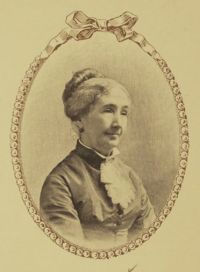 Anna Hanson Dorsey,
May Brooke
Anna Hanson Dorsey,
May Brooke
“ If I could only get Helen out once more, I should be the happiest fellow on earth," said Mr. Jerrold, with a sad and puzzled expression on his fine face. "I suspected all along that perhaps some religious crank had got into Helle's head, from the circumstances of her allowing no picture but that Mater Dolorosa to come into her room. It was a queer fancy in one so devoted to paintings as she is. ”
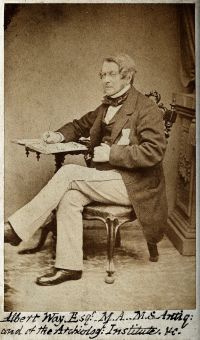 Albert Way,
Archaeological Journal
(1846)
Albert Way,
Archaeological Journal
(1846)
“ The subjects most commonly introduced as the principal decoration of the Pax are the Crucifixion, with the Virgin and St. John standing at the sides of the Cross; the representation of the Trinity; the Annunciation, Adoration of the Magi, the Baptism of the Saviour, the Mater dolorosa, and occasionally figures of Saints, as St. Martin, St. Sebastian, &c. in allusion, probably, to the Saint in honour of whom the church, where such ornaments were used, had been dedicated. Pax. New College, Oxford, with a Section, shewing the profile of the handle. ”
 Harriet Beecher Stowe,
Woman in Sacred History
Harriet Beecher Stowe,
Woman in Sacred History
“ If any mortal creature might be said to have entered into the sufferings of the great atonement with Jesus, it was his mother in those last hours. Never has sorrow presented itself in a form so venerable. Here is a depth of anguish which inspires awe as well as tenderness. The magnificent "Stabat Mater," in which the Church commemorates Mary's agony, is an outburst with which no feeling heart can refuse sympathy. ”
 James Lane Allen,
Flute and Violin and Other Kentucky Tales and Romances
(1891)
James Lane Allen,
Flute and Violin and Other Kentucky Tales and Romances
(1891)
“ The Mother Superior now crossed, and, laying her hand softly on Sister Dolorosa's head, pressed it backward and looked fondly down into the upturned eyes. "Something troubles you. What has happened?" There is a tone that goes straight to the hearts of women in trouble. If there are tears hidden, they gather in the eyes. ”
Mother St. Paul, Mater Christi: Meditations on Our Lady
“ O Mary, look upon thy weeping children, and as the great wail of suffering humanity rises up to thee, "show thyself a Mother," the Mother of Consolation. Come to the suffering hearts that cry for thee, and make them understand that joy and gladness is for them, even in the land of their exile ever since the Sun of justice has risen over it "with healing in His wings." Whisper to each heartbroken one, words of hope and consolation; tell of reparation, of mortification, of detachment, of the immense value of suffering, till the sorrowing heart is willing, yea glad, to suffer. ”
James Lane Allen,
Flute and Violin and Other Kentucky Tales and Romances
(1891)
“ If there had lingered thus long on Sister Dolorosa's nature any upland of childhood snows, these vanished in that hour; if any vernal belt of maidenhood, it felt the hot breath of that experience of the world and of the human destiny which quickly ages whatever it does not destroy. So that while she prayed there seemed to rise from within her and take flight forever that spotless image of herself as she once had been, and in its place to stand the form of a woman, elder, altered, and set apart by sorrow. ”
 Matilde Serao,
After the Pardon
Matilde Serao,
After the Pardon
“ A horror, is it not? I cause you horror, my sainted mother, my angelic mother! See to what life has brought me. A great, powerful, and beautiful love has only lasted a short time with me, and has left my heart dead to every fresh ardour. Mother, no one will take the place of Maria Guasco in my existence; she has been all, and that all has descended into the tomb. Afterwards I tried to attach myself to an idea, to a sentiment, to a loving duty, but the creature herself for whom I wished to live, for whom I wished to fight my life, spurned me and fled from me. ”
Mother St. Paul, Mater Christi: Meditations on Our Lady
“ She is the Mother of so many virtues—of fair love, of knowledge, of good counsel, of holy hope, of divine grace—yes, and the Mother of Sorrows too; but here her children love to call her "Mother of mercy," of pity, for they are exiles, and it is she who can effect their ransom. Mercy—this is what they who say the Salve Regina need. They are poor, banished, weeping children, and they need the pity, the mercy, the sympathy of their Mother. How comes it that there is no sorrow with which the Heart of Mary cannot sympathise? ”
James Lane Allen,
Sister Dolorosa, and Posthumous Fame
“ When, therefore, the Mother Superior rose from where she had been kneeling, turned, and in the dark church saw them assembled close around her, pallid, anxious, disordered, and looking with helpless dependence to her for that assurance for which she had herself in helpless dependence looked to God, so unnerved was she by the spectacle that strength failed her and she sank upon the steps of the altar, stretching out her arms once more in voiceless supplication towards the altar of the Infinite helpfulness. ”
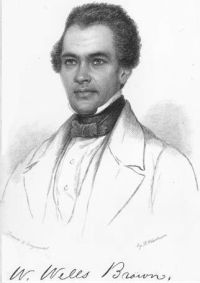 William Wells Brown,
Clotelle
(1867)
William Wells Brown,
Clotelle
(1867)
“ Many who saw her were melted to tears at the pitiful sight, and were struck with admiration at her intelligence; and, when she spoke of her child, they must have been convinced that a mother's sorrow can be conceived by none but a mother's heart. ”
Augusta J. Evans, At the Mercy of Tiberius
“ Wailing children of Time, we crouch and tug at the moss-velvet, daisy-sprinkled skirts of the mighty Mater, praying some lullaby from her to soothe our pain; but human woe frets not her sublime serenity, as deaf as desert sphinx, she fronts the future. ”
 Lydia Sigourney,
Poems
(1834)
Lydia Sigourney,
Poems
(1834)
“ ON THE DEATH OF A MOTHER, SOON AFTER HER INFANT SON. There's a cry from that cradle-bed, The voice of an infant's woe; Hark! hark! to the mother's rushing tread, In her bosom's fold she hath hid his head, And his wild tears cease to flow. Yet he must weep again, And when his eye shall know The burning brine of manhood's pain Or youth's unuttered woe, That mother fair With her full tide of sympathies, alas! may not be there. On earth, the tree of weeping grows Fast by man's side where'er he goes, And o'er his brightest joys, its bitterest essence flows. ”
 Letitia Elizabeth Landon,
The Vow of the Peacock and Other Poems
(1835)
Letitia Elizabeth Landon,
The Vow of the Peacock and Other Poems
(1835)
“ Your tears have made my shroud so wet; Oh, mother, do not weep!" Oh, love is strong!—the mother's heart Was filled with tender fears; Oh, love is strong!—and for her child Her grief restrained its tears. ”
St. Alphonsus Liguori, The glories of Mary (1852)
“ When a mother is by the side of a suffering and dying child, she no doubt then feels and suffers all his pains; but when the afflicted child is really dead and about to be buried, and the sorrowful mother takes her last leave of him, oh God! the thought that she is to see him no more is a sorrow that exceeds all other sorrows. Behold, the last sword of sorrow [586] which we are to consider, when Mary, after being present at the death of her Son upon the cross, after having embraced his lifeless body, was finally to leave him in the sepulchre, never more to enjoy his beloved presence. ”
Rhodius Apollonius, The Argonautica
“ And even as the mother had thrown her arms about her son, so she clung, weeping without stint, as a maiden all alone weeps, falling fondly on the neck of her hoary nurse, a maid who has now no others to care for her, but she drags on a weary life under a stepmother, who maltreats her continually with ever fresh insults, and as she weeps, her heart within her is bound fast with misery, nor can she sob forth all the groans that struggle for utterance ”
The Anti-Slavery Harp: A Collection of Songs for Anti-Slavery Meetings
“ So grieved that lone mother, that heart broken mother, In sorrow and woe.The lash of the master her deep sorrows mock, While the child of her bosom is sold on the block; Yet loud shrieked that mother, poor heart broken mother, In sorrow and woe.The babe in return, for its fond mother cries, While the sound of their wailings, together arise; They shriek for each other, the child and the mother, In sorrow and woe.The harsh auctioneer, to sympathy cold, Tears the babe from its mother and sells it for gold; While the infant and mother, loud shriek for each other, In sorrow and woe. ”
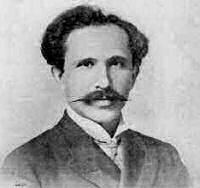 Morris Rosenfeld,
Songs of Labor, and Other Poems
Morris Rosenfeld,
Songs of Labor, and Other Poems
“ She hears mother’s crying—but where is the goodI pray you, how long will she sit there and cry Her candles so feebly to all that pass by? How long will it be, do you think, ere her breath Gives out in the horrible struggle with Death? How long will this frail one in mother-love strong, Give suck to the babe at her breast? Oh, how long? The child mother’s tears used to swallow before, But mother’s eyes, nowadays, shed them no more. ”
 Anne Gilchrist,
Mary Lamb
(1883)
Anne Gilchrist,
Mary Lamb
(1883)
“ I was going to partake with them when my recollection came that my poor dead mother was lying in the next room—the very next room; a mother who, through life, wished nothing but her children's welfare. Indignation, the rage of grief, something like remorse, rushed upon my mind. In an agony of emotion I found my way mechanically to the adjoining room and fell on my knees by the side of her coffin, asking forgiveness of Heaven and sometimes of her for forgetting her so soon. Tranquillity returned and it was the only violent emotion that mastered me. ”
James Lane Allen,
Sister Dolorosa, and Posthumous Fame
“ With what loneliness that sin had surrounded her! As she had issued from the damp, chill atmosphere of the church, the warm airs of the south quickened within her long-sleeping memories; and with the yearning of stricken childhood she thought of her mother, to whom she had turned of yore for sympathy; but that mother's bosom was now a mound of dust. She looked across the lawn towards the convent where the Mother Superior and the nuns were sleeping. To-morrow she would stand among them a greater alien than any stranger. No; she was alone ”
 Eugène Sue,
The Mysteries of Paris, illustrated with etchings…
Eugène Sue,
The Mysteries of Paris, illustrated with etchings…
“ To attempt to describe the tortures endured by the tender mother, as, during the greater part of the night, she watched her slumbering child, her thoughts alternately dwelling on the past, the present, and the future, would be to paint the sharpest, bitterest, wildest agony that ever crossed the brain of a loving and despairing mother ”
“ Gently, inexorably, with the first outstretching of the tiny fist, with the first soft pressure of the pink fragile fingers against the maternal breast, the child had pushed the mother from her place in the sunlight—gently, inexorably, out of love, out of joy, out of life—into the shadow where mothers sit with eyes whose tears no one kisses away, with heart-beats that no one counts. ”
 Emma Dorothy Eliza Nevitte Southworth,
Love's labor won
(1919)
Emma Dorothy Eliza Nevitte Southworth,
Love's labor won
(1919)
“ Can you breathe the breath of life again into the cold bosom of the dead mother that lies in yonder chamber? Can you cause that stilled heart to beat? those closed eyes to open? those silent lips to speak and murmur softly, “My little Margaret, my dove?” In a word, can you raise the dead to life? If not, then go, and trouble her not with your commonplaces. Before the image of an only child, just orphaned of her mother, that merely human comforter who best comprehends her sorrow would stand the most confounded—dumb. Leave her to God. Only He who wounds can heal. ”
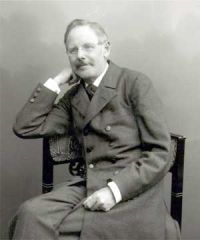 Peter Rosegger,
I.N.R.I.: A prisoner's Story of the Cross
Peter Rosegger,
I.N.R.I.: A prisoner's Story of the Cross
“ Dry your tears; see, I love you, more than any human heart can understand. Because the mother suffers double what the child suffers, so is your pain greater than that of Him who must sacrifice Himself for many. ”
Vera, Honor Edgeworth; Or, Ottawa's Present Tense
“ With scalding tears in her eyes, and a burning misery in her heart, the sorrowful mother stoops over the doomed form of her sleeping child, gently chafing the fevered hands, tenderly cooling the flushed and fevered brow; softly pressing the trembling lips on the clammy cheek of her darling, driving back her agony with a heroic cruelty, lest a sob or a sigh, or a falling tear disturb the quiet slumber of the little one she loves. A mother and her child, a wife and her husband are never drawn so closely together, one never seems so truly a part of the other, as during a moment like this. ”
