Summary

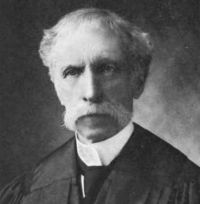
Portrait of Charles Cooper Nott Charles Cooper Nott The seven great hymns of the mediaeval church (1902)

THE Stabat Mater, with the Dies Iræ, possesses the power of imparting a shadowy impression of its meaning by the melody of its verse. Its soft, sad cadence echoes the feeling of its pathetic words. In fame it ranks next to the Dies Iræ, yet is neither so simple nor so grand; nor does it rise, like the Great Hymn, above sectarian faults. It has attracted the same great admiration, and been praised and repeated by the fame great admirers, but always in a lesser degree. As the Dies Iræ has been pronounced the greatest, so the Stabat Mater universally is deemed the most pathetic of hymns.
Source: Wikisource

Portrait of Charles Cooper Nott Charles Cooper Nott The seven great hymns of the mediaeval church (1902)

Mary at the manger, and Mary at the cross, opens a vista to an abyss of joy and of grief such as the world never saw before. Mary stood there not only as the mother, but as the representative of the whole Christian church, for which the eternal Son of God was born an infant in the manger, and for which he suffered the most ignominious death on the cross.
Source: Wikisource

Portrait of Charles Cooper Nott Charles Cooper Nott The seven great hymns of the mediaeval church (1902)

Ye traces of earth and continents, reply Alleluia. 14. To God, who all Creation made, 15. The frequent hymn be duly paid: Alleluia. 16. This is the strain, the eternal strain,
the Lord of all things loves : Alleluia. 17. This is the song, the heav'nly song,
that Christ Himself approves : Alleluia. 18. Wherefore we sing, both heart and voice awaking, Alleluia. 19. And children's voices echo, answer making, Alleluia. 20. Now from all men be out-pour'd
Alleluia to the Lord;
With Alleluia evermore
The Son and Spirit we adore. 21. Praise be done to the Three in One. Alleluia! Alleluia! Alleluia!
Source: Wikisource

Get perspective with Kwize: daily news enlightened by great literature