“ She could have entered at Miss Lucilla's door, or Mrs. Wappinger's; but a strange shyness, the shyness of the unfortunate, had taken hold of her, and she held back. In the mean time she was free to watch, with sad eyes and sadder spirit, the great city, reversing the processes of nature, awaken from the torpor of the genial months into its winter life.No one knew better than herself that thrill of excited energy with which those born with the city instinct return from the acquired taste for mountain, seaside, and farm, to enter once more the maze of purely human relationships. ”
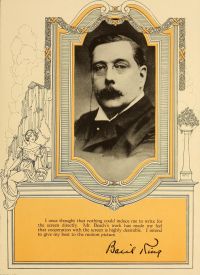
Basil King
Biographical details

Basil King (1859–1928), a Canadian writer and former Anglican clergyman, turned to literature after retiring due to health problems, composing spiritually focused novels and non-fiction. His works, such as The Inner Shrine and The Conquest of Fear, delve into themes of belief, mortality, and transcendence, merging personal trials with mystical religious understanding.
Although criticized for sentimentality, his body of work illustrates an evolving spiritual journey, reaching its peak in texts like The Abolishing of Death. King’s influence continues through his evocative stories that weave human vulnerability with the hope of divine resolution.
Quotes by Basil King
“ They came into May, the joyous, exciting, stimulating May of New York, with its laughing promise of adventure. To Tom Whitelaw that sense of adventure was in the happy sunlight, in the blue sky, in the scudding clouds, in winds that were warm and yet with the tang of salt and ice in them, in the flowers in the Park, in the gay dresses in the Avenue, in the tall young men already beginning to look summery, in the shop windows with their flowers, fruit, jewels, porcelains, and brocades, in the opulent crush of vehicles, and in his own heart most of all. ”
 Basil King,
The City of Comrades
Basil King,
The City of Comrades
“ Here was a dying man whose half-lighted spirit was standing on the threshold of a fully lighted world. One might have said that the radiance of the life on which he was entering already shone in the tenderness that began to dawn in the delicate old face. It was a face growing younger, as for two or three years it had grown more spiritual. I saw that now and did justice to it as something big. It was on the level of big things; and love-affairs between men and women were only on the level of the small. ”