Summary

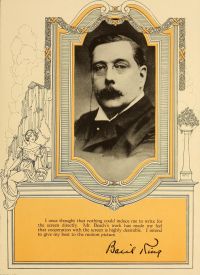
Portrait of Basil King Basil King The Letter of the Contract

And yet, Chip—oh, don't be angry—it seems to me that if I left him now and went back to you I should become something vile. It isn't because he's so noble and good. No, it isn't that. And it isn't just the idea of passing from one man to another and back again. We have turned marriage into opera bouffe, we Americans, and we might as well take it as we've made it. It isn't that at all. It's—it's exactly what you said just now: it's like a man swimming away from a sinking ship, and leaving his wife and children to drown, because he can't rescue them.
Source: Gutenberg

Portrait of Basil King Basil King The Letter of the Contract

Any such interval as that was always the hardest feature in the day for him. But what smote him specially now was the air of emptiness and loneliness. It met him as an odor in the stale smell of the cigar he had smoked on coming up-town from the office, and which still lingered in the rooms. He had forgotten to open a window, and the house valet, whose duty it was to "tidy up," had evidently gone out.
In the small hall into which Chip entered there was a bookcase with but two or three odds and ends of books in it, for his habits of reading had dropped away from him with everything else.
Source: Gutenberg

Portrait of Basil King Basil King The Letter of the Contract

Between the debonair, experienced New York lawyer, so much in demand for cases requiring discretion and so capable of dealing with them—between him and the farmer's boy he had been there was no more resemblance than between a living word and the dead root out of which it has been coined. In Emery Bland's case the word was not only living, but pliant, eloquent, and arresting to ear and eye. He was one of those men who overlook nothing that can be counted as self-expression, from their dress to the sound of their syllables.
Source: Gutenberg

Get perspective with Kwize: daily news enlightened by great literature