“ To make himself strong and free was Tom Whitelaw's ruling motive through the winter which preceded his going to Harvard. He must be a man, not merely in physical vigor, but in mental independence. Convinced that he was in what he called a rotten world, a world of rotten customs built on a rotten foundation, he saw it as a task to learn to pick his way amid the rottenness. To rebel, but keep his rebellion as steam with which to drive his engine, not as something to let off in futile raging against established convictions, was a hint of Honey's by which he profited. ”
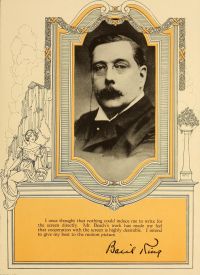
Basil King
Summary
Quotes from The Happy Isles (Basil King)
“ Jane Street is Dutch. It has Dutch quaintness, and, as far as New York will permit it, Dutch cleanliness. It might be a byway in Amsterdam. Instead of cutting straight from the Hudson River Docks to Greenwich Avenue, it might run from a canal with barges on it to a field of hyacinths in bloom.But Tom Quidmore saw not what you and I would have seen, a relief from the noise and fetidness of a hot summer's morning in a neighborhood reeking with garbage. When his heart had been fixed on that dream-city, Wilmington, Delaware, he found himself in a dingy little alley. ”
“ They came into May, the joyous, exciting, stimulating May of New York, with its laughing promise of adventure. To Tom Whitelaw that sense of adventure was in the happy sunlight, in the blue sky, in the scudding clouds, in winds that were warm and yet with the tang of salt and ice in them, in the flowers in the Park, in the gay dresses in the Avenue, in the tall young men already beginning to look summery, in the shop windows with their flowers, fruit, jewels, porcelains, and brocades, in the opulent crush of vehicles, and in his own heart most of all. ”
