Summary

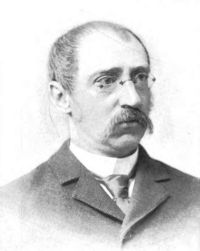
Portrait of Henry A. Beers Henry A. Beers A History of English Romanticism in the Eighteenth Century

Literature was a polished mirror in which the gay world saw its own grinning face. It threw back a most brilliant picture of the surface of society, showed manners but not the elementary passions of human nature. As a whole, it leaves an impression of hardness, shallowness, and levity. The polite cynicism of Congreve, the ferocious cynicism of Swift, the malice of Pope, the pleasantry of Addison, the early worldliness of Prior and Gay are seldom relieved by any touch of the ideal. The prose of the time was excellent, but the poetry was merely rhymed prose.
Source: Gutenberg

Portrait of Henry A. Beers Henry A. Beers A History of English Romanticism in the Eighteenth Century

I refer to Schlegel's famous saying that the genius of the antique drama was statuesque, and that of the romantic drama picturesque. A Greek temple, statue, or poem has no imperfection and offers no further promise, indicates nothing beyond what it expresses. It fills the sense, it leaves nothing to the imagination. It stands correct, symmetric, sharp in outline, in the clear light of day. There is nothing more to be done to it; there is no concealment about it. But in romantic art there is seldom this completeness. The workman lingers, he would fain add another touch, his ideal eludes him.
Source: Gutenberg

Portrait of Henry A. Beers Henry A. Beers A History of English Romanticism in the Eighteenth Century

If there is any poet who is par excellence the poet of romance, whose art is the antithesis of Pope's, it is the poet of the "Faërie Queene." To ears that had heard from childhood the tinkle of the couplet, with its monotonously recurring rhyme, its inevitable caesura, its narrow imprisonment of the sense, it must have been a relief to turn to the amplitude of Spencer's stanza, "the full strong sail of his great verse."
Source: Gutenberg

Get perspective with Kwize: daily news enlightened by great literature