
“ Neither can I by myself, have this sensation, nor the object by itself, this quality. THEAETETUS: Certainly not. SOCRATES: When I perceive I must become percipient of something—there can be no such thing as perceiving and perceiving nothing; the object, whether it become sweet, bitter, or of any other quality, must have relation to a percipient; nothing can become sweet which is sweet to no one. ”
Percipient
Definition and stakes
The concept of percipient centers on the ability to perceive, sense, or be aware of external stimuli, often portraying perception as an active interaction between the mind and the world. From Aristotle’s differentiation of sensory-specific qualities to William James’s rejection of "mere sensation" as a standalone reality, writers have examined how perception is intertwined with consciousness, judgment, and existence.
Thomas Brown viewed sensations as outcomes of the percipient mind, while James Frederick Ferrier stressed human uniqueness in the awareness of sensation. G.E. Moore connected cognition with the appreciation of beauty, and Hegel described experience as a dialectical process that shapes consciousness. These viewpoints together highlight the percipient’s role as both observer and active participant in shaping reality.
Quotes about “percipient”
Thomas Brown, Lectures on the Philosophy of the Human Mind…
“ What matter, in its relation to the percipient mind, can be, but the cause or occasion, direct or indirect, of that class of feelings which I term sensations or perceptions, it is absolutely impossible for me to conceive. ”
 James Frederick Ferrier,
Blackwood's Magazine
(1838)
James Frederick Ferrier,
Blackwood's Magazine
(1838)
“ This consciousness of sensation, then, is the other fact contained in perception; and it is an inquiry into the nature and origin of this fact, and of it alone, that forms the true and proper problem of psychology when we are busied with the phenomena of perception; because it is this fact, and not the fact of sensation, which constitutes man's peculiar and distinctive characteristic, and lies as the foundation-stone of all the grander structures of his moral and intellectual being. ”
G. W. F. Hegel, The Phenomenology of Mind — Introduction
“ This dialectic process which consciousness executes on itself—on its knowledge as well as on its object—in the sense that out of it the new and true object arises, is precisely what is termed Experience. ”
 George Edward Moore,
Principia Ethica — Chapter VI
(1903)
George Edward Moore,
Principia Ethica — Chapter VI
(1903)
“ By the cognitive element, which is equally necessary with emotions to the existence of a valuable appreciation, I mean merely the actual cognition or consciousness of any or all of an object’s beautiful qualities—that is to say, any or all of those elements in the object which possess any positive beauty. ”
 Aristotle,
On the Vital Principle
(1855)
Aristotle,
On the Vital Principle
(1855)
“ The object of perception is spoken of in a three-fold manner, as there are two ways in which we speak of perceiving objects distinctly, and one in which we speak of perceiving them accidentally; and of those two ways one signifies the property which is peculiar to each sense, and the other the property which is common to all the senses. I mean by peculiar property that which cannot be perceived by any other than its own sense, and concerning which that sense cannot be deceived—as colour for sight, sound for hearing, and savour for taste. ”
 Herbert Spencer,
First Principles
Herbert Spencer,
First Principles
“ For how can consciousness be wholly resolved into impressions and ideas, when an impression of necessity implies something impressed? Or again, how can the sceptic who has decomposed his consciousness into impressions and ideas, explain the fact that he considers them as his impressions and ideas? Or once more, if, as he must, he admits that he has an impression of his personal existence, what warrant can he show for rejecting this impression as unreal while he accepts all his other impressions as real? ”
 John Wesley Powell,
Truth and Error — Chapter XIV.
(1898)
John Wesley Powell,
Truth and Error — Chapter XIV.
(1898)
“ Sensation, therefore, produces concepts of kind, and the correlates of likeness and unlikeness are involved. We may define sensation as the cognition of properties as kinds in their effects, and it is a compound of judgments; and a judgment is a combination of a sense impression, a consciousness, a choice, a concept, and a comparison. ”
William James, The Principles of Psychology, Volume 2…
“ The true answer is, No." "Perception, in its simplest form...—perception as the first sight or touch of an object in which nothing but what is seen or touched is recognized—neither is nor contains sensation" (Contemp. Rev., xxxi. pp. 746, 750.) "Mere sensation is in truth a phrase that represents no reality." "Mere feeling, then, as a matter unformed by thought, has no place in the world of facts, in the cosmos of possible experience." ”
William James, The Will to Believe, and Other Essays in Popular Philosophy
“ I mean by this that the conceiving or theorizing faculty—the mind's middle department—functions exclusively for the sake of ends that do not exist at all in the world of impressions we receive by way of our senses, but are set by our emotional and practical subjectivity altogether. [2] It is a transformer of the world of our impressions into a totally different world,—the world of our conception; and the transformation is effected in the interests of our volitional nature, and for no other purpose whatsoever. ”
 Percy Bysshe Shelley,
The Complete Poetical Works of Percy Bysshe Shelley…
Percy Bysshe Shelley,
The Complete Poetical Works of Percy Bysshe Shelley…
“ I am formed, if for anything not in common with the herd of mankind, to apprehend minute and remote distinctions of feeling, whether relative to external nature or the living beings which surround us, and to communicate the conceptions which result from considering either the moral or the material universe as a whole. Of course, I believe these faculties, which perhaps comprehend all that is sublime in man, to exist very imperfectly in my own mind. ”
 Lester Frank Ward,
The American Journal of Sociology
(1896)
Lester Frank Ward,
The American Journal of Sociology
(1896)
“ The subdivision of mind which I prefer is that into sense and intellect, using the word sense as synonymous with feeling in general. But as most forms of intellection may be regarded as modes of thinking, it is sometimes clearer to draw the antithesis between feeling and thought. But as adjective forms are convenient and as all feelings are in the philosophical sense affections, it often strengthens the conception to refer to the feelings in this general sense as constituting the affective side of mind, or the affective faculties. ”
J. Marshall, A Short History of Greek Philosophy
“ The one criterion, whether of good or of truth, is the feeling of the moment for the man who feels it; all question of causes of feelings is delusive. We can say with truth and certainty, I have the sensation of white or the sensation of sweet. ”
Herbert Spencer,
Illustrations of Universal Progress…
“ Presentative-representative cognitions; or those in which consciousness is occupied with the relation between a sensation or group of sensations and the representations of those various other sensations that accompany it in experience. This is what we commonly call perception—an act in which, along with certain impressions presented to consciousness, there arise in consciousness the ideas of certain other impressions ordinarily connected with the presented ones: as when its visible form and colour, lead us to mentally endow an orange with all its other attributes. ”
Warren Hilton, Applied Psychology: Making Your Own World
“ It is obvious that the world is not the same for all of us; but that it is for each one of us simply the world of his individual perceptions.As Many Worlds as MindsThe whole subject of sense-impressions, [Pg 53] sensation and perception may, therefore, be looked at from the standpoint of the mind as an active influence, as well as from the standpoint of outside objects as the exciting causes of sense-impressions. ”
The Tibetan Book of the Dead (1927)
“ What he has thought and what he has done become objective: thought-forms, having been consciously visualized and allowed to take root and grow and blossom and produce, now pass in a solemn and mighty panorama, as the consciousness-content of his personality. ”
 James Mill,
Analysis of the Phenomena of the Human Mind
James Mill,
Analysis of the Phenomena of the Human Mind
“ By the Sensation, we mean the whole state of consciousness, under an actual or present impression of sense, as in looking at the moon, in listening to music, in tasting wine. By the Idea is meant the state of mind that remains after the sensible agent is withdrawn, or that may be afterwards recovered by the force of recollection. ”
William James, Essays in Radical Empiricism
“ If you agree that the perceptual object is not an idea within me, but that percept and thing, as indistinguishably one, are really experienced there, outside, you ought not to believe that the merely thought-of object is hid away inside of the thinking subject. ”
James Frederick Ferrier,
Philosophical Works of the Late James Frederick Ferrier
(1875)
“ Is psychology able to explain, or is any human being competent to know what these qualities are, apart from his perceptions of them? It is always our perceptions of the primary qualities, and not these qualities themselves, which come before the mind, just as it is always our sensations resulting from the secondary qualities, and not the secondary qualities themselves, that we are cognisant of. ”
 Georg Wilhelm Friedrich Hegel,
The Philosophy of Fine Art, volume 3…
Georg Wilhelm Friedrich Hegel,
The Philosophy of Fine Art, volume 3…
“ In other words in sense-perception and conception we have already, as in self-conscious thought, the necessary distinction between the perceiving, conceiving and thinking Ego and the object of perception, conception, and thought. ”
James Frederick Ferrier,
Philosophical Works of the Late James Frederick Ferrier
(1875)
“ Thus speculation gives out as the substantial what nature herself has fixed as such; and, moreover, gives out as the phenomenal the elements which result when this substantial is tampered with and broken up. Psychology, on the contrary, gives out as the substantial the elements which result when the substantial is tampered with and broken up; and, moreover, gives out as the phenomenal that which nature herself has fixed as the substantial. ”
 Josiah Royce,
The World and the Individual, First Series
(1899)
Josiah Royce,
The World and the Individual, First Series
(1899)
“ If you ask what manner of partial Being, from the point of view of our Fourth Conception, such abstractly conceived but concretely excluded facts possess, I answer, precisely the fragmentary sort of Being which the consciousness of a specific purpose, that is the consciousness of a particular attentive selection, consciously assigns to them. ”
James Mill,
Analysis of the Phenomena of the Human Mind
“ As is observed by the author of the Analysis, the exposition in detail of the associations which enter into our various feelings of the sublime and beautiful, would require the examination of the subject on a scale not suited to the character nor proportioned to the dimensions of this Treatise. Of all our feelings, our acquired pleasures and pains, especially our pleasures, are the most complex; resulting from the whole of our nature and of our past lives, and involving, consequently, a greater multitude and variety of associations than almost any other phenomena of the mind. ”
Aristotle,
On the Vital Principle
(1855)
“ As the inquiry proceeds, we are reminded of the obscurity or inaccuracy of language, in portraying the impressions upon and the functions, so to say, of the sentient organs even now the external object is, with us, in common parlance, a sensible object; sensation, besides its own sense, implies casual feelings from within; sight signifies both faculty and function ”
John Wesley Powell,
Truth and Error — Chapter XV.
(1898)
“ It has been shown that there is a faculty of the mind, by which judgments and concepts of kind are produced, which has been called sensation. It is now proposed to demonstrate that there is a faculty of the mind by which judgments and concepts of form are produced which will be called perception. ”
Thomas Brown, Lectures on the Philosophy of the Human Mind…
“ We have merely the desire of knowing the scene before us,—the selection of some prominent object, or rather the mere perception of it, as peculiarly prominent,—the desire of knowing it particularly,—and the contraction of a few muscles, in obedience to our volition. ”
William James, The Principles of Psychology, Volume 1…
“ It seems reasonable to me—upon the hypothesis that it is a person using another's mind or brain—that there must be more or less of that other's style or tone incorporated in the message, and that to the unseen personality, i.e., the power which impresses, the thought, the fact, or the philosophy, and not the style or tone, belongs. ”
 Johann Gottlieb Fichte,
The Vocation of Man — Book Two…
(1846)
Johann Gottlieb Fichte,
The Vocation of Man — Book Two…
(1846)
“ It is not our business at present to inquire whether the impression made by means of sight be a pure sensation, or whether it may not rather be a middle term between sensation and intuition, and the bond by which they are united in our minds. ”
 Robert Adamson,
Fichte — Chapter VI. "Wissenschaftslehre" in its Earlier Form
(1881)
Robert Adamson,
Fichte — Chapter VI. "Wissenschaftslehre" in its Earlier Form
(1881)
“ But all tendency of the Ego must at the same time be for the Ego—that is, must be reflectively matter of consciousness to the Ego. A tendency of which we are reflectively conscious is a need or want, and when further determined in reference to a definite object, a desire. ”
 G. E. Moore,
Philosophical Studies
G. E. Moore,
Philosophical Studies
“ What, then, that we observe, can give us any reason for believing that anyone else has certain particular perceptions, thoughts or feelings? It has, I think, been very commonly assumed that the observation of my own perceptions, thoughts, and feelings, can, by itself, give me such a reason. ”
 Alfred H. Lloyd,
The will to doubt
Alfred H. Lloyd,
The will to doubt
“ Of course, the consciousness is; but, however subjective, the consciousness must have more than its mere subjectivity, than its mere seeming or wanting or willing, being in some way genuinely objective or grounded in reality. In a word, all consciousness implies and demands, postulates and possesses, a real world ”
John Wesley Powell,
Truth and Error — Chapter XV.
(1898)
“ A representative judgment of perception, like that of sensation, has five elements. Instead of the consciousness of the sense impression we have the consciousness of a concept brought about by an act of choice arising from association or exercise of the will. ”
James Frederick Ferrier,
Berkeley and Idealism
(1883)
“ All the secondary qualities, colours, sounds, tastes, smells, heat, hardness, everything, in short, which is an affection of sense, may be generalised at one sweep into our mere knowledge of things. But the primary qualities, which are usually restricted to extension and figure, and which constitute, it is said, the objective or real essence of things, and which are entirely independent of us, into what shall they be generalised? ”
 A. E. Taylor,
Elements of metaphysics
(1903)
A. E. Taylor,
Elements of metaphysics
(1903)
“ What the subjectivist means when he says that in perception I am aware only of the states, or subjective modifications, of my own consciousness, is that the object of which each perceptive state is aware is simply itself as a perceptive state; the perception perceives itself and nothing else. ”
Robert Adamson,
Fichte — Chapter VIII. Concluding Remarks
(1881)
“ The question how the human mind, regarded as a thing of definite or indefinite characteristics, comes to have the filling-in which we call experience, opens out, when duly considered, into the much wider problem as to the relation of any individual consciousness to the sum total of things, a relation which may be either cognitive, or practical, or religious. ”
Jaime Luciano Balmes, Fundamental Philosophy, Vol. 1…
“ These principles, based on the data of experience,—that is, on sensations the existence of which we know from consciousness, assure us that the objectiveness of sensations, or the reality of the external world, is a truth. ”
James Mill,
Analysis of the Phenomena of the Human Mind
“ That the feelings of sight which we are capable of distinguishing from one another, are exceedingly numerous, is obvious from this, that it is by them we distinguish the infinite variety of visible objects. We have the sensation; the sensation suggests the object ”
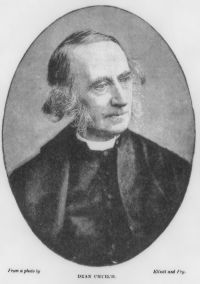 R. W. Church,
The Oxford Movement; Twelve Years…
R. W. Church,
The Oxford Movement; Twelve Years…
“ We speak not from our own fixed impression, however deeply felt, but from what we have heard and observed everywhere, from the natural, incidental, unconscious remarks dropped from persons' mouths, and evidently showing what they thought and felt. ”
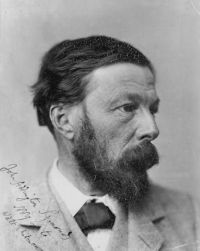 John Addington Symonds,
Sketches and Studies in Italy and Greece…
John Addington Symonds,
Sketches and Studies in Italy and Greece…
“ During that long period of time, the most delicate gradations of human personality, divinised, idealised, were presented to the contemplation of the consciousness which gave them being, in appropriate types. ”
William James, The Principles of Psychology, Volume 1…
“ But all these essential characteristics, which together form for us the genuine objectivity of the thing and are contrasted with what we call the subjective sensations it may yield us at a given moment, are mere sensations like the latter. The mind chooses to suit itself, and decides what particular sensation shall be held more real and valid than all the rest. ”
 Joseph Dietzgen,
The Positive Outcome of Philosophy
Joseph Dietzgen,
The Positive Outcome of Philosophy
“ Referring back to the statement that seeing is limited to the visible qualities of some object, hearing to its audible qualities, etc., while the faculty of thought has everything for its object, we now understand this to mean that all objects have certain innumerable, but concrete, qualities which are perceptible by our senses, and in addition thereto the general spiritual quality of being thought of, understood, in short, of being the object of our faculty of thought. ”
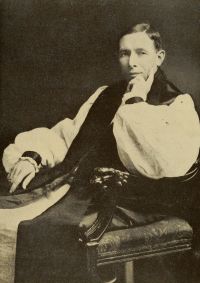 Charles Henry Brent,
The Sixth Sense: Its Cultivation and Use
Charles Henry Brent,
The Sixth Sense: Its Cultivation and Use
“ The bodily senses alone can get at the full content, the deep inside of nothing, no matter how pronounced its objectivity, “The truly real is a thing that has an inside.” [3] The more pronounced or attractive the external [24] substance and form of a material object and the closer we are to it, the greater the difficulty for the average character to gain cognition of its spiritual essence. ”
William James, The Varieties of Religious Experience (1902)
“ It is as if there were in the human consciousness a sense of reality, a feeling of objective presence, a perception of what we may call 'something there,' more deep and more general than any of the special and particular 'senses' by which the current psychology supposes existent realities to be originally revealed. If this were so, we might suppose the senses to waken our attitudes and conduct as they so habitually do, by first exciting this sense of reality; ”
