Summary

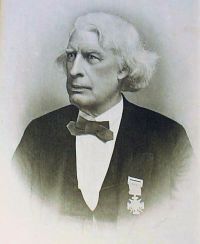
Portrait of Albert Mackey Albert Mackey The Symbolism of Freemasonry — Chapter X (1882)

The lectures of the English lodges, which are far more philosophical than our own,--although I do not believe that the system itself is in general as philosophically studied by our English brethren as by ourselves,--have beautifully defined Freemasonry to be "a science of morality veiled in allegory and illustrated by symbols." But allegory itself is nothing else but verbal symbolism; it is the symbol of an idea, or of a series of ideas, not presented to the mind in an objective and visible form, but clothed in language, and exhibited in the form of a narrative.
Source: Wikisource

Portrait of Albert Mackey Albert Mackey The Symbolism of Freemasonry — Chapter X (1882)

The objective character of a symbol is best calculated to be grasped by the infant mind, whether the infancy of that mind be considered nationally or individually. And hence, in the first ages of the world, in its infancy, all propositions, theological, political, or scientific, were expressed in the form of symbols. Thus the first religions were eminently symbolical, because, as that great philosophical historian, Grote, has remarked, "At a time when language was yet in its infancy, visible symbols were the most vivid means of acting upon the minds of ignorant hearers."
Source: Wikisource

Portrait of Albert Mackey Albert Mackey The Symbolism of Freemasonry — Chapter X (1882)

The construction of language was, therefore, one of the first products of the science of symbolism.
We must constantly bear in mind this fact, of the primary existence and predominance of symbolism in the earliest times, [5] when we are investigating the nature of the ancient religions, with which the history of Freemasonry is so intimately connected. The older the religion, the more the symbolism abounds. Modern religions may convey their dogmas in abstract propositions; ancient religions always conveyed them in symbols.
Source: Wikisource

Get perspective with Kwize: daily news enlightened by great literature