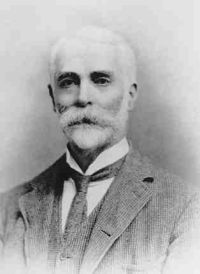
Bernard Bosanquet

Bernard Bosanquet

Summary

Portrait of Bernard Bosanquet Bernard Bosanquet Three Lectures on Aesthetic (1915)

This same conception of the ideal is the lesson of our doctrine of art. The ideal of every art must be revealed, I take it, in terms of the art itself; and it must be what underlies the whole series of efforts which the artist’s imagination has made and is making, to create, in his own medium, an embodied feeling in which he can rest satisfied. It is the world as he has access to it through his art.
Source: Wikisource

Portrait of Bernard Bosanquet Bernard Bosanquet Three Lectures on Aesthetic (1915)

From the simplest perception of a square or a cube, or of a rock or stream, upwards to the greatest achievements of music or the drama, it is plain, I think, that the aesthetic attitude must be imaginative. That is to say, it must be the attitude of a mind which freely tracks and pursues the detail of experience for the sake of a particular kind of satisfaction — not the satisfaction of complete and self-consistent theory, but the automatic satisfaction, so to speak, of a complete embodiment of feeling.
Source: Wikisource

Portrait of Bernard Bosanquet Bernard Bosanquet Three Lectures on Aesthetic (1915)

Beauty, he sees, is for the mind and in the mind. A physical thing, supposed un-perceived and unfelt, cannot be said in the full sense to possess beauty. But he forgets throughout, I must think, that though feeling is necessary to its embodiment, yet also the embodiment is necessary to feeling. To say that because beauty implies a mind, therefore it is an internal state, and its physical embodiment is something secondary and incidental, and merely brought into being for the sake of permanence and communication — this seems to me a profound error of principle, a false idealism.
Source: Wikisource

Get perspective with Kwize: daily news enlightened by great literature