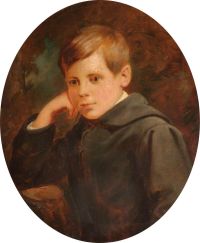
A. Clutton-Brock

A. Clutton-Brock

Summary

Portrait of A. Clutton-Brock A. Clutton-Brock Essays on Art

Art is always most completely art when it makes music's confession of the ineffable; then it comes nearest to the beauty of music. But when it is no longer a forlorn hope, when it is able to say what it wishes to say with calm assurance, then it has ceased to be art and become a game of skill.
Often the great artist is imperious, impatient, full of certainties; but his certainty is not of himself; and he is impatient of the failure to recognize, not himself, but what he recognizes. Michelangelo, Beethoven, Tintoret, would snap a critic's head off if he did not see what they were trying to do.
Source: Gutenberg

Portrait of A. Clutton-Brock A. Clutton-Brock Essays on Art

We must praise war, the German worshippers of force seem to say, so that we may survive. We must forgo the past hopes of man so that we may find something real to hope for. We must habituate ourselves to the universe as it is, and break ourselves and all mankind in to the bitter truth. They praised war as we used in England to praise industry. Labour, we believed, when all the labour of the poor had been made joyless by the industrial revolution, was the result of the curse laid upon man by God. Therefore, man must labour without joy and never dream of happy work.
Source: Gutenberg

Portrait of A. Clutton-Brock A. Clutton-Brock Essays on Art

Because the painter is supposed to be an artist and nothing else and the craftsman a tradesman and nothing else, we do not expect the virtues of the craftsman from the painter nor the virtues of the artist from the craftsman. For us there is nothing but mystery in the work of the artist and no mystery at all in the work of the craftsman. The painter can be as silly as he likes, and we do not laugh at him, if we are persons of culture, because his art is a sacred mystery.
Source: Gutenberg

Get perspective with Kwize: daily news enlightened by great literature