Summary

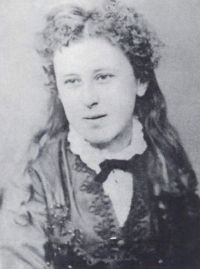
Portrait of Vernon Lee Vernon Lee Belcaro; Being Essays on Sundry Aesthetical Questions

But a poet, inasmuch as he is a poet, knows, sees, feels a great many things which have a practical and moral meaning: just because he is a poet, he knows that there is something beyond poetry; he knows that there are in the world such things as justice and injustice, good and evil, purity and foulness: he knows all this, which the mere musician, the mere painter, does not—and knowing it, perceiving, feeling, understanding it, with more intensity than other men, is he to sweep it all out of his sight?
Source: Gutenberg

Portrait of Vernon Lee Vernon Lee Belcaro; Being Essays on Sundry Aesthetical Questions

Call we in our artist, or let us be our own artist; embody, let us see or hear this ghost, let it become visible or audible to others besides ourselves; paint us that vagueness, mould into shape that darkness, modulate into chords that silence—tell us the character and history of those vague beings ... set to work boldly or cunningly. What do we obtain? A picture, a piece of music, a story; but the ghost is gone. In its stead we get oftenest the mere image of a human being; call it a ghost if you will, it is none. And the more complete the artistic work, the less remains of the ghost.
Source: Gutenberg

Portrait of Vernon Lee Vernon Lee Belcaro; Being Essays on Sundry Aesthetical Questions

Wherefore, I pray you, should you, my friend, my beloved little child poet, with the keen eyes and eager lips of Keats, who sit (in fancy at least) here by my side on the rough wall overlooking the orchard ravine at Perugia, drowsily listening (as poets listen to prose) to our discussion, wherefore should you, the poet, be worth more than I, the prose writer, merely inasmuch as you are the one and I am the other? Why be surrounded, even in my eyes, by a sort of ideal halo; why pointed out by my own secret instinct as the artist?
Source: Gutenberg

Get perspective with Kwize: daily news enlightened by great literature