“ Her spirits rose as she realised the power she was exerting. She felt a little impatient at the thought of Murad. After all, she was a great lady, a lady of the harem of Ahmed Ali, the richest Turk in Damascus. She was dressed in delicate silks, and the jewels blazed on her arm. She was queen of the harem, and the beloved of its lord. He was most desirable to her and to all women, and, but for Murad, who seemed to stand like a black shadow between, she would have lain upon his breast with pure delight. ”
Murad
Definition and stakes
Murad, a name deeply rooted in Ottoman history and literary imagination, represents both a historical figure—a sultan whose rule shaped empires—and a symbolic embodiment of ambition and destiny. Historians such as Herbert Adams Gibbons emphasize his political skill and military endeavors, while stories like Quatrelles’ chivalric romances and Maria Edgeworth’s fables present him as a tragic or noble leader.
From Gibb’s descriptions of Murad IV’s revival of Ottoman greatness to Edgeworth’s depiction of “Murad the Unlucky,” the recurring theme highlights his dual legacy: a sovereign struggling with power and a figure representing human frailty. These diverse portrayals illustrate Murad’s lasting impact across historical scholarship and narrative traditions.
Quotes about “Murad”
 Herbert Adams Gibbons,
The Foundation of the Ottoman Empire…
Herbert Adams Gibbons,
The Foundation of the Ottoman Empire…
“ The only result recorded by the Ottoman historians is that Alaeddin kissed Murad’s hands! Murad withdrew to Kutayia without annexing any portion of the Karamanian emirate, without booty, and without promise either of tribute or military contingents for the European wars. Had Murad actually accomplished more than merely holding his own in the battle of Konia, the campaign would not have ended so profitlessly. Granting the Ottoman victory, Murad’s conduct after the battle is inconsistent with his whole life and character. We are compelled to discard the story of a decisive victory. ”
Quatrelles, The Days of Chivalry; Or, The Legend of Croquemitaine
“ Murad continued:—“While I was a child, happily for me, I did not occupy any place in your life; but from the hour when you saw me return the conqueror of the lioness and her cubs, you began to keep an eye on me. I grew up under your personal superintendence, and if the queen, Hadrama, my mother, had not at times pressed me to her bosom, I believe I should have become a wild beast, and not a man. My name became famous; the prodigies of my valour, my wisdom, and bravery won you many kingdoms. ”
Related terms
Authors who wrote about “Murad”
Herbert Adams GibbonsBaron G. Shaw-Lefevre Eversley Edwin Pears
 Elias John Wilkinson GibbVincent Henry Penalver Caillard and Elias John Wilkinson GibbQuatrellesDaniel Henderson
 H. F. B. Lynch
 Maria EdgeworthWilliam Holden Hutton
 Sir Charles Augustus MurrayVictoria Cross
 Leo Tolstoy
 Charles OmanFanny Janet Sandison BluntW. Lloyd BevanThomas Wilhelm| override_editor
 Edward Gibbon
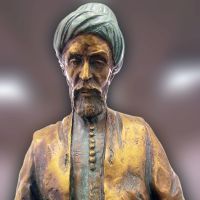 Evliya Çelebi