“ Nature had gifted Ahmed with all the best treasures in her jewel-box; beauty of face and form, strength and grace, charm of voice and presence—everything needed to ensnare and delight the senses, and he was accustomed to be loved, passionately adored, and worshipped. ”
Ahmed
Definition and stakes
The name Ahmed, a male given name of Arabic origin, appears frequently in literature as a symbol of diverse human experiences. From Victoria Cross’s portrayal of Ahmed as a sensually captivating figure to Achmed Abdullah’s depiction of him as a rogue seeking redemption, the name embodies both charm and moral complexity.
In Meadows Taylor’s narrative, Ahmed is a loyal servant, while in The World’s Greatest Books, he becomes a fantastical hero wielding supernatural power. These varied portrayals highlight Ahmed’s adaptability as a literary archetype, reflecting ideals of strength, spirituality, and human vulnerability across cultures and eras.
Quotes about “Ahmed”
 Achmed Abdullah,
The Thief of Bagdad — Chapter VI
(1924)
Achmed Abdullah,
The Thief of Bagdad — Chapter VI
(1924)
“ Ahmed, the lonely man, the thief, the outcast, with every man’s hand against his—with nothing but his sword, his small bag of provisions and, perhaps a faint hope—out on the bitter, thorny path—out to conquer, first himself, and then the greatest treasure on earth! ”
 Meadows Taylor,
A Noble Queen: A Romance of Indian History…
Meadows Taylor,
A Noble Queen: A Romance of Indian History…
“ Suddenly a powerful voice from a place high in the rocks above her called out, "Ahmed! Ahmed! Where art thou?" Zóra knew the voice: it was Johur's, the Nawab's Abyssinian slave, who had often helped her to climb rocks, and gather flowers of the beautiful creepers which hung over them. "Ahmed! Ahmed!""I am here," shouted Ahmed, who had ascended the bastion to see who called him. "What do you want with me?""The master wants thee; come up: he is angry that thou art not present. Take care, he is in no humour to wait." ”
Various, Blackwood's Edinburgh Magazine…
“ Riding off with his cavalry from Persia to Candahar, Ahmed these robbed a caravan! Upon which every body cried out to him, "Go it!" and his lucky connexion by birth with the best of the Dooraunee blood did the rest. A murder, a flight, and a robbery, or pretty nearly in the words of our English litany, "Battle, and murder, and sudden death," together with a silver spoon in his mouth at his natal hour, had made Ahmed a shah; and this Ahmed was the grandfather of our own pet Soojah. In such a genealogy there is not much for a poet-laureate to found upon, nor very much to make a saint out of. ”
Charles John Tibbitts, Folk-Lore and Legends: Oriental
“ Hear me, Ahmed! Think only of discovering the king’s treasure. Thou hast just as good a chance of doing so as thou hadst of finding the ruby, and the necklace and earrings. [Pg 13] At all events, I am determined thou shalt not escape; and shouldst thou attempt to run away, I will inform the king’s officers, and have thee taken up and put to death, even before the forty days are expired. Thou knowest me too well, Ahmed, to doubt my keeping my word. So take courage, and endeavour to make thy fortune, and to place me in that rank of life to which my beauty entitles me. ”
The World's Greatest Books — Volume 01…
“ However, all that he commanded Ahmed performed by help of the genie, even things the most impossible. He brought a tent which would cover the sultan's army, and yet, folded up, lay in the hollow of a man's hand. This and many other wonderful things did Ahmed perform, till the sultan asked for a man one foot and a half in height, with a beard thirty feet long, who could carry a bar of iron weighing five hundredweight.Such a man the genie found, and the sultan, beholding him, turned away in disgust; whereat the dwarf flew at him in a rage, and with his iron bar smote him to death. ”
Achmed Abdullah,
The Thief of Bagdad — Chapter VI
(1924)
“ But Ahmed passed unharmed through the Valley of the Seven Temptations, with the help of prayer and faith: faith in Allah, the One, that was slowly growing in his inmost soul. And by the time he had left the valley and was climbing up toward the Hill of Eternal Fire, the Hill of Pride, he had sloughed his old lawless passions as snakes slough their skin in spring and had begun to admit that there was a Master greater than his own will, finer and nobler than his own desires. ”
 Lewis Spence,
Legends & Romances of Spain
Lewis Spence,
Legends & Romances of Spain
“ Ahmed was conducted into her chamber, but the lovers, knowing their danger, were discreet, and contented themselves with the exchange of glances more eloquent than speech. Never was triumph of music more complete. The roses returned to the pale cheeks of the princess, and so delighted was the King that he at once requested Ahmed to select the most precious jewel in his treasury. The prince, feigning modesty, replied that he disdained jewels, and desired only an old carpet enclosed in a sandal-wood coffer, which had been handed down by the Moslems who once owned Toledo. ”
Richard Lepsius, Discoveries in Egypt, Ethiopia and the peninsula of Sinai… (1853)
“ Sheikh Ahmed was a splendid man, still young, but tall and well grown, with peculiarly active limbs of shining black-brown hue, an expressive countenance, a piercing, but gentle and slyly-glancing eye, and an incomparably beautiful and harmonious pronunciation, so that I liked much to have him about me, although we were always in a contention at Korusko, as he was obliged to furnish the camels and their concomitants, and through circumstances, could not or would not, procure them. ”
 Edith Maude Hull,
The Sheik — Chapter IX
(1919)
Edith Maude Hull,
The Sheik — Chapter IX
(1919)
“ Ahmed was standing by the window. He never said a word the whole time my father was speaking, and when he finished he stood quite still for a few moments, his face almost grey under the deep tan, his eyes fixed passionately on my father's—and then his fiendish temper broke out suddenly. It was a terrible scene. He cursed his father in a steady stream of mingled Arabic and French blasphemy that made one's blood run cold. He cursed all English people impartially. He cursed my father because he had dared to send him to England. ”
Herbert Strang, Barclay of the Guides
“ Ahmed was not sorry; while waiting for the return of the officers he would have an opportunity of gleaning a little information from the men. And so, after a little exchange of courtesies, he said—"Without doubt such fine men as you must have a famous warrior as leader.""Without doubt, though we know him little yet," was the reply. "He is, at any rate, a fellow-countryman of yours, O banijara, and a very devout man.""What! Has he not led you against the Feringhis? Surely in no better way could he prove his devoutness." ”
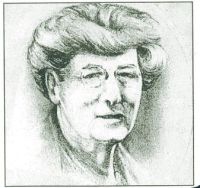 E. M. Hull,
The Sheik: A Novel
E. M. Hull,
The Sheik: A Novel
“ It was Ahmed whom she loved, Ahmed who had waked to such a tardy recognition of the priceless gift that she had given him, Ahmed whom he must wrest from the grim spectre that was hovering near him lest the light that shone in her violet eyes should go out in the blackness of despair. And yet as he looked at her with eyes filled with hopeless misery a demon of suggestion whispered within him, tempting him. He knew his friend as no one else did. What chance of happiness had any woman with a man like Ahmed Ben Hassan, at the mercy of his savage nature and passionate changeable moods? ”
Herbert Strang, Barclay of the Guides
“ As they reached the lines, Ahmed was amazed to see some of the infantry break their ranks and rush up to an English officer distinguished by his very fair hair. They clung to his stirrups, some kissed his hands, others his feet, pressing upon him with such excitement as to cause alarm to some of his fellow-officers."What is it?" asked Ahmed of Sherdil."'Tis that they are pleased to see Hodson Sahib. He was our commander when Lumsden Sahib went over the black water, and we love him. Wah! he is a fighter. See him with the sword: there is no match for him. It is good to see him again." ”
Meadows Taylor,
A Noble Queen: A Romance of Indian History…
“ No one shall see me, if he does not like my face to be uncovered. Abba," she continued to her grandfather, who sat thinking in the doorway, telling his beads, "I am going out for awhile with Ahmed, but I will not delay. I have not been out all the day.""Go, Zóra," he said quietly. "May Alla keep thee! But do not delay long. My heart trembles for thee sometimes when thou art long absent; but Ahmed will be with thee, and I do not fear." ”
Edward Yardley, Once a Week (1862)
“ The prince persuaded Ahmed as easily as he had persuaded Fatanlazee. They both disguised themselves, and, having concealed about their persons as many valuables as they could conveniently carry, they stole out of the palace. They travelled about from country to country for some time until the prince, who was tired of being only an observer, expressed a wish to become an actor in life. “What occupation,” said he to Ahmed, “is most beneficial to mankind?” ”
The Book of the Thousand Nights and a Night… (1886)
“ She learned it was the wife of the chief astrologer to the king. With this information she returned home. Ahmed met her at the door, but was received with a frown, nor could all his caresses obtain a smile or a word; for several hours she continued silent, and in apparent misery; at length she said, "Cease your caresses, unless you are ready to give me a proof that you do really and sincerely love me." "What proof of love," exclaimed poor Ahmed, "can you desire that I will not give?" "Give over cobbling, it is a vile, low trade, and never yields more than ten or twelve dínárs a day. ”
T. W. E. Holdsworth, Campaign of the Indus
“ Ahmed was a brave and intelligent man, had been an officer of rank under the Shah, and, being in possession of the treasure necessary for his purpose, he proclaimed himself king, and was crowned at Candahar "King of the Afghans." Ahmed was of the Suddoozye family, which were but a small tribe; but he was greatly assisted by the powerful Barukzye family, whose friendship he justly valued and made use of to his advantage: of this latter family Hajee Jamel was then the chief. ”
The Arabian Nights Entertainments…
“ When prince Ahmed saw the pavilion, which the fairy called the largest in her treasury, he fancied she had a mind to banter him, and his surprise soon appeared in his countenance; which Perie Banou perceiving, she burst out a laughing. "What! prince," cried she, "do you think I jest with you? You will see that I am in earnest. Noor-Jehaun," said she to her treasurer, taking the tent out of prince Ahmed's hands, "go and set it up, that he may judge whether the sultan his father will think it large enough." ”
Achmed Abdullah,
The Thief of Bagdad — Chapter VII
(1924)
“ The sort of fool who fasts for a whole year—and then breaks his fast with an onion!” Still Ahmed kept as silent as the desert at noon, thinking to himself: “Expect good from the wicked; drain the swallow’s milk; pluck a hog’s wool; cause the sand to yield pomegranates; fix a pump in the middle of the sea; put a male elephant in the nest of a humming-bird—then make the silent talk!” ”
The Blue Fairy Book — The Story of Prince Ahmed and the Fairy Paribanou (1889)
“ When Prince Ahmed came pretty nigh to these rocks he perceived an arrow, which he gathered up, looked earnestly at, and was in the greatest astonishment to find it was the same he shot away. ‘Certainly,’ said he to himself, ‘neither I nor any man living could shoot an arrow so far,’ and, finding it laid flat, not sticking into the ground, he judged that it rebounded against the rock. ”
Herbert Strang, Barclay of the Guides
“ Ahmed departed with his coolie. When they reached the Chandni Chauk it was instantly apparent that something had happened which stirred public excitement. Crowds were pouring towards the palace, Hindus and Mohammedans together, their faces lit with joy. One man jostled the coolie, and his burden was thrown to the ground."Pig of a Purbiya!" cried Ahmed, seizing the man—a Pathan could not overlook such an insult—"what meanest thou to damage thus the goods of thy betters?" ”
 Mrs. Oliphant,
Memoirs and resolutions of Adam Graeme of Mossgray
Mrs. Oliphant,
Memoirs and resolutions of Adam Graeme of Mossgray
“ But Ahmed was not the stuff to make poets of. He was cowed and humbled in his father’s presence—overpowered by a force which he could not understand, and though he grew up a gentle lad—weak folk learn wiles, you know—there was the national policy, the tendency to intrigue and deceit; the defective sense of truth and honour constantly displaying themselves. I could not hedge my Affghan boy about with the higher principles, so much more noble and pure than the natural instincts which yet suit our humanity so well—and I could not give him the savage virtues of his father ”
Penrhyn Wingfield Coussens, The Jade Story Book — Prince Ahmed (1922)
“ Prince Ahmed, who had believed that the sultan his father would be satisfied with so remarkable and useful a tent as the one he had brought, and that he would not impose any new task upon him which might hazard the fairy's displeasure, was thunderstruck at this new request. After a long silence he said, "I beg of your majesty to be assured that there is nothing I would not undertake to procure which may contribute to the prolonging of your life, but I wish it might not be by the means of my wife. ”
The Book of the Thousand Nights and a Night… (1886)
“ An angel from heaven could not have brought more consolation to Ahmed than did the jeweller's wife. He assumed all the dignified solemnity that became his new character, and said, "Woman! I know all thou hast done, and it is fortunate for thee that thou hast come to confess thy sin and beg for mercy before it was too late. Return to thy house; put the ruby under the pillow of the couch on which thy husband sleeps; let it be laid on the side farthest from the door; and be satisfied thy guilt shall never be even suspected." ”
Achmed Abdullah,
The Thief of Bagdad — Chapter VIII
(1924)
“ And he remembered what the tree in the Enchanted Garden had told him: that he would have to consult the Old Man of the Midnight Sea—the Sea of Resignation to Fate. So he traveled on. The valley below him was filled with mist. Above the mist, the sky vaulted tight and steel-blue, clear but for a cloud bank of a sickly, olive-green color that stretched across from North to South; stretched there like a solid obstacle, daring Ahmed to hurdle across and into the unknown. He half turned, looking over his shoulder. There, in back of him, the mountains rose and surged superbly. ”
E. Dixon, Fairy Tales from the Arabian Nights
“ To which she replied: 'He is my husband, brother; his name is Ahmed; he is son to the Sultan of the Indies. The reason why I did not invite you to my wedding was that I was unwilling to divert you from the expedition you were engaged in, and from which I heard with pleasure that you returned victorious; on his account I have taken the liberty now to send for you.'At these words, Schaibar, looking at Prince Ahmed with a favourable eye, which however diminished neither his fierceness nor his savage look, said, 'Is there anything, sister, in which I can serve him? he has only to speak. ”
Achmed Abdullah,
The Thief of Bagdad — Chapter VI
(1924)
“ Laughing gayly, he left the defile of the Hill of Eternal Fire, the Hill of Pride, and walked along steadily until at the beginning of the third moon he fell in with a wise hermit—a hermit, indeed, so wise that, alone in that part of the world, perhaps in all Asia, he knew all about the defects of a horse, the reasoning of a cat, the thundering of clouds, a woman’s deeds, and a man’s future fortunes. He told Ahmed that he was on the right road, but that he would first have to cross the Valley of the Monsters and the Garden of the Enchanted Trees. ”
The Cat and the Mouse: A Book of Persian Fairy Tales
“ Ahmed had never seen anyone so beautiful, and was so lost in wonder, that before he could find words of thanks, the party had passed on.But when the money was spent, Ahmed and his father began to be in want again. A Jewish pedlar having told him how much better trade was in the capital, they determined to set forth to that city, though the way was long and full of danger. "Better to die in the desert, than in the heart of a great city," said Ahmed. ”
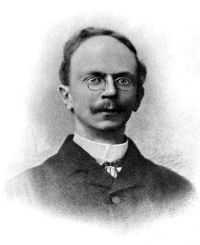 Elias John Wilkinson Gibb,
Encyclopædia Britannica, Ninth Edition
(1888)
Elias John Wilkinson Gibb,
Encyclopædia Britannica, Ninth Edition
(1888)
“ Ahmed was, like his father, a man of great ability, and happily for Turkey he enjoyed the complete confidence of the young sultan, who cared for nothing but the chase, whence he is called in the Ottoman histories Avji Muhammed or Muhammed the Huntsman. Before long Ahmed was called on to lead the Turkish army against Austria. ”
Penrhyn Wingfield Coussens, The Jade Story Book — Prince Ahmed (1922)
“ The grand vizier, anxious to give his king some ease, proposed to send for and consult a sorceress, of whom he had heard many wonders. The sultan consented, and the grand vizier, on her arrival, introduced her into the presence of the ruler. The sultan said to the sorceress, "Canst thou tell me by thy art and skill what is become of Prince Ahmed my son? If he be alive, where is he? What is he doing? ”
The Arabian Nights Entertainments - Complete
“ The sultan of the Indies was so far from thinking that prince Ahmed could be capable of so wicked a design, that he said to them in displeasure, "You are mistaken, my son loves me, and I am the more assured of his tenderness and fidelity, as I have given him no reason to be disgusted." ”
Related terms
Authors who wrote about “Ahmed”
Herbert StrangAchmed AbdullahEdward YardleyCharles John TibbittsEdith Maude HullVictoria CrossGertrude LandaMuḥammad ibn ʻUmar TūnisīPenrhyn Wingfield CoussensAntoine GallandE. DixonA. S. RappoportUnknown Jeremiah CurtinMrs. OliphantMeadows TaylorLewis SpenceElias John Wilkinson Gibb
 L. Frank BaumVarious
Achmed AbdullahEdward YardleyCharles John TibbittsEdith Maude HullVictoria CrossGertrude LandaMuḥammad ibn ʻUmar TūnisīPenrhyn Wingfield CoussensAntoine GallandE. DixonA. S. RappoportUnknownJeremiah CurtinMrs. OliphantMeadows TaylorLewis SpenceElias John Wilkinson GibbL. Frank BaumVarious