“ The beginning of old age in the voluptuary, the implacable work of vice and time, the vain and clumsy artifice to hide the senile grayness, the menace of a sudden death—all these sad, miserable, and tragic things of human life filled the son's heart with profound distress. An immense pity entered into his heart, even for his father. "Blame him? But he suffers, too. All this flesh, which inspires such a strong aversion in me, all this heavy mass of flesh, is inhabited by a soul. What anguish he may have felt, and what weariness! He certainly has a terrible fear of death." ”
Human frailty
Definition and stakes
The theme of “human frailty” has been addressed by authors such as Various, Robert Louis Stevenson, Lady Sarah Davison Nicolas, Evelyn Everett-Green and Frederick Charles Jennings. It is often associated with terms like death, grief, sorrow, disease and suffering.
Quotes about “human frailty”
Various, Graham's Magazine, Vol XXXIII, No…
“ Let us come nearer the heart, and speak of some of those changes by which human affections and individual attachments have been disturbed. Not, however, to quote the instance exactly—that would be to drag up into life the hidden sorrow, and expose to observation the grief which is sanctified for the recesses of the heart, whither in moments of leisure the wounded retire and sit and brood in profitable reflection over the affliction which Providence has allowed. ”
Lady Sarah Davison Nicolas, The cairn (1846)
“ If there are sufferings which, however dreadful in their endurance, are yet susceptible of amelioration, the sorrow which a parent’s loss awakens is not among the number; other ties may be replaced, other affections may be restored, but when death breaks the bond of filial love, nature, honouring the most sacred of her feelings, forbids a sentiment less pure, less strong, succeeding to it; and though the tear which sorrow sheds upon the parent’s grave may be dried by time, the loss which bids that tear to flow can never be replaced by human tenderness or human power. ”
Frederick Charles Jennings, Old Groans and New Songs
“ Let Death have his way. The power and dignity of his Conqueror will not permit Him to hasten. For haste would bespeak anxiety as to the result; and that result is in no sense doubtful. The body of the brother shall even see corruption, and begin to crumble into dust, under the firm and crushing hand of Death. Many a tear shall the sisters shed, and poor human sympathy tell out its helplessness. ”
Evelyn Everett-Green, In the Days of Chivalry: A Tale of the Times of the Black Prince
“ But when the scourge of deadly sickness has passed over the land, the effect has almost always been to slacken this tie; the inherent love of life, natural to human beings, turning to an almost incredible selfishness, and inducing men to abandon their nearest and dearest in the hour of peril, leaving them, if stricken, to die alone, or turning them, sick to death though they might be, away from their doors, to perish untended and without shelter. ”
 Percy Bysshe Shelley,
The Prose Works of Percy Bysshe Shelley…
(1897)
Percy Bysshe Shelley,
The Prose Works of Percy Bysshe Shelley…
(1897)
“ Do not their hearts beat in their bosoms, and the tears gush from their eyes? Are they not human flesh and blood? Yet none weep for them—none mourn for them—none when their coffins are carried to the grave (if indeed the parish furnishes a coffin for all) turn aside and moralize upon the sadness they have left behind. ”
 Romain Rolland,
Jean-Christophe Journey's End
Romain Rolland,
Jean-Christophe Journey's End
“ Oh, the agony, the sorrow! Pains of the wounded body, quivering flesh, rotting away in life. The silent torture of hearts under gnawing grief. Children whom no one loves, poor hopeless girls, women seduced or betrayed, men deceived in their friends, their loves, their faith, the pitiable herd of the unfortunates whom life has broken and forgotten!... Not poverty and sickness were the most frightful things to see, but the cruelty of men one to another. ”
M. L. Weems, The Life of General Francis Marion
“ Who, I say, without grief could behold those sad sights which then offered themselves, of human beings lying mangled over the crimson ground — some stone dead, some still alive and struggling, with brains oozing from their cloven skulls — and others sitting up, or leaning on their elbows, but pale with loss of blood, running in streams from their mortal wounds, and they themselves looking down, the while, sadly thinking of home and of distant wives and children, whom they shall never see again. ”
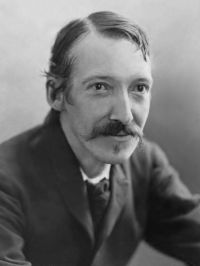 Robert Louis Stevenson,
Virginibus Puerisque and Other Papers
(1881)
Robert Louis Stevenson,
Virginibus Puerisque and Other Papers
(1881)
“ Hope is the boy, a blind, headlong, pleasant fellow, good to chase swallows with the salt; Faith is the grave, experienced, yet smiling man. Hope lives on ignorance; open-eyed Faith is built upon a knowledge of our life, of the tyranny of circumstance and the frailty of human resolution. ”
 Herbert Allen Giles,
Gems of Chinese Literature
(1922)
Herbert Allen Giles,
Gems of Chinese Literature
(1922)
“ They owe no thanks for life, for what have they done to deserve death? They may be alive or dead the family knows it not. And if one brings the news, they listen, half doubting, half believing, while the heart overflows with grief. Sleeping and waking, they seem to see the lost one's form. Sacrifices are made ready and libations poured, with tearful eyes strained towards the far horizon; heaven and earth, nay, the very trees and plants, all seeming to sympathise with their sorrow. ”
 Fanny Kemble,
Records of Later Life
Fanny Kemble,
Records of Later Life
“ Pain, our poor human bodies shrink from; and yet it has been endured, almost as if unfelt, not only in the triumphant death of the mob-hunted martyr, but in the still, lonely, and, by all but God, unseen agony of the poor and humble Christian, in those numerous cases where persecution indeed was not, but the sorrowful trial of the neglect and careless indifference of their fellow-beings, the total absence of all sympathy—a heavy desolation whether in life or death. ”
 Robert Southwell,
St. Peter's Complaint
Robert Southwell,
St. Peter's Complaint
“ The scourge that whips, the salve that cures offence; Sorrow, my bed and home, while life hath sense. Here solitary muses nurse their griefs, In silent loneness burying worldly noise; Attentive to rebukes, deaf to reliefs, Pensive to foster cares, careless of joys; Ruing life's loss under death's dreary roofs, Solemnizing my funeral behoofs. A self-contempt the shroud, my soul the corse. The bier, an humble hope, the hearse-cloth, fear; The mourners, thoughts, in black of deep remorse. ”
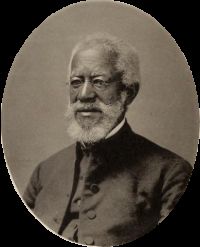 Alexander Crummell,
The Future of Africa — Chapter VI.
(1862)
Alexander Crummell,
The Future of Africa — Chapter VI.
(1862)
“ Do not sorrows press heavily upon their spirits, and woful agonies eat into their hearts? Does not grief furrow their brows, and the cancer eat away their soul? Are there not miseries so brimful and multitudinous that the spirit ofttimes gives way, and the poor victim seeks willingly the sod, saying to corruption, "Thou art my father; and to the worm, thou art my mother and my sister?" Are they not bruised, and wounded, and lacerated, all their life long, by all the divers thrusts of deadly sin? And does not death come here to them, with all its doubt, and desolation, and agony? ”
O. S. Fowler, Tight-lacing or the evils of compressing the organs of animal life…
“ I beseech you remember, that you are not only sowing the seeds of disease and premature death, which will nip all your pleasures in the bud, but which must also yield you a harvest of sorrows too many to number and too aggravated to endure—that you are bringing down not only your own soul with sorrow to an untimely, grave, but, in case you become mothers, your children also with you or before you into their graves. ”
Mary Wollstonecraft Shelley, The Last Man
“ Had I a child, or any tie to bind me to existence, I might descend to this—but, as it is—the world has been to me a harsh step-mother; fain would I leave the abode she seems to grudge, and in the grave forget my pride, my struggles, my despair. The time will soon come; grief and famine have already sapped the foundations of my being; a very short time, and I shall have passed away; unstained by the crime of self-destruction, unstung by the memory of degradation, my spirit will throw aside the miserable coil, and find such recompense as fortitude and resignation may deserve. ”
Mary Christina Miller, A Basket of Barley Loaves
“ Perhaps our sorrow may be of such a nature that we cannot reveal it even to our best-beloved. Our secret grief lies like ice upon our hearts, sending its chilling influences through every member. The hands hang down listlessly and the feeble knees smite together; the aching of the head is only exceeded by the aching of the heart. Yet no one knows the agony that paralyzes our life. Or, sadder still, the heart-friend may be snatched away, and while our hearts are breaking by reason of bereavement, we may have no one left to whom we may turn for comfort in our affliction. ”
author:Metta Victoria Fuller Victor, Poems of Sentiment and Imagination (1851)
“ Does the frail one pass thee by With a bended brow of sadness— Frown not, in that heart now lie Thoughts that scorch the brain to madness. Life is strong, and hearts are frail— In the struggle man may fall ”
Tixall Poetry (1813)
“ And is the image of our frail mortality for ever present with you, to throw a damp on your gayest hours, and poison even those joys which love inspires? Consider rather, that if life be frail, if youth be transitory, we should well employ the present moment, and lose no part of so perishable an existence. ”
 Emma Lazarus,
The Poems of Emma Lazarus, Volume 2
Emma Lazarus,
The Poems of Emma Lazarus, Volume 2
“ What secret misery was thine, Which set a bar 'twixt thee and me? Alas, I suffer from it still; What was this grief, this unknown ill, Which I have wept so bitterly? POET. 'T was but a common grief, well known of men. But, look you, when our heavy heart is sore, Fond wretches that we are! we fancy then That sorrow never has been felt before. MUSE. There cannot be a common grief, Save that of common souls; my friend, Speak out, and give thy heart relief, Of this grim secret make an end. Confide in me, and have no fear. The God of silence, pale, austere, Is younger brother unto death. ”
 Ann S. Stephens,
Fashion and Famine
Ann S. Stephens,
Fashion and Famine
“ How mournful would be the history of these pages, could I write of that solemn under-current of grief that has swept through my heart, while each word has fallen, as it were, mechanically from my pen. I have written in a dream; my mind has been at work while my soul dwelt wholly with another. Between every sentence fear, and grief, and keen anxiety have broken up, known only to myself, and leaving no imprint on the page which my hand was tracing. My brother, my noble young brother, so good, so strong, once so full of hopeful life! ”
 Robert Dodsley,
A Select Collection of Old English Plays…
Robert Dodsley,
A Select Collection of Old English Plays…
“ If it may mitigate that killing grief, Which your so solitary life too much Has nourish'd in you. Cousin, feed it not: 'Tis a disease that will in time consume you. I have already given the best advice, That my poor knowledge will afford, to ease Your troubled thoughts. If time, which Heaven allows To cure all griefs, should not have power to do it: If death of father, mother, husband, wife, Should be lamented still, the world would wear Nothing but black: sorrow alone would reign In every family that lives, and bring [Pg 69] Upon poor mortals a perpetual night. ”
 Dora Sigerson Shorter,
The Suicide's Grave
(1907)
Dora Sigerson Shorter,
The Suicide's Grave
(1907)
“ A shot, a cry, a struggle, and a fainting woman's kiss; Life's blood let 'mid the grasses—and all a world was lost, And no one may ever know how he paid the cost. He is lost in the crowd of the dead, in the night-time of death, A name on a stone left to tell that he ever drew breath. So desperate body die there, with your soul's long release, And, unhappy spirit, God grant you Eternity's peace! ”
 Eugène Sue,
The Mysteries of Paris, illustrated with etchings…
Eugène Sue,
The Mysteries of Paris, illustrated with etchings…
“ What gnawing grief, what hidden sorrows have you not been called upon to endure, from the death of your mother to the birth of your child! Who would ever believe such ills could reach one so envied, so admired, and so calculated to enjoy and impart happiness to others?""Oh, my lord, there are some sorrows so deep, so unapproachable, that for worlds we would not even have them suspected; and the severest increase of suffering would arise from the very doubt of our being the enviable creatures we are believed to be." ”
 Lillian Eichler,
Book of Etiquette, Volume 1, Part 1…
(1921)
Lillian Eichler,
Book of Etiquette, Volume 1, Part 1…
(1921)
“ And so, death brings with it sorrow and misery. Those of us who are most directly concerned can think of no rules of etiquette, no customs of good society, when we are suffering a deep bereavement. We think only of our great loss, and of our great sorrow. ”
 James George Frazer,
The Belief in Immortality and the Worship of the Dead…
James George Frazer,
The Belief in Immortality and the Worship of the Dead…
“ We naturally ask, What motive have these savages for inflicting all this voluntary and, as it seems to us, wholly superfluous suffering on themselves? It can hardly be that these wounds and burns are merely a natural and unfeigned expression of grief. We have seen that by experienced observers such extravagant demonstrations of sorrow are set down rather to fear than to affection. ”
“ Then, also, the tears caused by this suffering flow abundantly, and without any trouble; the soul is disposed to the most touching emotions of pity, or is full of commiseration and of love; in a word, all misfortunes are the cherished and respected sisters of our misfortune. On the contrary, if you suffer for an unworthy cause, your heart is drowned in hatred; your concentrated grief resembles dumb fury which shame bridles with a sharp bit that vanity conceals; envy and hatred gnaw you, but your eyes are dry, and the unhappiness of others can alone draw from you a sad and mournful smile. ”
 William Morris,
The Water of the Wondrous Isles
William Morris,
The Water of the Wondrous Isles
“ She was silent a while, and then she said: Meanwhile of thy coming, and I see thee not at all for many days, how will it be with my grief then? Quoth he: More than enough of grief no soul may bear; for either death comes, or else some dullness of the pain, and then by little and little the pain weareth. Then she said: And how would it be if thou come not back and I see thee never again, or if when thou come back thou find me not, for that I be either dead or gone away out of thy reach? ”
 John S. C. Abbott,
The Child at Home: The Principles of Filial Duty…
John S. C. Abbott,
The Child at Home: The Principles of Filial Duty…
“ But the hour for them to die must come. You may weep as though your heart would break, but it will not recall the past, and it will not delay their death. They must die; and you will probably gaze upon their cold and lifeless countenances in the coffin. You will follow them to the grave, and see them buried for ever from your sight. Oh, how unhappy you will feel, if you then have to reflect upon your misconduct! The tears you will shed over their graves will be the more bitter, because you will feel that, perhaps, your own misconduct hastened their death. ”
 Dinah Maria Mulock Craik,
Mistress and Maid: A Household Story
Dinah Maria Mulock Craik,
Mistress and Maid: A Household Story
“ It is difficult to understand how a family can possibly hear such a sorrow, did we not know that many have had to bear it, and have borne it, with all its load of agonizing suspense, slowly dying hope,"The hope that keeps alive despair," settling down into a permanent grief, compared to which the grief for loss by death is light and endurable. ”
Abigail Stanley Hanna, Withered Leaves from Memory's Garland
“ But when will the sons of men learn to think? with all the blight of death around, cutting one down upon the right hand and another upon the left, the thoughtless crowd pass on, little seeming to heed their own mortality. They look into the open grave, or watch the passing funeral perhaps with a momentary sadness, and turns lightly again to the active concerns of life, mingling in its gaities and dissipation, dancing on to the very whirlpool that is soon to engulf their frail bark, and bear it away where hope can never come. ”
Various, Notes and Queries, Number 45, September 7…
“ If it be otherwise, if we are not all frail as thou sayest, then let my brother die, unless he be but in the same case as others; if he alone possess and follow thee in that particular frailty to which thou has half confessed. ”
 James Montgomery,
The Joy of Grief
James Montgomery,
The Joy of Grief
“ When you woke to pangs unknown, How unwelcome was the morrow, For it rose on you alone! Sunk in self-consuming anguish, Can the poor heart always ache? No! the tortured nerve will languish, Or the strings of life must break. ”
Various, Stories Worth Rereading
“ Only a few weeks after I had followed my father to his resting-place in the silent grave, my brother was brought home with delirium tremens again, and, after suffering for a short time the most terrible agony, the poor boy died, and was laid in a drunkard's grave. O my God! why was I ever born? Why cannot I die, too? But what will my eternity be for having thus ruined my own brother, the bright and beautiful boy? ”
James De Mille, Cord and Creese
“ Unutterable grief dwelt upon her sweet young face, which also was pale and wan from the sickness through which she had passed. An awful feeling shot through me. My first question was, “Is your mother on shore?” She looked at me for a moment in solemn silence, and, slowly raising her hand, pointed upward. “Your brother?” I gasped. She turned her head away. I was silent. They were dead, then. O God! and this child—what had she not been suffering? My mind at once, in its agony of sympathy with her, burst through the clouds which sickness had thrown around it. “Poor child!” I said. ”


