Summary

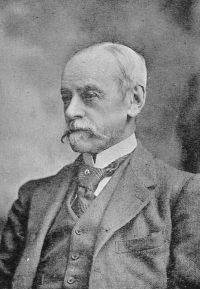
Portrait of Lewin Bentham Bowring Lewin Bentham Bowring Haidar Alí — Chapter 2 : Haidar rises into notice–Contest for supremacy in Southern India…

Saádat Ullah Khan ruled with success from 1710 to 1732, but, having no son, left the masnad to his nephew Dost Alí Khán, who invaded Mysore, but was disgracefully defeated by the troops of Rájá Chikka Krishnaráj. It was during the rule of this Nawáb that his son-in-law, Hussén Dost Khán, better known as Chandá Sáhib, acquired by fraud the territory of Trichinopoli, and subsequently sided with the French against the English.
Source: Wikisource

Portrait of Lewin Bentham Bowring Lewin Bentham Bowring Haidar Alí — Chapter 2 : Haidar rises into notice–Contest for supremacy in Southern India…

In the same year that witnessed the withdrawal of the Mysore troops from their abortive expedition, that is in 1755, Haidar was appointed Fáujdár or military governor of Dindigal, now in the Madura district of Madras, a stronghold which the Mysore State had acquired ten years previously. Here he established an arsenal under the superintendence of French artificers whose services he obtained from Pondicherry. He also augmented the numbers of his troops, and accumulated considerable wealth by plundering the chiefs in the neighbourhood.
Source: Wikisource

Portrait of Lewin Bentham Bowring Lewin Bentham Bowring Haidar Alí — Chapter 2 : Haidar rises into notice–Contest for supremacy in Southern India…

In the short campaign which followed Násir was treacherously killed by the Kadapa Nawáb, while Muzaffar Jang was installed as Nizám by the French, and Muhammad Alí fled precipitately to Trichinopoli. The Mysore troops on this occasion bore themselves bravely. Haidar, with the mercenary instinct of a freebooter, took advantage of the confusion to seize, with the aid of his Bedar followers, a large amount of the late Nizám's treasure, with which he retreated to Mysore.
Source: Wikisource

Get perspective with Kwize: daily news enlightened by great literature