Summary

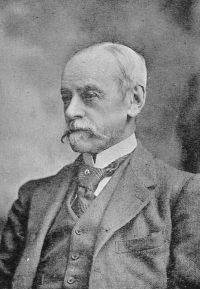
Portrait of Lewin Bentham Bowring Lewin Bentham Bowring Haidar Alí — Chapter 4 : Haidar assumes the Control of affairs–Conquest of Bednúr…

On the departure of Basálat Jang, after the occupation of Sírá, Haidar Alí turned his attention to the reduction of the Pálegárs of Chikka Ballapúr, Raidrúg, Harpanhalli, and Chitaldrúg, all of whom were compelled to submit to his authority and to pay tribute. While Haidar was encamped near Chitaldrúg, his assistance was solicited to replace on the masnad an individual who gave himself out to be the legitimate Rájá of Bednúr, a chiefdom in the Malnád, a hill country to the westward, and better known as the territory of the Náyaks of Kiladi.
Source: Wikisource

Portrait of Lewin Bentham Bowring Lewin Bentham Bowring Haidar Alí — Chapter 4 : Haidar assumes the Control of affairs–Conquest of Bednúr…

The young Rájá Chikka Krishnaráj of Mysore had long smarted under the thraldom of his Mayor of the Palace, Nanjráj, and it occurred to the dowager queen that advantage might be taken of the ascendancy over the troops which Haidar had acquired to get rid of the obnoxious minister. This was successfully achieved with the aid of Khande Ráo, but the effect was to exchange King Log for King Stork, for Haidar, having practically command of the army and of the revenue of nearly half the kingdom, kept the Rájá in the same state of dependence as before.
Source: Wikisource

Portrait of Lewin Bentham Bowring Lewin Bentham Bowring Haidar Alí — Chapter 4 : Haidar assumes the Control of affairs–Conquest of Bednúr…

The money was paid, but the territory mentioned was never surrendered, while Haidar, relieved from the pressure which had been put upon him, proceeded to encounter Khande Ráo at Nanjangúd, twenty-seven miles south of Seringapatam. He was, however, defeated. Haidar then adopted the singular course of throwing himself as a suppliant at the feet of Nanjráj, the late Minister, who, completely deceived by his professions of fidelity, was weak enough to put him in command of a respectable body of troops, and to give him the title of Dalwái, or commander-in-chief.
Source: Wikisource

Get perspective with Kwize: daily news enlightened by great literature