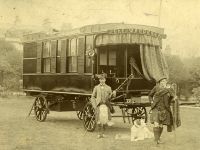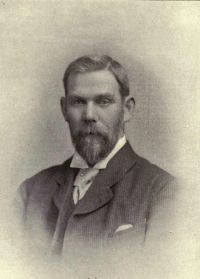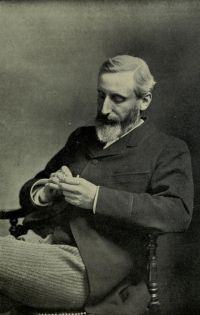
“ A FLIGHT OF QUAILS. It is one of the wonders and delights of the moorland that here alone Nature pays the first call, instead of demurely waiting to be called upon. Near great towns she is coy; and even in the fields that abut on villages, she shows but a few familiar aspects; while aloof on the open heath she reveals herself unreservedly, like a beautiful woman to her chosen lover. She exhibits all her moods and bares all her secrets. ”
Moorland
Definition and stakes
Moorland refers to an upland habitat marked by acidic soils and sparse vegetation, including both highland regions and wetlands. This landscape, present in Europe, Africa, and South America, sustains distinctive ecosystems and species such as the Exmoor Pony.
In literature, moorland has frequently symbolized wildness and isolation, as seen in Grant Allen’s poetic admiration for its unspoiled beauty or John Buchan’s portrayal of its harsh solitude. Writers from the Romantic period to contemporary authors have utilized its stark, evocative scenery to shape stories of desolation, exploration, and enduring natural majesty, highlighting both its ecological uniqueness and cultural significance.
Quotes about “moorland”
G. Basil Barham, Legend Land, Vol. 1
“ The glorious moorland, rugged and wild, stretches all about them—a wonderful walking country, where one may escape from all cares and wander for hours amid the bracken and sweet-smelling grasses and find strange prehistoric remains seldom visited by any but the moorland sheep and the wild birds. ”
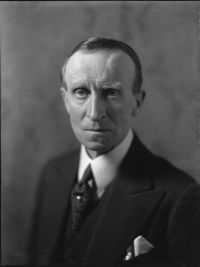
John Buchan,
The Thirty-Nine Steps — Chapter Three…
“ Over a long ridge of moorland I took my road, skirting the side of a high hill which the herd had called Cairnsmore of Fleet. Nestling curlews and plovers were crying everywhere and the links of green pasture by the streams were dotted with young lambs. All the slackness of the past months was slipping from my bones and I stepped out like a four-year-old. By and by I came to a swell of moorland which dipped to the vale of a little river, and a mile away in the heather I saw the smoke of a train. The station, when I reached it, proved to be ideal for my purpose. ”
“ Above the garden, the wild moorland rose steeply up, marked with wandering sheep tracts. From the back of the house, a little flower garden sloped away to the edge of a rocky back. The moorland stream rushed wildly along its narrow channel, a few yards below; and, viewed from the garden wall, at the edge of the bank, it was a weird bit of stream scenery. The water rushed and roared here; there it played a thousand pranks; and there, again, it was full of graceful eddies; gliding away at last over the smooth lip of a worn rock, a few yards lower down. ”
Mabel Quiller-Couch, The Carroll Girls
“ In the beautiful evening light of the summer's day there lay before them an immense stretch of wild and rugged moorland, sloping down on either side till it met a winding silver streak at the bottom of the valley, and rolling upwards, away and away, rising and dipping, with every here and there rough boulders and tors, single or in groups, standing upon its brown bosom like rocks out of a brown sea, until in the distance high rock-crowned hills bounded and closed it in. ”
Gordon Home, Yorkshire—Coast and Moorland Scenes
“ Away to the north the road crosses the desolate country like a pale-green ribbon. It passes over Lockton High Moor, climbs to 700 feet at Tom Cross Rigg, and then disappears into the valley of Eller Beck, on Goathland Moor, coming into view again as it climbs steadily up to Sleights Moor, nearly 1,000 feet above the sea. An enormous stretch of moorland spreads itself out towards the west. ”
Francis A. Knight, In the West Country
“ It is moorland air that has draped the trees with shaggy lichens, adding centuries of age to oaks yet hardly in their prime, and lending to the sturdy fruit bushes of the borders the air of hoary patriarchs. Furze bushes, in whose thorny depths the yellow-hammers build in springtime, and willow-warblers weave their domes of grass, flourish in the garden precincts. And all the banks are overgrown with a green jungle of fern and broom and bilberry—children of the moorland, stealing down to regain their lost dominions. ”
G. Basil Barham, Legend Land, Vol. 2
“ THE HOOTING CARN One of the grimmest yet most fascinating tracts of moorland in the West is that wild, boulder-strewn district behind St. Just in Penwith, near the Land's End. Here, amid a scene of savage beauty, wind-swept by the great gales from the Atlantic, is a stretch of treeless moor the richest in all Cornwall in remains of prehistoric man. ”
“ It must be confessed that the rarest beauty of the moorland belongs to its fringes, around what may be called the gateways of the moor; in the interior there is the charm of broad expanse, the glorious colour of heather, ling, and gorse, and occasionally a grand desolation of mist and tempest that may almost strike dismay. A guidebook writer has spoken of Dartmoor as "the quintessence of unlovely dreariness"; and perhaps there is some justification for his words in the immediate neighbourhood of Princetown, the solitary town of the moorland proper. ”
“ But, oh! how beautiful they are! how much more beautiful than the dendrobiums and cattleyas, the flowering spiders and blossoming lizards of the rich man’s hothouse! How proudly they raise their tall spikes of pale bloom, true sultanas of the moorland! how daintily they woo the big burly bumble bees! how gracefully they bend their nodding heads before the bold south-west that careers across the country! They seem to me always such great regal flowers, yet simple with the simplicity of the untrodden upland.Take a spike and look at it close ”
“ Each bark is an eager impatient snap, and its burden is—“Rabbits!” Now, I sympathize with every living thing that breathes; yet if it were not for a constitutional objection to unnecessary vigour of language, I could almost back Fan, and echo the Great Poet’s indignant exclamation. For whatever we try to plant among the heather, by way of beautifying our small patch of moorland (as who should paint the lily or gild refined gold) , those unscrupulous rodents immediately proceed to treat as their private property. Not one of our white brooms has survived their attacks ”
S. Baring-Gould, A Book of Dartmoor
“ Others, again, as Lustleigh, Bridford, Moreton, Buckland-in-the-Moor, Ilsington, and Ugborough, must surely have been moorland settlements at one time, and Okehampton itself is as distinctly a moor town as is Moreton, which tells its own tale in its name. But all these have their warm envelope of arable land, groves and woods, farms and hamlets. Such have their commons, over which every householder has a right to send cattle, to take turf and stone, and, alas! with the connivance of the other householders, to inclose. ”
Francis A. Knight, In the West Country
“ These "rhines," as they are called in the West Country, take the place of hedge-rows, and serve also to drain away into the sluggish moorland stream the water which in rainy seasons would collect on the low ground. Turf Moor is a strange looking country, with its interminable stacks of black peat, its great hollows from which turf has been taken, its miles of straight-cut dykes by which the water is drained away into the rivers. ”
Philip Ashworth, Philip Lake and Charles Atkinson, 1911 Encyclopædia Britannica (1911)
“ Long stretches of ground are covered by moors, and there turf-cutting forms the principal occupation of the inhabitants. The greatest extent of moorland is found in the westernmost parts of the plain, in Oldenburg and East Frisia. ”
Gordon Stables,
Kenneth McAlpine: A Tale of Mountain…
“ Then the heather which covers the large sweeps of moorland that you see here and there is very sturdy and strong, while from the furze or whins boats’ masts could be made.“The creatures, too, that one sees while walking through this forest, seem birds and beasts of some bygone time, and look as if they hardly, if ever, saw a human being from one year’s end to the other.“The hares or rabbits, instead of scurrying away at your approach, sit leisurely on one end while they wash their faces and study you. ”
“ In their earliest walks, the five little girls with their one brother—all of them under seven years—directed their steps towards the wild moors above their home rather than into the village. Over a century has passed, and practically no change has come to the moorland side of the house, so that we can imagine the precocious toddling children going hand-in-hand over the grass-lands towards the moors beyond, as though we had travelled back over the intervening years. ”
Memorials of old Durham (1910)
“ Moor, fell, common, are well-known terms. Anglo-Saxon mor is waste-land, a moor, a heath; Danish mor is a moor, or morass; we have Killhope, Burnhope, and Wellhope Moors. Fell is Old Norse. All the Weardale moorlands are called fells. Chapel Fell is 2,294 feet above sea-level; A common is a tract of unenclosed pasture or outside land on which the tenantry of the inlands have a common right, or right of common for their sheep. ”
Portal:The Folk-Lore Society, Folk-Lore (1896)
“ Some peculiarities, on the other hand, may really denote an intermixture of races, as I am much inclined to think is the case with the delicate features and pointed chins of the potters, the dark complexions of the Needwood Forest men, and possibly the long limbs and handsome faces of the Moorlanders. One very curious settlement we have, locally reputed to be a separate race, the "Biddle Muir" men. Biddulph Moor is situated in the north-western extremity of the county, bordering on Cheshire. ”
Charles Dixon,
Among the Birds in Northern Shires
“ Roughly speaking, each description of moorland ground has its own peculiar birds. Some species there are, it is true, that distribute themselves more or less universally throughout the moorlands, but others are confined to well-defined limits. ”
William T. Palmer, In Lakeland Dells and Fells
“ I know this moor well; for several years I have watched the seasons pass over its face281 of spreading bracken and stiff, erect heather; otherwise I might be impatient.‘It’s a bit noisy for t’ birds here,’ is an apology hazarded by the old man; ‘a good many sheep have been driven across there this last week.’ ('Across there,’ indicated by a sweep of his arm, is a moorland road, lonesome-looking enough to-day.) A gun is discharged at the far end of our line—I cannot see exactly by whom, as we are in a slight fold of the moor, then quite a small volley. ”
“ Ancient camps are not common on the actual moorland, but we find them here at the fringe: those Bronze Age moormen appear to have been peaceable among themselves, and only to have raised entrenchments against external enemies. ”
Gordon Home, Yorkshire—Coast and Moorland Scenes
“ The Early British inhabitants were more inclined to the hill-tops than the hollows, if the innumerable indications of their settlements be any guide, and there is every reason for believing that many of the hollows in the folds of the heathery moorlands were rarely visited by man. Thus, the suggestion has been made that a few of the last representatives of now extinct monsters may have survived in these wild retreats, for how otherwise do we find persistent stories in these parts of Yorkshire, handed down we cannot tell how many centuries, of strange creatures described as 'worms'? ”
John Buchan,
The Thirty-Nine Steps
“ I had a fine prospect of the whole ring of moorland. I saw the car speed away with two occupants, and a man on a hill pony riding east. I judged they were looking for me, and I wished them joy of their quest. ”
Archibald Geikie,
Landscape in History, and Other Essays
“ From time immemorial, these strips of more sheltered and cultivable ground, lying much below the general level of the moorlands, have been to a large extent cut off from each other by high tracts of fell and peat-moss. Each of them took its name from the stream which, rising far up among the moors, and gathering tributary rivulets from glens on either side, winds down the strip of haugh along the valley-bottom. For generations past the people have looked on their native stream with an affectionate regard. ”
Gordon Home, The Evolution of an English Town
“ One can wander, too, on the moors a few miles to the north and see heather stretching away to the most distant horizon and feel that there, also, are scenes which have been identically the same for many centuries. The men of the Neolithic and Bronze Ages may have swept their eyes over landscapes so similar that they would find the moorlands quite as they knew them, although they would miss the dense forests of the valleys and the lower levels. ”
Charles Dixon,
Among the Birds in Northern Shires
“ From the moorlands to the mountains and lochs is in many localities a transition of an almost imperceptible character. In not a few cases the moors terminate in mountain summits beyond the borderland, where the two species of heather cease to climb, or the most sturdy and tenacious ling that clothes the hillsides for still another thousand feet or more. ”
Charles Dixon,
Among the Birds in Northern Shires
“ Then, again, these moors are inhabited by two very distinct avifaunæ—a limited one which is practically sedentary, and a more extensive one composed entirely of migratory species. As might naturally be expected, the birds that can exist upon these bleak storm-swept moorlands during winter are extremely few; possibly we might reduce the number to a single species, and even this is occasionally partially driven from its heathy haunts by the inclemency of the northern winter. ”
Portal:The Folk-Lore Society, Folk-Lore (1896)
“ To the north, the ground, broken by hills and river-valleys, yet gradually rises to the Moorlands, a bleak, bare, stone-walled country, abutting on the Derbyshire moors. The hills on the south-west do not attain so great a height, and they are not bleak, but black; for here, around Wolverhampton, is the seat of the South Staffordshire iron trade. ”
Anthony Trollope,
The Belton Estate
“ But the Quantock hills are very lovely, with their rich valleys lying close among them, and their outlying moorlands running off towards Dulverton and the borders of Devonshire,—moorlands which are not flat, like Salisbury Plain, but are broken into ravines and deep watercourses and rugged dells hither and thither; where old oaks are standing, in which life seems to have, dwindled down to the last spark ”
Gordon Home, Yorkshire—Coast and Moorland Scenes
“ We are sufficiently high to look right across Fylingdales Moor to the sea beyond, a soft haze of pearly blue over the hard, rugged outline of the ling. Away towards the north, too, the landscape for many miles is limited only by the same horizon of sea, so that we seem to be looking at a section of a very large scale contour map of England. Below us on the western side runs the Mirk Esk, draining the heights upon which we stand as well as Egton High Moor and Wheeldale Moor. The confluence with the Esk at Grosmont is lost in a haze of smoke and a confusion of roofs and railway-lines ”
“ But the devil is now the heir-general and residuary legatee of all heathen gods deceased, be they late or early; he has come into titular ownership of their entire property. A steep path leads zigzag down the side of the escarpment into the bowl-shaped hollow; at its bottom a tiny stream oozes out in a spring as limpid as Bandusia. Water lies in the rock, indeed, at about two hundred and fifty feet below the surface of the moor, to which depth we have, accordingly, to sink our wells on the hilltop ”
Gordon Home, Yorkshire—Coast and Moorland Scenes
“ We will go up the steep road to the top of Sleights Moor. It is a long stiff climb of nearly 900 feet, but the view is one of the very finest in this country, where wide expanses soon become commonplace. ”
Sheridan Le Fanu,
Laura Silver Bell
(1872)
“ In the five Northumbrian counties you will scarcely find so bleak, ugly, and yet, in a savage way, so picturesque a moor as Dardale Moss. The moor itself spreads north, south, east, and west, a great undulating sea of black peat and heath.What we may term its shores are wooded wildly with birch, hazel, and dwarf-oak. No towering mountains surround it, but here and there you have a rocky knoll rising among the trees, and many a wooded promontory of the same pretty, because utterly wild, forest, running out into its dark level. ”
George Borrow,
Wild Wales: The People, Language…
“ In about an hour I came to a wild moor; the moor extended for miles and miles. It was bounded on the east and south by immense hills and moels. On I walked at a round pace, the sun scorching me sore, along a dusty, hilly road, now up, now down. Nothing could be conceived more cheerless than the scenery around. The ground on each side of the road was mossy and rushy—no houses—instead of them were peat stacks, here and there, standing in their blackness. Nothing living to be seen except a few miserable sheep picking the wretched herbage, or lying panting on the shady side of the peat clumps. ”