“ All our foliage alike is, strictly speaking, annual, and all alike deciduous; but while oaks and beeches shed their dead leaves in our climate in autumn, pines, firs, and hollies retain theirs on the tree till the succeeding spring, and then let them drop quietly off, unperceived amid the pale glory of the fresh green foliage. The larch is a well-known example of a conifer which behaves in this respect like the oak or the birch; while its ally, the spruce-fir, keeps on the dead or dying leaves through the winter months, and then shuffles them off unobtrusively as the new foliage develops. ”
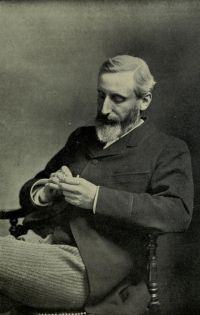
Grant Allen
Summary
Grant Allen’s Moorland Idylls is a reflective examination of England’s upland landscapes, merging natural observation with poetic contemplation. Through vivid depictions of heather, ponds, and the endurance of plant and animal life—such as the thrush, lizard, and resilient vegetation—the text explores the delicate equilibrium of life in challenging environments.
Allen’s essays, abundant in botanical and ecological insight, emphasize the recurring trials and quiet tenacity of nature, from the stillness of winter to the tentative emergence of spring. The work highlights the interdependence of all living beings, portraying the moor not as a barren wasteland but as a lively, evolving ecosystem where survival and regeneration are forever intertwined.
Quotes from Moorland Idylls (Grant Allen)
“ When winter blows cold, the leaves die down—the plant, as it were, retires underground into its bulb, like the caterpillar into the cocoon, and there remains, formless and organless, a mere pupa-like potentiality of future buds and blossoms. But when warm weather recurs, the bulb once more begins to germinate: it takes fresh form as a vigorous flower-head. Observe, too, that the flowering stem, like the winged stage of the insect, is the sexual epoch of the plant, an avatar told off, as the butterfly by the caterpillar, to produce the seeds which are the eggs of the species. ”
“ Perhaps, too, some part of the charm in the night-jar and his kind may be due to the sense that here at least we stand face to face with a genuine relic of the older, the wilder, and the freer England. He is a bird of the night, of the heather and the bracken, of the unbroken waste, of the unpeopled solitude. When man invades his high home, he moves afield before the intruder. Here on the great moors we hear him nightly in summer; but only when no other sound assails the ear, save the boom of the cockchafer, and the myriad hum of the flies and moths of dusk among the heather. ”
