“ The cause of my relapse is a mental one. I have done a great wrong to two people, a very great wrong, and it is too late to right it. No, I am not delirious.” She smiled up into his troubled, anxious face and her eyes were clear, even though unusually bright. ”
Relapse
Definition and stakes
Relapse, defined as the recurrence of a condition following a period of remission, is a multifaceted phenomenon examined in medicine, psychiatry, and literature. Authors such as Grace May North portray it as a psychological battle, while Horace B. Day emphasizes the danger of increased susceptibility after abstinence.
Mary Baker G. Eddy connects it to metaphysical concepts, underscoring the importance of inner determination. These viewpoints highlight relapse as a complex interaction of biological, emotional, and environmental influences, demonstrating its ongoing difficulty in both physical and spiritual contexts.
Quotes about “relapse”
Horace B. Day, The Opium Habit
“ Indeed, with some temperaments, the greatest danger of a relapse comes in, not during the process of abandonment, but after the habit has been broken. Great bodily pain serves only to rouse up some natures to a more earnest strife, and, as their sufferings become more intense, the determination not to yield gains an unnatural strength. The mind is vindicating itself as the master of the body. ”
 Mary Baker G. Eddy,
Science and Health with Key to the Scriptures
(1898)
Mary Baker G. Eddy,
Science and Health with Key to the Scriptures
(1898)
“ A relapse cannot in reality come from other minds, for there is but one Mind. It may come from yourself, because you are not bringing out, in your deeds, the divine Principle of metaphysics, but departing from its rules. To succeed in healing, you must conquer your own beliefs and fears, as well as those of your patients, and you must rise daily into higher and holier consciousness. ”
 Sheridan Le Fanu,
The Vision of Tom Chuff
(1870)
Sheridan Le Fanu,
The Vision of Tom Chuff
(1870)
“ But in a little time came a relapse, and another repentance, and then a relapse again, and gradually the return of old habits and the flooding in of all his old way of life, with more violence and gloom, in proportion as the man was alarmed and exasperated by the remembrance of his despised, but terrible, warning. ”
 John Donne,
Devotions Upon Emergent Occasions…
John Donne,
Devotions Upon Emergent Occasions…
“ It is not in man's body, as it is in the city, that when the bell hath rung, to cover your fire, and rake up the embers, you may lie down and sleep without fear. Though you have by physic and diet raked up the embers of your disease, still there is a fear of a relapse ”
James Vance May, Mental diseases: a public health problem
“ As a second sub group, the agitated form, we bring together those cases in which the disease begins with an excitement and then immediately or after more or less frequent remissions and relapse passes into the terminal stage. ”
Various, Popular Science Monthly (1884)
“ For the chief danger of a relapse is not the attractiveness of intoxication, but the misery of the after-effect, the depressing reaction that follows upon the abnormal excitement, and for several weeks seems daily to gain strength against the reformatory resolves of the penitent. ”
 Abby Morton Diaz,
The William Henry Letters
Abby Morton Diaz,
The William Henry Letters
“ A relapse is to get sick when you’re getting well; and, if I should get sick again, O what should I do! for I want to go out-doors. If they’d only let me go out, I’d saw wood all day, or anything. There isn’t much fun in being sick, I tell you, Dorry; but getting well, O, that’s the thing! I tell you getting well’s jolly! I have very good things sent to me about every day, and when I want to make molasses candy my grandmother says yes every time, if she isn’t frying anything in the spider herself ”
 Robert Bellarmine,
Sermons from the Latins
(1902)
Robert Bellarmine,
Sermons from the Latins
(1902)
“ Go," said Christ to the adulterous woman, " go and sin no more lest something worse befall thee." The higher up one stands, the greater his fall if he stumble, and a relapse is always worse than the original illness. ”
Mary Baker G. Eddy,
Science and Health with Key to the Scriptures
(1898)
“ Your true course is to destroy the foe, and leave the field to God, Life, Truth, and Love, remembering that God and His ideas alone are real and lasting. If, from any cause, your patient suffers a relapse, meet the cause mentally and courageously, knowing that there Relapse. can be no reaction in Truth. ”
 Friedrich Schiller,
Aesthetical and philosophical essays
(1899)
Friedrich Schiller,
Aesthetical and philosophical essays
(1899)
“ And yet it is perhaps an advantage for you that I have been torn from you exactly at this time. You have to endure a malady, from which you can only perfectly recover by your own energy, so as not to suffer a relapse. ”
 Joseph Cottle,
Reminiscences of Samuel Taylor Coleridge and Robert Southey
Joseph Cottle,
Reminiscences of Samuel Taylor Coleridge and Robert Southey
“ To what then was the relapse owing? I believe to this cause—that no use was made of renewed health and spirits; that time passed on in idleness, till the lapse of time brought with it a sense of neglected duties, and then relief was again sought for a self-accusing mind;—in bodily feelings, which when the stimulus ceased to act, added only to the load of self-accusation. This Cottle, is an insanity which none but the soul's physician can cure. ”
“ In the same way only a slight occasion is necessary apparently to dispel clouds that hang over a person in the milder attacks of depression, because, for some time before, relief has been preparing itself and a livelier phase of existence has been gradually coming on. Relief can be promised with absolute assurance, but freedom from relapse cannot be assured and the only true source of consolation that is helpful is the frank recognition of the fact that these are successive phases of existence quite as likely to be periodic as certain physical facts in life. ”
 Thomas De Quincey,
Narrative and Miscellaneous Papers…
Thomas De Quincey,
Narrative and Miscellaneous Papers…
“ It may be safely asserted, that few, indeed, are the suicides amongst us to which the miseries of indigestion have not been a large concurring cause; and even where nothing so dreadful as that occurs, always these miseries are the chief hinderance of the self-reforming drunkard, and the commonest cause of his relapse. ”
John Donne,
Devotions Upon Emergent Occasions…
“ And amongst the many weights that aggravate a relapse, this also is one, that a relapse proceeds with a more violent dispatch, and more irremediably, because it finds the country weakened, and depopulated before. ”
M. Allen, Essay on the Classification of the Insane
“ The most obvious remark suggested by this case is, that, like many old cases, when once an irritable habit is established in any part of the mind, how easily the mere association of old existing causes will overturn the balance and introduce a relapse into the same state: no exciting causes can have more power to do this, than the constant painful state of mind which ill-assorted and unhappy marriages produce ”
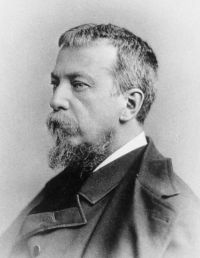 S. Weir Mitchell,
Fat and Blood
S. Weir Mitchell,
Fat and Blood
“ The physician who discharges his patient when she rises from her bed after her two or three months' treatment, or who neglects to consider the moral and mental needs and aspects of each case, will find that many will relapse. ”
“ It has been found that after the dominant idea in the subconsciousness has been found and neutralized with a consequent amelioration of the psycho-neurotic symptoms, there may be a relapse, when another dominant idea will have to be found, and that there seems to be the possibility, in some cases at least, of an almost endless succession of such ideas to account for further and further relapses. ”
“ In a number of the patients who are operated upon for this condition there is a relapse of symptoms, and there seems to be no doubt but that whatever good is accomplished comes from the expectation of relief followed by the weeks of rest and quiet in bed and very often the gain in weight which succeeds the operation. ”
Worthington Hooker, Physician and patient (1849)
“ This remark is equally applicable to diet, drink, and exercise. As patients become convalescent they are very apt to suppose that the rules prescribed for them may be disregarded, and the consequence, but too often, is a relapse. ”
 Edmond François Valentin About,
Stories by Foreign Authors
(1898 (Ed. 1917))
Edmond François Valentin About,
Stories by Foreign Authors
(1898 (Ed. 1917))
“ If, on the other hand, he looks back upon his disorder without shame or regret, if he speaks of it resignedly, if he meets the people who have been taking care of him without repugnance, I can laugh at the idea of relapses." "Ah, father, why should he be ashamed of having loved to excess? It is a noble and generous madness which never enters petty souls. And how can he feel repugnance on meeting those who have nursed him? For they are we!" After six days of delirium., an abundant perspiration carried off the fever, and the patient began to convalesce. ”
 Richard Challoner,
Think Well On't
(1801)
Richard Challoner,
Think Well On't
(1801)
“ Another main preservative against relapse, is to labour by fervent prayer, and diligent frequenting of the sacraments, to suppress the unhappy dispositions that insensibly lead thereunto; vigorously to resist the first motions to evil ”
“ The habit must be gradually undone and this will take as long as it did to form it originally. The exercise of contrary muscular movements carefully carried out, and of gentle repression with definite times of exercise during the day, gradually increasing the length of the intervals of repression, in the end proves successful. Only a determined struggle will effect a cure. It depends on the patient's will. Like a drug addiction, or a tendency to overeat, or a craving for alcohol, it must be gradually overcome and then care must be exercised to prevent relapses ”
“ Curiously enough, there are rather often relapses when the patients are run down in weight, or are in an irritable condition from worry or emotional stress, and then something of the former mental discipline has to be reinstituted to make them once more free from disturbance. ”
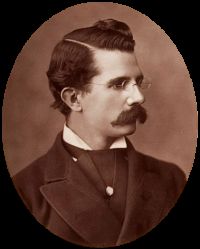 William Black,
A Comparative View of the Mortality of the Human Species…
William Black,
A Comparative View of the Mortality of the Human Species…
“ They are in danger of relapses from all the causes which give birth to insanity. From the proportion of cured and incurable, and successive relapses, many of which at length become incurable, we see how difficult it is, as yet, to expel this mental usurper, and to restore chaos into order. ”
 William Godwin,
St. Leon: A Tale of the Sixteenth Century
William Godwin,
St. Leon: A Tale of the Sixteenth Century
“ The restoration of my health was greatly retarded by the melancholy impressions which necessarily offered themselves to my mind when recollection resumed her seat. It was fortunate for me that this sort of retrospection appears not to be the first thing that occurs after a paroxysm of insanity. When the tide of incoherent ideas subsides, the soul is left in a state of exhaustion; and seems, by a sort of instinct, to shun the influx of tumultuous emotions, and to dwell upon such feelings as are mild, tranquil, and restorative. ”
 James Mill,
Analysis of the Phenomena of the Human Mind
James Mill,
Analysis of the Phenomena of the Human Mind
“ The first is, when under a present pain, something happens to give us relief; in which case, we experience on the instant, a burst of 388 physical elation, exactly as from a sudden access of pleasure. In exposure to a cold wind, we have the depression accompanying a massive pain; in coming gradually under shelter, we feel buoyed and elated, our movements are quickened, and we follow the lead with growing energy. Every one has experienced the stimulus of success, and the damping effect of failure ”
Gaius Glenn Atkins, Modern Religious Cults and Movements
“ Fatigue produces mental depression. An accumulation of uneliminated waste darkens all our horizons; irritability of mind and soul attend physical irritability; any unhappy modification in the balance of the physical registers automatically an equally unhappy modification in the balance of the psychic. Most of us, as we come to know ourselves better, recognize marked alterations even in spiritual states which we are taught to refer to physical condition, but just as truly altered spiritual conditions produce altered physical states. ”
Bernard Capes, Bag and Baggage — Bullet-Proof (1913)
“ You know how it takes some people, even the sanest? That is the devil of what they call its convalescence. One can endure the fever and the pain and the nausea; but the suicidal depression during recovery! ”
Hugh Roberts, Roberts' Chester Guide [1858]
“ The relaxed and debilitated body and nerves are at once rebraced, restored, enlivened, and built up. The mental and physical symptoms of all disease vanish together under its influence—the stooping trembling victim of depression or debility becomes a new man ”
 George Wharton James,
Quit Your Worrying!
George Wharton James,
Quit Your Worrying!
“ Work is wear; worry is tear. Overwork, mental strain, and worry lead to a diminution of nerve force and to a prostration of the vital forces and causes a degeneracy of the blood vessels of the brain. Exhaustion, another name for fatigue, may show itself either in the form of physical collapse, so that the patient lacks resistance, and, becoming anemic and run down, falls a prey to any and every little ailment, or in the form of mental collapse. An exhausted brain then gives way to depression, to fears, and to anxiety. ”
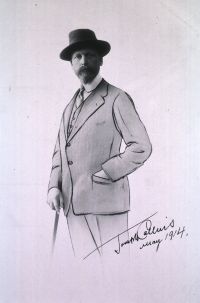 Joseph Collins,
The doctor looks at biography
(1925)
Joseph Collins,
The doctor looks at biography
(1925)
“ This period of hyperactivity is invariably followed by a time of depression, of inadequacy, of emotional barrenness, of intellectual sterility, of physical impotency, of spiritual frigidity. The sun from which the body and the soul have had their warmth and their glow falls below the horizon of the unfortunate’s existence and he senses the terrors of the dark and the rigidity of beginning congelation. ”
White Heather: A Novel (Volume 3 of 3…
“ But it was not only the bodily sickness—he believed he could mend that; he had still a fine physique; and surely absolute abstention from stimulants, no matter with what accompanying depression, would in time give him back his health—it was mental sickness and hopelessness and remorse that had to be cured ”
 Abraham Myerson,
The Nervous Housewife
Abraham Myerson,
The Nervous Housewife
“ The fatigue, pains and aches, changes in mood and emotion are born of this reaction, except in those cases where they arise from definite bodily disease, and even here a vicious circle is established. The weakness and fatigue state, the consciousness of impaired power brought about by sickness, are reacted to in a neurasthenic manner. It is not often enough realized by physicians that a physical defect or a physical injury may be reacted to so as to bring about nervous and mental symptoms; may cause the emotions of fear, hopeless anger, and sorrow; may cause an agony of doubt. ”
 John Harvey Kellogg,
Plain Facts for Old and Young
John Harvey Kellogg,
Plain Facts for Old and Young
“ General Debility.—Nervous exhaustion and the loss of the vivifying influence of the seminal fluid produce extreme mental and physical debility, which increases as the habit is practiced, and is continued by involuntary emissions after the habit ceases. If the patient's habits are sedentary, and if he had a delicate constitution at the start, his progress toward the grave will be fearfully rapid, especially if the habit were acquired young, as it most frequently is by such boys, they being generally precocious. ”
Matilda Charlotte Houston, Sink or swim? vol. 3/3 (1868)
“ Laying his head down on his folded arms, with one short but fervent ejaculation of thankfulness hovering on his parched lips, the man whose iron frame had hitherto seemed almost impervious to fatigue, and proof against the ordinary ills that flesh is heir to, grew gradually insensible to outer things, losing all sense whether of joy or sorrow, in the heavy and lethargic slumber which is too often the precursor of serious illness. ”
Louis Dechmann, Valere Aude: Dare to Be Healthy…
“ And now, one final word in conclusion, for the purpose of drawing together, as it were, the multiplicity of threads which constitute the complex skein of causes and effects, with their remedial measures which cover the wide range of human life's vicissitudes—the interruptions of its would-be harmonies—which take the forms, all too common in these times of stress, of physical disturbance and of mental strain which come to us in the combined and threatening guise of suffering and disease. ”
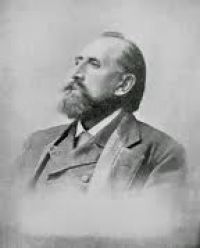 Felix Leopold Oswald,
Popular Science Monthly
(1881)
Felix Leopold Oswald,
Popular Science Monthly
(1881)
“ The depressing after-effect of sensual excesses, the dreary reaction, is a chief incentive to the repetition of the vicious act, and the success of all reformatory measures depends at first upon the possibility of relieving this depression by healthful diversion, till, in the course of time, regained mental and bodily vigor will help the remedial tendency of Nature to neutralize the morbid inclination. ”
Eliza Ann Youmans, Popular Science Monthly (1879)
“ Add to this labor lessons to prepare in the evenings, a constant feeling of inanition, especially during winter, cold feet and thin clothing, with no object in the world in my lessons to interest me, and it may well be conceived how the state of sin and misery brought on man by the fall was to me a palpable, undeniable, experienced reality. A few explanations will throw light on the causes of these sufferings. Too much cerebral action, and a close, ill-aired bedroom, with three besides myself in it, made me in the morning low, listless, irritable, and without appetite. ”
Horace B. Day, The Opium Habit
“ Friends enter his bed-chamber—in an agony of alarm rouse him—lift him to his feet—but he has not the strength of an infant, and he falls again. In this condition he may continue for a day or two, then sink into absolute coma, and die of nervous exhaustion, or his constitution may rally as the effects of the last overdose pass off, and the man, after a fortnight's utter prostration, come gradually back to such a state of tolerable health and comfort as he enjoyed before he overtaxed himself. ”

