AI-generated from sources
Care or Coercion, What the Suffragette Prisons Revealed About Force-Feeding
In Brief
- Force-feeding a hunger striker is described in two languages that never meet: prison officials speak of a patient whose heart can bear the operation, prisoners of a tube forced into the body as an added punishment.
- The duty to keep prisoners alive is old and real, but Lady Constance Lytton, a suffragette who was herself fed by tube, held that inside a prison forcible feeding's only possible excuse was that it prolonged the prisoner's sentence.
- The suffragette hunger strike was meant not as suicide but as a demand to be treated as political prisoners rather than common criminals; hostile critics answered that political motive cannot turn an ordinary offence into a political one.
- Faced with prisoners who would not eat, governments seemed anxious to avoid the public impression of deaths in custody, a concern that may help explain the practice of releasing starving prisoners and re-arresting them once recovered.
Main authors


The official record keeps a calm tone. A prisoner has refused to be examined, and the refusal is duly entered in the medical reception register. The senior medical officer nonetheless puts his ear to her chest, listens, and satisfies himself that her heart will bear artificial feeding without immediate risk to her health—provided it is done “in the absence of active resistance by the patient” [1]. The sentence, printed in Lady Constance Lytton's prison memoir, holds the whole problem in one clause. The woman is a patient, the feeding an operation, the danger a matter for the stethoscope. Yet the only condition that makes the act safe is that she not actively resist it.
Feeding a hunger striker by force has always carried two descriptions that never quite meet. Officials speak of a duty to preserve life. Writers who took the side of the suffragettes held in English prisons in the years around 1912 called it a filthy practice and a punishment [2, 3]. Neither account is simply false. The duty to keep a captive alive is old and serious, and the pain of the tube was real. But the quarrel was never only about survival. It was about what kind of prisoner lay at the end of the tube—a criminal, a patient or a political adversary—and about what her death would have said had it been allowed to happen.
Nine Missed Meals and the Keeper's Duty
The case for feeding rests on a principle older than any feeding tube: whoever locks a person up becomes answerable for that person's life. In his reminiscences of the American Civil War, Jacob D. Cox called it the plain duty of a civilized government to parole and send home military prisoners it could not feed or shelter [4]. In 1917 The Czechoslovak Review put it more bluntly: in no case should men imprisoned by the government die of hunger [5]. John Rae, writing on contemporary socialism, carried the principle beyond the prison walls. Leaving a citizen to die of hunger, he held, disgraces a government as much as abandoning him to an assassin's knife [6]. Starvation under the state's eye is a scandal for the state.
That principle has a reverse side. If the state answers for the prisoner's life, it also governs the prisoner's body, and first of all the stomach. Describing the English prison system in 1921, Sir Evelyn Ruggles-Brise noted that diet and labour were uniform across the country and changed only on a medical certificate, with the medical officer empowered to add to the rations [7]. Long before anyone refused to eat, the prison doctor already stood where food meets discipline. John Galsworthy drew the line the liberal conscience wished to hold. Society may restrain offenders and punish them with the loss of liberty, but it has no right to inflict “unnecessary and harmful suffering” [8]. Everything turns on the word unnecessary, and on who gets to define it.
The language of care reached its most finished form nearly a century after the suffragette prisons. A 2007 article on detainees, Caring for hunger strikers is a medical mission, sets out the procedure. A hunger striker is a detainee who misses nine consecutive meals and shows intent to strike; involuntary feeding is recommended only once body weight has fallen to 85 percent of its baseline and a doctor has examined him [9]. Before that, medical and behavioural staff counsel the detainee through a translator in his own language, so that he understands both the risks and the feeding process [10]. Every step of compulsion is wrapped in explanation. Yet the decisive word, involuntary, survives intact. The protocol does not dissolve the contradiction of the old medical register. It administers it.
The same move can be traced in law. Washington v. Harper concerned not food but an inmate whose mental disability made him a danger to others. Writing for the court, Anthony Kennedy held that the state's interest in reducing that danger “necessarily encompasses” an interest in giving him medical treatment [11]. The case says nothing about hunger strikes. Its reasoning, though, shows how an interest in order can be restated as an interest in health. Once that translation is made, treatment becomes the shape that security takes.
Lady Constance Lytton and the Glycerine Tube
Seen from the cell, the same act bore another name. Ethel Snowden, writing in 1912, described a baffled government meeting the hunger strike with “the filthy practice of forcible-feeding” [2]. Nearly two decades later, Dalip Singh Saund called it a punishment and set it in a catalogue of persecutions. Hired gangs drowned out women's meetings with tin cans and bells; suffragettes were struck down unconscious; their leaders were jailed by the hundred and fed through a tube into the stomach, at the cost of intense and lingering pain [3]. Nothing in that list marks the tube as medicine. It sits beside the tin cans and the blows as one more weapon against a movement.
Lytton's memoir records a subtler scene, and in some ways a more damning one. Under forcible feeding, she resolved to use every privilege she had to push the officials toward reason, and to make them bend the rules “in the direction of hygiene, if not of humanity” [12]. So she pleaded with the doctor. She asked for less food, for less of the tube to be pushed into her body, for less glycerine, which irritated her throat the moment the tube touched it, or for oil in its place. The prisoner argues here on the doctor's own ground, like a patient discussing her treatment. That she had to argue at all shows that the clinical choices were being made without regard to the body that bore them.
From such experience Lytton drew a harsh conclusion. Forcible feeding, she wrote, had only one possible excuse: it lengthens the prisoner's sentence by so many days, so many weeks, and nothing more [13]. The claim reverses the official account. Feeding does not serve the prisoner's life; it serves the sentence, keeping the body in its cell long enough for the punishment to run its course. This is a prisoner's verdict, not a neutral finding, and the official record describes the same act in terms of heartbeats and risk [1]. Still, it names what the medical description leaves out. The feeding takes place inside a penalty, and prolongs it.
The thirst strike exposed the limits of that medicine. Emmeline Pankhurst, who called the hunger strike a dreadful ordeal, described the refusal of water as torture from beginning to end; weight fell so fast that prison doctors were at first thrown into panic [14]. A clinic that certified hearts could not keep pace with a body that refused everything. Nor did the prison doctor enjoy the trust his title implied. An anonymous memoir of English prisons records that while many inmates schemed to get into hospital for its better food, others were afraid to enter it lest a carelessly given sleeping draught poison them, and quick to blame the doctor for any sudden death on the ward [15]. Authority over the prisoner's body did not always bring the prisoner's confidence with it.
Suicide or Argument, What the Fast Was For
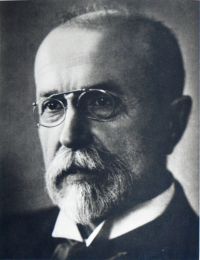
Force-feeding as rescue presumes that the hunger striker wants to die. Some observers read the fast exactly that way. Tomáš Garrigue Masaryk, writing in 1919 on Russia, counted the hunger strike among the unprecedented ways in which prisoners ended a long martyrdom by suicide [16]. Alexander Berkman, the same year, saw something else. Describing political prisoners awaiting deportation, driven to the extremity of a hunger strike by brutal treatment, he called it “the paradoxical self-defense of despair” [17]. The paradox is exact. The striker harms the body in order to defend the person, and the harm itself is the argument.
The suffragettes refused to have their fast read as self-destruction. Emmeline Pankhurst rebuked the well-meaning friends who claimed that the women had endured prison, hunger and forcible feeding out of a wish to martyr themselves; they had never gone to prison to be martyrs, she insisted [18]. In 1913 she stated the purpose plainly: to end unjust sentences at the earliest possible moment [19]. Only people with an intolerable sense of oppression would take up such a means, she added, and the one precedent she knew was that of Russian revolutionaries protesting against prison conditions [19]. The very precedent Masaryk read as suicide, she read as resistance. On her account the fast was a way out of prison, not a way out of life.
What the strike was meant to win was a status. Snowden explained that the women resisted being treated as common criminals, and took up the hunger strike to obtain the first-class treatment already granted to certain male political prisoners [2]. A letter quoted by Doris Stevens says the same of the American suffragists jailed in their turn: the officers knew they were starving so that women fighting for liberty might be considered political prisoners [20]. Stevens later conceded that the demand was never granted, since America had neither regulation nor precedent for political prisoners [21]. Lytton had set out the logic in advance. The strike would offer the government four choices: release, to “inflict violence upon our bodies,” death by starvation, or the vote [22]. Force-feeding was the second.
The claim had its enemies, and their objection deserves a hearing. Ernest Belfort Bax, in a 1913 book he titled The Fraud of Feminism, argued that no country had ever let a mere assertion of political motive turn an ordinary crime into a political offence. By the suffragettes' logic, he wrote, they might set fire to theatres and churches and still claim first-class treatment [23]. Bax was hostile, and his example is framed as a reductio. Yet a sympathetic historical anthology makes a related point from the other side: the tactics of prison and hunger strike depend on the innocence of the prisoners, whose offence must be merely nominal or technical [24]. Enemy and admirer converge. The fast persuades only as long as the crime looks slight; the heavier the offence, the more easily the tube can pass for ordinary discipline.
The Cat and the Mouse, or the Fear of a Dead Prisoner
Governments faced with prisoners who would not eat had found their weak point before the suffragettes did. An 1893 issue of The Idler describes prisoners preparing to back a demand by refusing all nourishment. The process kills them, the account notes, but the government, anxious to avoid the “disastrous impression” that their deaths produce, gives way—at least in appearance [25]. Pankhurst knew of no precedent but Russia [19]; this text suggests the bargain was already familiar to magazine readers twenty years earlier. The passage is precise about the motive. What the government is anxious to avoid is the impression the deaths produce.
What Lytton called the Cat-and-Mouse torture turned that fear into a routine. A starving prisoner is let out, watched day and night, then taken back to prison, to hunger and thirst, until she is again at death's door—twice, three, four, five times, until life is all but gone [13]. The mechanism keeps the punishment going while the prisoner reaches the brink outside the walls rather than inside them. That reading is an inference, but the sequence Lytton describes, release at the edge of death and recapture on recovery, makes it hard to avoid. Bax, from the opposite camp, saw in women's sentences left uncarried-out proof that criminal law had become a mockery where female prisoners were concerned [26]. One side calls torture what the other calls leniency. Both describe a state that would neither let the prisoner die nor let her go.
The fear was political before it was moral. In the American campaign, deputations of influential women warned party leaders and cabinet officials that the administration would suffer politically for its handling of the suffrage agitation [27]. Stevens spells out the arithmetic. Forty-one women representing sixteen states, jailed together, might cause a considerable political dislocation, and the administration had to choose between tolerating their picketing and bearing the reaction to their imprisonment [28]. Writing for hunger strikers in 1930, Bhagat Singh suspected that a government's assurances had been given only to check the tide of public agitation and avert a crisis [29]. In each case the prisoner's body counts less as a life to save than as a message to manage.
Coercion, moreover, produced what it was meant to prevent. E. Sylvia Pankhurst observed that the torture of women in prison made it easy for gentler spirits to give up deputations and polite questions for symbolic acts that, while doing hurt to none, shadowed forth “the violence that coercion always breeds” [30]. The martyr the state feared was therefore not only a dead woman. It was every living one who had heard about the tube. A martyr is made by those who watch, not by the one who suffers, and the sequence of feeding, release and re-arrest can be read as an effort to control that watching.
Feeding a hunger striker by force is at once a medical act and a penalty, and the two descriptions do not cancel each other out. The official sees a patient whose heart can bear the operation [1]; the prisoner feels a tube, a glycerine that irritates the throat, and days added to her sentence [12, 13]. Behind the first lies an old and genuine principle: a government that imprisons someone answers for that person's life [4, 5]. Behind the second lies the suffragettes' insistence that their fast was not suicide but a demand to be treated as political prisoners rather than common criminals [2, 18]. The practice of releasing starving women and re-arresting them once recovered suggests that what the authorities could least afford was a death in custody, and the impression it would leave [13, 25].
A protocol written nearly a century later counts missed meals, waits for body weight to fall to a set threshold, and explains every step through a translator [10, 9]. It makes involuntary feeding more careful and better explained. It does not make it voluntary. The tube can be made gentler, but it cannot be made consensual, and the life it preserves is never only the prisoner's own.