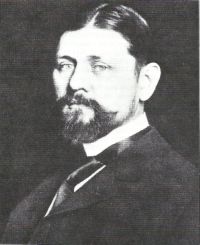
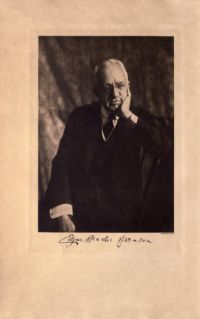
The pillory, a historical instrument of public disgrace and retribution, stood as a striking emblem of judicial rigor in pre-modern societies. Authors such as Nathaniel Hawthorne portrayed it as a remnant of a "cruder and coarser era," while Walter Besant highlighted its contradictory function as both a place of disgrace and shared celebration.
Charles Heber Clark’s vivid description emphasizes its powerful role in communal life, where retribution and devotion were closely linked. From Hawthorne’s ethical musings to Besant’s societal critique, the pillory appears as a complex lens through which writers explored justice, public virtue, and the relationship between personal wrongdoing and communal reaction.
 Walter Besant,
The Orange Girl
Walter Besant,
The Orange Girl