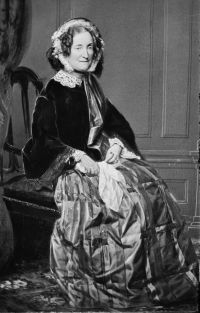
Lydia Sigourney

Lydia Sigourney

Summary

Portrait of Lydia Sigourney Lydia Sigourney Letters to Mothers (1839)

Nor does love falter, though its gifts involve sacrifices. The young bride leaves the hearthstone of her earliest remembrances, and lifts her timid brow in the home of strangers, or follows her chosen protector to a wild land, and uninhabited, willingly trusting to him, her "all of earth, perchance, her all of heaven." The mother grudges not the pang, the faded bloom, the weary night-watchings with which she rears her infant. Must an earthly love ever transcend that which is divine?
Source: Wikisource

Portrait of Lydia Sigourney Lydia Sigourney Letters to Mothers (1839)

To bear the loss of children with submission, requires the strong, exercise of a christian's faith. It seems to contradict the course of nature, that the young and blooming should descend to the tomb, before the aged and infirm. We expect to see the unfolding of a bud which we have watched till it had burst its sheath, trembling with joy and beauty, as it first met the sunbeam. "These same shall comfort us, concerning, all our toil," is the voice in the heart of every parent, who contemplates the children, for whom he has laboured and prayed.
Source: Wikisource

Portrait of Lydia Sigourney Lydia Sigourney Letters to Mothers (1839)

The Mother who is thus assiduous in the work of early education, will find in Poetry an assistant not to be despised. Its melody is like a harp, [95] to the infant ear, like a trumpet stirring up the new-born intellect. It breaks the dream with which existence began, as the clear chirping of the bird wakes the morning sleeper. It seems to be the natural dialect of those powers which are earliest developed. Feeling and Fancy put forth their young shoots ere they are expected, and Poetry bends a spray for their feeblest tendrils, rears a prop for their boldest aspirings.
Source: Wikisource

Get perspective with Kwize: daily news enlightened by great literature