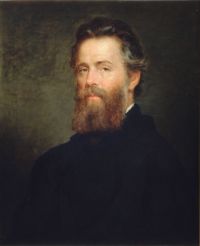
Thomas S. Gowing

Biographical details

Thomas S. Gowing The Philosophy of Beards

Now the Beard, which, as the Romans phrased it, “buds” on the face of youth in a soft downiness in harmony with immature manliness, and lengthens and thickens with the progress of life, keeps gradually covering, varying, and beautifying, as the “mantling ivy” the rugged oak, or the antique tower, and by playing with its light free forms over the harsher characteristics, imparts new graces even to decay, by heightening all that is still pleasing, veiling all that is repulsive.
Source: Gutenberg

Thomas S. Gowing The Philosophy of Beards — Historical (1875)

To touch another's beard, unless to kiss it respectfully, is considered by all these people a great insult. When two friends meet, to kiss it, sometimes on both sides, answers to our shake of the hand—how are you? and "may God preserve your Beard!" is a form of invoking a blessing on a friend. In the bosoms of their families the Beard is treated as an object of reverential fondness—wife and children kissing it with the most tender and respectful affection. To express high value for a thing, they say, "it is worth more than one's Beard."
Source: Wikisource

Thomas S. Gowing The Philosophy of Beards — Artistic (1875)

Such, however, is the force of prejudice founded on custom, that people who sink themselves to the ears in deep shirt collars, and to the chin in starched cravat and stiffened stock, muffle themselves in comforters till their necks arc as big as their waists; nay do not demur some of them to be seen in that abomination of ugliness—that huge black patch of deformity—a respirator, have still sufficient face left to tell us that the expression of the countenance would be injured by restoring the Beard!
Source: Wikisource

Get perspective with Kwize: daily news enlightened by great literature