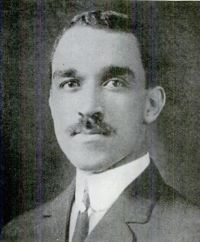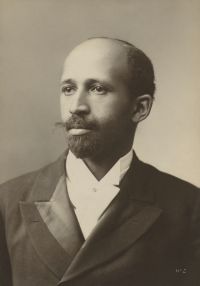
William Edward Burghardt Du Bois

Biographical details

Portrait of William Edward Burghardt Du Bois William Edward Burghardt Du Bois Darkwater (1920)

I believe in Liberty for all men: the space to stretch their arms and their souls, the right to breathe and the right to vote, the freedom to choose their friends, enjoy the sunshine, and ride on the railroads, uncursed by color; thinking, dreaming, working as they will in a kingdom of beauty and love.
I believe in the Training of Children, black even as white; the leading out of little souls into the green pastures and beside the still waters, not for pelf or peace, but for life lit by some large vision of beauty and goodness and truth
Source: Wikisource

Portrait of William Edward Burghardt Du Bois William Edward Burghardt Du Bois The Gift of Black Folk: The Negroes in the Making of America (1924)

For the Negro everywhere discriminated against, segregated and shunned, mobbed and murdered—he it is whose melodies are on all our lips, and whose rhythms impel our marching feet in a ‘war for democracy.’ The irresistible music that wells up from this sunny and unresentful people is hummed and whistled, danced to and marched to, laughed over and wept over, by high and low and rich and poor throughout the land. The downtrodden black man whose patient religious faith has kept his heart still unembittered, is fast becoming the singing voice of all America.
Source: Wikisource

Portrait of William Edward Burghardt Du Bois William Edward Burghardt Du Bois Darkwater (1920)

Yet yesterday—
"Death, the leveler!" he muttered.
"And the revealer," she whispered gently, rising to her feet with great eyes. He turned away, and after fumbling a moment sent a rocket into the darkening air. It arose, shrieked, and flew up, a slim path of light, and, scattering its stars abroad, dropped on the city below. She scarcely noticed it. A vision of the world had risen before her. Slowly the mighty prophecy of her destiny overwhelmed her. Above the dead past hovered the Angel of Annunciation. She was no mere woman. She was neither high nor low, white nor black, rich nor poor.
Source: Wikisource

Get perspective with Kwize: daily news enlightened by great literature