AI-generated from sources
The paradox of freedom: How exclusion shaped Australia's democratic identity
In Brief
- Australian identity was founded on the paradox of radical democratic freedom coupled with systematic racial exclusion, reserved primarily for white settlers.
- The goal of racial homogeneity, enforced through policies like immigration restriction and the subjugation of Aboriginal peoples, was historically viewed as a prerequisite for national unity and democratic stability.
- This foundational tension created a society that valued social conformity as highly as individual liberty, a conflict still visible in contemporary debates over 'Australian values' and assimilation.
- Fulfilling the democratic promise requires reconciling these exclusionary origins with universal ideals and expanding the 'great umbrella of freedom' to all citizens.
Main authors
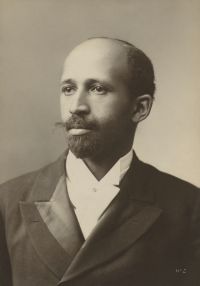

The Australian national identity is built upon a profound and challenging paradox: a simultaneous commitment to radical democratic freedom and a deeply ingrained history of racial and social exclusion [1, 2]. From its colonial beginnings, the continent was imagined as a place of unparalleled liberty, offering a society with a 'freest of free constitutions' and broad manhood suffrage that stood in stark contrast to the rigid hierarchies of the Old World [3]. This egalitarian spirit was seen as a foundational virtue, shaping a unique national character. Yet, this celebration of democratic freedom was constructed upon a meticulously enforced system of racial exclusion. The liberty promised was not universal; it was a privilege largely reserved for white settlers, built upon the systematic segregation and disempowerment of Aboriginal peoples and the legal restriction of non-white immigration [4].
This tension is not unique to Australia but reflects a broader, often troubling, dynamic in the development of modern democracies. Many nations born from the impulse to escape Old World despotism and establish societies based on human rights have carried within them the seeds of their own contradictions [5, 6]. The history of the United States, for instance, is marked by the glaring inconsistency of a republic founded on the ideal that 'all men are equal' while simultaneously codifying and defending the institution of chattel slavery [7, 8]. This recurring conflict between universalist ideals and particularist exclusions reveals a fundamental challenge: the very act of defining 'the people' in a new democracy can become an act of exclusion [9, 10]. The Australian experience, therefore, serves as a powerful case study in how a nation's identity can be forged within this crucible of contradiction.
This analysis explores the complex interplay between these competing forces in the shaping of Australia. It examines how a national character was constructed upon the dual pillars of egalitarianism and a powerful drive for social and racial conformity . By investigating the ideological justifications for racial exclusion as a supposed prerequisite for national unity and democratic stability, this article probes the enduring legacy of this foundational paradox. Ultimately, it questions whether a truly democratic society can be sustained on a platform of exclusion and what this history means for contemporary understandings of 'Australian values' and national belonging [11, 12].
Forging a Nation: The Dual Pillars of Radical Freedom and Social Conformity
The early narrative of the Australian colonies was one of profound democratic exceptionalism. The continent was envisioned as a national safety-valve, a 'second America' blessed with vast resources and the promise of a society unburdened by the rigid class structures of Europe . Commentators celebrated the existence of a 'free constitution' and the widespread implementation of manhood suffrage as evidence of a new, more equitable political order that would not tolerate restrictions on the franchise . This democratic environment was believed to foster a distinctly capable and 'quick-minded' populace, fundamentally different from the peasantry of older nations [13]. This self-perception as a land of opportunity and political freedom formed a cornerstone of the emerging national identity.
However, this celebrated freedom did not necessarily equate to rugged individualism. Beneath the surface of democratic egalitarianism lay a powerful undercurrent of social conformity . The impulse to adhere to custom and the opinions of one's social circle often superseded personal inclination, suggesting a society where the mind itself could be 'bowed to the yoke' of convention [14]. In Australia, this manifested as a nascent high society, ambitious and keenly aware of its standing relative to older, more established communities like Great Britain [15]. The desire for external recognition and the adoption of established mannerisms indicated that social aspiration and conformity were potent forces, tempering the rhetoric of radical independence .
This duality found expression in the nation's political life. Australian politics could accommodate figures who seemed to embody conflicting ideologies, who might think conservatively while speaking in the language of radicalism [16]. The ideal leader was often portrayed as dignified yet accessible, shunning the overt pomp of older political systems in a nod to democratic sensibilities [17]. At the same time, political success was not always a matter of pure substance or ability. The cultivation of a popular persona, a specific mannerism, or a well-timed laugh could be just as crucial for gaining power, revealing a political culture that valued social performance alongside democratic principle [18]. This tension between authentic democratic expression and the pressure to conform created a complex and sometimes contradictory political landscape.
The White Continent: Racial Exclusion as a Precondition for Democracy
The democratic experiment in Australia, like in other settler colonies, was profoundly shaped by race. The establishment of a new society on what was perceived as a free continent was often justified by an ideology that intertwined freedom for one group with the subjugation of another [19, 20]. The ideal of the nation was frequently articulated as a project for 'pioneer white freemen,' who saw themselves as building a home for liberty in the wilderness . This vision implicitly, and often explicitly, excluded non-white peoples from participation. In some arguments, the very existence and prosperity of the white race on the continent were seen as dependent on the exclusion or control of other racial groups, framing racial purity as a prerequisite for national survival and success [21, 22].
This exclusionary vision was bolstered by powerful intellectual and pseudo-scientific justifications. The era was marked by a widespread belief in a natural hierarchy of races, with slavery or subordination to the white race being posited as the 'natural and normal condition' for people of African descent and other non-European groups [23]. Such beliefs were used to rationalize legal systems that curtailed the civil rights of specific racial groups [24]. These measures were not seen as incidental but as essential tools for maintaining 'White Supremacy' and preventing the perceived threats of racial mixing and cultural degradation [25]. The goal was to construct what was, in effect, a white man's world, protected by legislative dams against the tides of other races [26].
In Australia, this ideology translated directly into policy and national identity. The political achievement of becoming 'one people under one Government' was lauded as a unique advantage for the continent-nation [27]. However, this unity was achieved through a process of profound exclusion. Aboriginal people were subjected to systematic segregation, their freedom of movement and work was severely restricted, and families were forcibly separated, inflicting deep and lasting trauma . The legal architecture of the new nation, including its citizenship and immigration acts, was carefully designed to define who belonged and, critically, who did not [28]. The fear of creating a 'race-problem' similar to that in other parts of the world drove the implementation of exclusionary policies designed to preserve the continent for a white, predominantly British, populace .
The Persistent Paradox: Democracy, Identity, and the Legacy of Exclusion
The effort to build a democracy on an exclusionary foundation creates an inescapable paradox. A government cannot endure as 'half-slave and half-free,' for the chains forged for one group ultimately constrain the liberty of all [29]. The democratic mission is fundamentally compromised as long as any segment of the population is barred from full participation in government, industry, and society . The act of oppressing one race inevitably inflicts a form of intellectual and moral bondage upon the oppressors, hindering free thought and expression [30]. This results in a fractured political reality, where a nation might proclaim universal freedoms while its institutions practice systemic discrimination, creating a society that is a paradox unto itself [31, 32].
This internal contradiction profoundly shaped the Australian national character. A tendency towards a 'parochial' or inward-looking perspective developed, with observers noting that many inhabitants had failed to truly 'discover' their own country [33]. This insularity could foster a crudely materialistic attitude towards life and the land, creating a sense of detachment and exploitation [34, 35]. The nation's psyche seemed to be in a state of suspense, as if waiting for a blood sacrifice to make its identity feel authentic and whole . This uneasy foundation also made the society susceptible to inflamed racial sentiment, particularly in response to external criticism or the perceived failures of its citizens abroad [36].
The historical legacy of this paradox continues to echo in contemporary discussions about national identity and 'Australian values.' The modern requirement for aspiring citizens to align with a set of national values reflects the long-standing tension between a proclaimed love of individual freedom and a deep-seated institutional demand for social and cultural conformity . The foundational democratic principle that rests on the equality of all citizens is fundamentally challenged when that equality is made conditional upon assimilation into a specific, historically defined cultural and racial archetype . This perpetuates the core paradox: a nation that celebrates liberty while potentially marginalizing those who do not fit a mold conceived by 'pioneer white freemen' , leaving the question of who is truly included in the democratic promise perpetually under dispute.
The story of Australia's formation is a compelling illustration of a paradox central to the development of many modern nations: the simultaneous and often contradictory pursuit of democratic liberty and racial purity . The continent was conceived as a laboratory for a new kind of freedom, founded on egalitarian ideals that explicitly rejected the rigid class systems of the Old World . Yet, this expansive vision of liberty was from its inception circumscribed, reserved primarily for a population of white settlers. The very definition of 'the people' in this emerging democracy was forged through the systematic and legal exclusion of Aboriginal populations and the strict curtailment of non-white immigration . This process created a nation that valued social conformity as highly as it prized freedom, embedding a deep and persistent tension between its universalist rhetoric and its exclusionary practices .
The enduring challenge for a nation forged in such contradictions is the difficult work of reconciliation—not only between peoples, but between its founding ideals and its historical realities . The powerful democratic creed, that a government's legitimacy derives from the consent of all the governed, stands as a permanent critique of any system built on exclusion [37]. Moving forward requires a continuous re-examination of national myths and a candid acknowledgment of the legacies of exclusion. The ultimate fulfillment of the democratic promise lies not in enforcing a homogenous identity, but in expanding the 'great umbrella of freedom' to all [38]. It is in this expansion that a society can fully realize the meaning of a true commonwealth, where harm to one is understood as harm to all, and the nation's strength is found in its inclusive capacity rather than its exclusive origins [39, 40].