AI-generated from sources
The Private Bond and the Public Trust, Navigating Friendship in Political Life
In Brief
- Public office transforms an individual's private life into a public spectacle, subjecting personal conduct and associations to intense and unrelenting scrutiny.
- The inherent tension between personal loyalties and public duty often leads to corruption, defined as the misuse of a public position for any improper private benefit, including favoritism and the "spoils system."
- Cicero observed that true friendship is exceedingly rare among those engaged in politics, as the allure of power frequently eclipses the duties of personal loyalty.
- True integrity in public life demands an unwavering commitment to the common good, a principle that must supersede all private bonds and personal considerations, even in the face of public censure.
Main authors


The assumption of public office fundamentally alters an individual's relationship with society, transforming private life into a public spectacle. This transition brings with it an intense and unrelenting level of scrutiny, where every aspect of one's conduct, both professional and personal, becomes a subject for general judgment [3]. Unlike the relative anonymity afforded to ordinary citizens, public figures live under the constant watch of a critical populace, where personal associations and private character are weighed as heavily as policy decisions [5]. Behaviors that might pass as minor reproaches in private life can be magnified into perceived disqualifications for holding a high-stakes government position, blurring the lines between the individual and the office they inhabit .
This reality creates a persistent dilemma regarding the separation of one's public and private identities. While many argue for a clear division, where political opinions are distinct from personal friendships, maintaining such a boundary is profoundly challenging [1]. Public figures often find their private affairs, such as financial dealings with friends, thrust into the spotlight, compelling them to defend their integrity against a backdrop of media sensationalism [7]. In this environment, which John Stuart Mill characterized as being under the watch of a "hostile and dreaded censorship," personal preferences and relationships are perpetually judged against the impersonal demands of public duty [4]. Society asserts a right to this oversight, provided it does not devolve into malicious scandal, yet for those in power, the experience is one of continuous and often unforgiving evaluation [2].
The Unrelenting Gaze of Public Scrutiny
To enter public life is to be perpetually exhibited for public view, a state in which misconduct is far more difficult to conceal than in any other sphere . Every action is magnified, with thousands of eyes scrutinizing behaviors that would go unnoticed in a private individual . This creates a pervasive atmosphere of surveillance, which 19th-century thinkers like John Stuart Mill identified as a form of social censorship that dictates not only public conduct but also intensely personal choices . The pressure to conform to an external standard of behavior becomes immense, often overriding individual preference and autonomy.
The ideal of separating one's public persona from their private sentiments is a recurring theme in political thought, yet it remains an elusive goal . The expectation is that affairs of state should be handled with an impartiality untainted by the bonds of friendship . However, the public's right to information often complicates this separation, demanding transparency in a way that can expose private character to harsh judgment . The challenge lies in balancing this legitimate public interest with the need to protect individuals from defamatory attacks and baseless innuendo .
For those who aspire to high office, the standards of conduct are exponentially stricter than for the average citizen . A character flaw that might be considered a simple reproach in private life can be viewed as a fundamental unfitness for public trust . Vices such as egotism or vanity, while unamiable in any context, are treated as near-criminal when they influence the conduct of public affairs, as they prioritize personal interest over the welfare of the country [6]. This heightened expectation means that public figures must constantly manage their private morality and associations, knowing that any perceived failing could be used to undermine their public record and career .
When Friendship Becomes a Political Liability
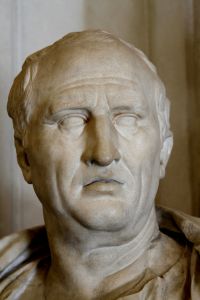
The collision between personal loyalty and public duty is an ancient and profound challenge in governance. As the Roman statesman Cicero observed centuries ago, it is exceedingly rare to find individuals in politics who would prioritize a friend's advancement over their own, or who would willingly share in a friend's political downfall [9]. The allure of power and office is so strong in human nature that it frequently eclipses the duties of friendship, making genuine loyalty a scarce commodity among those vying for political influence [8]. This inherent tension is most visibly played out in the process of appointing people to office, an exercise that Alexander Hamilton noted is especially prone to agitation by personal attachments, dislikes, and party animosities [13].
This dynamic, where private connections influence public decisions, is the very essence of corruption. Modern analysis echoes the views of America's founders, defining corruption not merely as illegal transactions but as any misuse of a public position for improper private gain [10]. When public office is treated as a vehicle for rewarding friends or political allies, it subverts its core purpose of serving the public good [12]. This practice, often called the "spoils system," degrades political parties from organizations based on principle to mere vehicles for acquiring personal power and patronage [14, 17]. As Ralph Waldo Emerson argued, a party is perpetually corrupted by personality when it abandons its core principles to defend individuals based on personal considerations [15].
The ethical failure is particularly acute when a public official elevates a disreputable ally to a position of power, a choice Carl Schurz described as deeply immoral [16]. This act of patronage not only rewards villainy but also serves a strategic purpose, as Edmund Burke theorized, by making the recipient more dependent and simultaneously eroding the public's faith in the authenticity of any friendship or principle [11]. The leader, in turn, faces a stark choice: either embrace the principle of rewarding supporters or adopt a rigid policy of refusing to let personal kindness influence official acts [18]. There appears to be little middle ground.
When private and personal interests are allowed to weigh on the scales of governance, they inevitably usurp the place of patriotism and duty . The integrity of the political system is thus threatened not only by overt bribery but by the more subtle and pervasive influence of personal relationships. This allows selfishness to replace a sense of public service, undermining the very foundation of a functional state .
Integrity, Censure, and the Primacy of Public Good
When public censure descends upon a political figure, the role of friendship becomes deeply complicated. The esteem of a few close friends can offer a powerful psychological defense against widespread public contempt [19, 23]. However, this private support is often fragile. As the essayist William Hazlitt contended in the early 20th century, the bonds of friendship quickly fray when subjected to the overwhelming force of popular indignation, making it immensely difficult to stand by a disgraced friend [20]. This creates an ethical strain not just for associates but also for professionals like journalists, who may be forced to publicly censure individuals with whom they have personal relationships [21].
This inherent conflict has led some thinkers to question the moral standing of friendship itself. From a detached philosophical perspective, as articulated by Ernest Renan, friendship can be viewed as an injustice—a form of theft from society that focuses one's sympathies on a select few, blinding them to the virtues of many others [22]. In this light, the impersonal nature of public duty rightfully demands that such partiality be set aside. The ideal public servant, according to this stringent standard, is one who makes decisions based purely on the public good, unswayed by favoritism, personal friendship, or popular outcry [29]. A person who compromises their convictions to maintain social standing or political alliances is seen as forfeiting their political integrity [25].
Public judgment, however, is not an infallible measure of truth or justice. Censure based on general rumor or "common fame," as Samuel Johnson argued, is an insufficient basis for condemning a person of long-standing public service and distinguished friendships [26]. Indeed, virtue can sometimes attract more slander than vice, and the consequences of such attacks are often irreparable [27]. Nonetheless, the moral health of a nation depends on its public sentiment; a society that tolerates or even honors dishonesty in its leaders creates a corrupting environment for all its citizens, particularly the young [24].
Ultimately, a crucial distinction must be drawn between a public servant's personal moral failings and acts of political corruption [30]. While certain private behaviors may have a negligible impact on a person's ability to govern, any act of corruption directly compromises their efficiency and trustworthiness as a public servant . True integrity may therefore lie in cultivating a character so strong that the hollow rewards of political maneuvering lose their appeal [28]. The paramount duty remains an unwavering commitment to the public good, a principle that must supersede all personal loyalties and private bonds .
The intersection of private friendship and public service remains a landscape of inherent and unavoidable conflict. Entering the political arena necessitates a forfeiture of privacy, subjecting individuals to a level of scrutiny where personal character and public conduct are seen as inextricably linked . This dynamic inevitably creates tension when the deeply personal loyalties owed to friends clash with the impartial duties demanded by the state . When these private bonds manifest as political favoritism, patronage, or corruption, they strike at the heart of governance, eroding public trust and debasing the noble purpose of public service into a quest for personal advantage .
Navigating this ethical minefield requires an exceptional degree of personal integrity and a clear-eyed commitment to the common good. While the force of public censure can be swift, overwhelming, and at times unjust, the foundational principle of public life dictates that the welfare of the community must take precedence over all other considerations . The enduring challenge for both leaders and the societies that elect them is to differentiate between private conduct with little bearing on governance and corrupt acts that represent a fundamental betrayal of public trust . In a world of heightened political scrutiny, the ancient dilemmas surrounding friendship, power, and duty continue to test the character of our leaders and the resilience of our institutions.