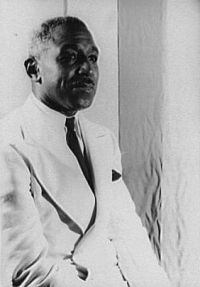
George Samuel Schuyler

George Samuel Schuyler

Summary

Portrait of George Samuel Schuyler George Samuel Schuyler The Negro-Art Hokum (1926)

In order to satisfy the cravings of an inferiority complex engendered by the colorphobia of the mob, the readers of the Negro newspapers are given a slight dash of racialistic seasoning. In the homes of the black and white Americans of the same cultural and economic level one finds similar furniture, literature, and conversation. How, then, can the black American be expected to produce art and literature dissimilar to that of the white American?
Source: Wikisource

Portrait of George Samuel Schuyler George Samuel Schuyler The Negro-Art Hokum (1926)

Why should Negro artists of America vary from the national artistic norm when Negro artists in other countries have not done so? If we can foresee what kind of white citizens will inhabit this neck of the woods in the next generation by studying the sort of education and environment the children are exposed to now, it should not be difficult to reason that the adults of today are what they are because of the education and environment they were exposed to a generation ago. And that education and environment were about the same for blacks and whites.
Source: Wikisource

Portrait of George Samuel Schuyler George Samuel Schuyler The Negro-Art Hokum (1926)

Aside from his color, which ranges from very dark brown to pink, your American Negro is just plain American. Negroes and whites from the same localities in this country talk, think, and act about the same. Because a few writers with a paucity of themes have seized upon imbecilities of the Negro rustics and clowns and palmed them off as authentic and characteristic Aframerican behavior, the common notion that the black American is so “different” from his white neighbor has gained wide currency.
Source: Wikisource

Get perspective with Kwize: daily news enlightened by great literature