AI-generated from sources
Strindberg's psychological arena: the theater of merciless intellectual combat
In Brief
- Strindbergian drama is defined by ruthless psychological duels where a powerful intellect systematically dismantles the vulnerable self of another character through corrosive suggestion and analysis.
- This dramatic method was fundamentally influenced by Edgar Allan Poe's theories on mental suggestion, leading Strindberg to focus on the power of words as creative and destructive forces.
- The manipulator often assumes the role of a 'creditor,' exposing the victim's emotional and intellectual 'indebtedness' to others, thereby stripping them of any claim to unique identity and authenticity.
- The endpoint of this psychological warfare is annihilation and 'abysmal pessimism,' reflecting a profound existential despair where truth brings only the sorrow of knowledge.
Main authors
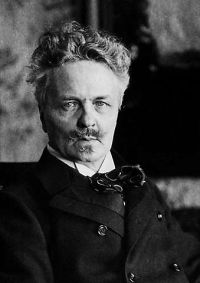
At the core of August Strindberg’s dramatic vision lies a ruthless form of psychological combat, an intellectual duel where one consciousness systematically dismantles another [1, 2]. This is not a theater of grand external events, but an intimate arena for merciless analysis, where suggestion and cunning become the primary weapons [3, 4]. The central conflict unfolds within the minds of the characters, exploring how a powerful intellect can exploit the vulnerabilities of another, leading to the fragmentation of their moral and mental structures [5]. This theatrical method creates a potent, often unsettling, experience for the audience, who witnesses the raw mechanics of psychological domination [6].
A crucial catalyst for this focus was Strindberg's introduction to the works of Edgar Allan Poe [7]. The American writer's theories on mental suggestion provided Strindberg with a new vocabulary and framework to articulate a theme that would become a favorite: the strategic battle between intellect and manipulation . This influence is explicitly visible in plays like Creditors, where the character Gustav's actions are a direct application of these principles . By embracing this psychological approach, Strindberg moved to rid drama of its shackling conventions, creating a concentrated and dynamic form centered on a single, intense conflict of minds [8]. The result is a body of work where the stage becomes a laboratory for the soul's destruction.
The Anatomy of Intellectual Domination
The mechanics of psychological destruction in Strindberg’s plays operate through a calculated process of suggestion and insinuation. The conflict is framed as an intellectual wrestling match, pitting a morally and mentally superior figure against a weaker, more emotional one . The antagonist, exemplified by Gustav in Creditors, does not use physical force but rather the corrosive power of analysis . He identifies latent insecurities and tendencies in his victim—in the case of the artist Adolph, his epilepsy—and uses suggestion to call them forth, effectively turning the victim's own mind against him . This process is about implanting a seed of doubt that grows into a paralyzing certainty, leaving the target in a state of perpetual suspicion without ever providing concrete proof [9].
This intellectual assault works by systematically eroding the victim's sense of self and originality. The manipulator often assumes the role of a figurative 'creditor,' revealing the victim's intellectual and emotional 'indebtedness' to others, thereby stripping them of any claim to unique identity [10]. A key tactic is to redefine the victim's relationships and perceptions. For instance, a spouse might be depicted as a mere 'phonograph,' an empty vessel that only repeats the words and ideas of others in a diluted form [11]. This dismantles the victim's belief in the authenticity of their own life and love. The objective is to induce a state of confusion and despair, where the individual begins to believe they have been living a lie, rendering them powerless [12].
The language used by the manipulator is itself a weapon. Words are presented as having creative and destructive force, capable of casting a spell over an individual's perception of reality [13]. By repeating a negative concept like 'hate,' a person can be made to believe they are hateful; conversely, the repetition of 'love' might convince them they are loved . This demonstrates a deep understanding of suggestion's power to shape consciousness. The dialogue in these plays mirrors this process, straying from linear logic to mimic how one mind's cogs haphazardly engage with another's, building up themes and ideas that are later repeated and expounded upon, much like a musical composition [14]. This creates an atmosphere where the victim is ensnared not by a logical argument, but by a web of recurring, suggestive ideas.
The Psychological Terrain of Vulnerability
Strindberg's predators are effective because their prey are uniquely vulnerable, inhabiting a psychological landscape ripe for manipulation. The victims are often described as having a 'diseased spirit' or suffering from a kind of spiritual 'anaemia,' making them susceptible to the 'new life' promised by a dominant personality [15]. This pre-existing state of emotional turmoil or self-doubt is the fertile ground in which the seeds of suggestion are sown [16]. The intellectual aggressor does not create the weakness but expertly identifies and exploits it . These characters are often artists or individuals governed by emotion, whose very sensitivity becomes their undoing .
The relationships themselves are often built on pretense and illusion, creating inherent instabilities. Characters may engage in role-playing, such as a married couple acting as 'brother and sister,' to hide truths they cannot face [17]. This emotional dishonesty creates dark corners where manipulation can flourish unseen. The dynamic between men and women is a particularly fraught area. Strindberg portrays men, even self-proclaimed 'free-thinkers,' as being held captive by a superstitious awe or suspicion of the feminine 'sphinx' [18]. This internal conflict is a critical vulnerability; a manipulator can prey on a husband's deep-seated anxieties about his wife's nature, turning his own imagination against him . The result is a destructive game of hide-and-seek where the partners become so lost in their roles that they can no longer find each other [19].
Ultimately, this psychological warfare is a battle for control over another's mind and will. In The Father, the Captain's desperate attempt to ensure his daughter has only one soul, one mind, and one will—his own—is a stark illustration of this theme [20]. He perceives her as having two souls, one that loves him and one that hates him, a reflection of his own fragmented psyche and profound insecurity. This desperate need to impose one's own consciousness upon another reveals the terror of losing control, a fear that drives both the manipulator and the manipulated toward mutual destruction. The emotional torment stems from this violation of the self, the feeling of one's soul being deposited piece-meal into another, only to have it torn away [21].
The Aftermath: Annihilation and Tragic Pessimism
The endpoint of Strindberg's psychological duels is not resolution but annihilation. The merciless analysis to which characters are subjected leads to the complete collapse of their mental and moral framework . The process cultivates a will to destruction, an instinct for self-vivisection that can be seen as a desire for nonentity [22]. The 'grievously inferior' victim, like Adolph, is left shattered, while the 'repulsively superior' victor, like Gustav, stands as a testament to the cold cruelty of a powerful intellect . This dramatic outcome rejects the notion of a tidy conclusion where the virtuous are rewarded, instead leaving the audience with an unsettling vision of human nature [23].
This focus on the internal 'Shadow Theatre of the Soul' results in a profound and abysmal pessimism that permeates the work [24, 25]. The plays articulate the sorrow of living, where all lofty souls are conspired against and the weak are victims of the strong [26]. The psychological struggles depicted are manifestations of a broader battle with a relentless fate, where the stripping away of illusions brings not freedom but only the sorrow of knowledge and the fruits of sin and hatred [27]. This is a world where even love becomes a battlefield, and a connection can curdle into mutual revulsion, transforming partners into 'hissing snakes' [28].
Yet, this bleak vision is precisely what lends Strindberg's work its enduring power. His willingness to probe the depths of human suffering and the mechanics of cruelty, without offering easy answers, creates a drama that feels intensely real [29]. By focusing on the 'infinitely small' details of the mind's contact with the world, he builds characters that are not static but in a state of perpetual motion—growing, shrinking, and changing in response to the ceaseless pressure of existence [30, 31]. This dynamic and often painful exploration of the human psyche is what holds audiences, attracting and repelling them in equal measure .
August Strindberg transforms the stage into a crucible for the human mind, where psychological suggestion serves as both the catalyst and the weapon of destruction. His dramatic method, refined through influences like Edgar Allan Poe's theories on mental manipulation, is one of merciless dissection . He presents human relationships not as unions of sentiment, but as intellectual wrestling matches where the victory of one consciousness necessitates the subjugation or complete erasure of another . This results in a theater of profound, often terrifying, psychological intensity, where the true action is the 'snaring of the poor emotional wretch's soul' .
By shifting the dramatic focus inward, Strindberg's work transcends the specific social conflicts of his era to address timeless questions of power, identity, and existential suffering [32]. His characters, perpetually vibrating with discontent, embody a modern restlessness that continues to resonate . While his vision is steeped in an abysmal pessimism, it is through this unflinching exploration of the mind's darkest capabilities that his plays achieve their lasting impact . He presents a world where thought itself is a creative and destructive force, leaving a legacy of drama that remains as challenging, repulsive, and compelling as the human psyche it so ruthlessly portrays .