AI-generated from sources
The Laughing Tear, The Human Condition in Art and Life
In Brief
- The human experience inherently blends joy and sorrow, rather than existing as separate emotional states.
- Laughter and mirth can function as a mask to conceal profound inner suffering, a performance often demanded by society.
- Dramatic art has evolved beyond rigid genre separations, developing hybrid forms like tragicomedy to more accurately represent life's complex emotional nuances.
- Philosophers like Arthur Schopenhauer and Kahlil Gibran illustrate how perceived comedy often dissolves into tragedy, or how joy emerges directly from experienced sorrow.
Main authors


The human condition is frequently characterized by a profound and inescapable duality, an experience where moments of elation are shadowed by an awareness of sorrow, and profound grief can give way to unexpected mirth. This intermingling is not an occasional feature but a foundational aspect of existence, suggesting that joy and sadness are not polar opposites but two faces of a single, complex reality. The spectacle of humanity, caught between aspiration and limitation, presents a picture that is at once comic and tragic in its essence [3]. Life itself appears as a tapestry woven with threads of both light and darkness, orchestrated by forces that seem to mock our deepest sorrows with laughter and silence our joy with sobs [1].
Art, in its pursuit of truth, has long grappled with this paradox. The genres of comedy and tragedy, while often treated as distinct territories, are in practice deeply intertwined, reflecting a world where the most profound experiences elicit both tears and laughter. This artistic impulse recognizes that the wellspring of our emotional lives is singular; the same source that produces laughter is often the one carved out by tears [7]. The attempt to capture this complex emotional landscape reveals a fundamental truth: that the distinction between the comic and the tragic is often a matter of perspective or degree, with one frequently melting into the other when viewed on a grander scale [2].
The Inherent Duality of Experience
The notion that life can be neatly categorized into either comedy or tragedy is a simplification that fails to capture the texture of lived experience. Instead, existence is better understood as a continuous fusion of both elements . Thinkers have long observed that from a sufficiently broad perspective, the individual absurdities and follies that fuel comedy dissolve into a larger, more somber narrative of human struggle and inevitable doom, much like the Fool's jests beside the suffering of Lear . Arthur Schopenhauer articulated a particularly bleak version of this idea, positing that while the substance of our lives—with its crushed hopes and constant suffering—is unequivocally tragic, our individual roles within this grand drama are often those of foolish comic characters [5].
This convergence of the tragic and the comic appears to stem from the inherent imperfection of humanity itself. Our condition, suspended between our potential and our reality, is the very source of both humor and tragedy, with the two differing mainly in intensity rather than in kind . The line between the horrible and the ridiculous is remarkably thin, with one often transforming into the other [4]. This suggests that the same underlying qualities—our flaws, our vanities, our struggles against an unpitying fate—can provoke either mirth, fear, or disgust depending on the context and framing . The perception of life as comedy for the thinker and tragedy for the feeler underscores this subjectivity, implying that our experience is a blend shaped by our own intellectual and emotional responses [6].
Ultimately, the relationship between joy and sorrow may be more than mere coexistence; it may be one of mutual creation. As Kahlil Gibran proposed in the early 20th century, joy is often sorrow revealed or 'unmasked' . According to this perspective, our capacity for happiness is directly proportional to the depth of the sorrow we have endured. The vessel that holds the wine of celebration is the same one that was fired in the kiln, and the instrument that produces soothing music was first carved and hollowed by knives . This intimate connection implies that one cannot exist without the other, and that to understand our moments of laughter, we must look into our hearts and recognize the past pains that made such joy possible .
The Mask of Mirth and Hidden Suffering
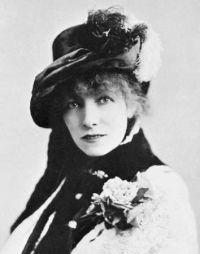
The outward expression of joy is not always an authentic reflection of an inner state. Often, laughter and mirth function as a performative mask, concealing a reality of profound suffering [8, 10]. This is particularly evident in the world of entertainment, where the actor's comic persona may hide a soul aching with personal grief, their hollow laugh a professional requirement rather than a genuine emotion [11]. Sarah Bernhardt attested to this professional torment, describing the anguish of portraying a character on stage while one's heart is consumed by the suffering of a loved one elsewhere [14]. The public, seeking an escape from its own vast and wearying tragedies, demands this performance, asking only to laugh for a while, even at shadows, to forget its own terrors [9].
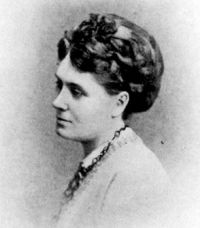
This dynamic of concealed pain is not limited to the stage. In daily life, a cheerful demeanor can be a deliberate pretense, a coping mechanism for internal grief or the dull struggles of existence [13]. Alice MacDonald Kipling voiced this skepticism in 1902, questioning whether laughter can always be trusted as a sign of gladness or smiles as genuine mirth, suggesting human faces can be as false as human hearts [17]. The outward signs of emotion are therefore unreliable indicators of truth. This phenomenon creates a stark contrast: a surface-level gladness that conceals a gnawing, perpetual sorrow at the core of one's being . For some, like Oscar Wilde, this performance of joy in the face of suffering transforms the afflicted into grotesque figures—clowns with broken hearts, whose tragedy is made absurd [15].
In a notable counterpoint, Oscar Wilde also argued that while pleasure can wear a mask, true pain cannot [16]. He contended that behind sorrow, there is always sorrow, suggesting an authenticity to suffering that joy may lack. However, the very existence of a 'broken laugh' born of extreme suffering, as observed in the performances of the actor Edmund Kean, complicates this view [12]. Such a laugh is not a mask for sorrow but an involuntary expression of it, a sign that the mind is on the verge of succumbing to an 'insane joy' as a reaction to unbearable grief . This suggests that the relationship between outward expression and inner feeling is deeply complex, where joy and sorrow can become indistinguishable in moments of intense emotional pressure.
Dramatic Art and the Blending of Genres
Theatrical tradition has long wrestled with how to represent life's emotional complexity, primarily through the distinct genres of tragedy and comedy. In its classical formulation, comedy represents human passions and weaknesses in a way that averts serious consequences, turning potential embarrassments into sources of pleasure and laughter [18]. Tragedy, by contrast, takes a more somber path, focusing on the pathos of defeated human wills and broken hearts, refusing to tolerate the trivial details that comedy embraces . Yet, there are profound human experiences, such as a regret that is 'too grave to belong to comedy, and too happy to belong to tragedy,' that defy this neat categorization [19].
In response to the limitations of these pure forms, dramatists developed hybrid genres to capture the nuanced territory between laughter and despair. The modern practice of blending comedy with tragedy, though open to misuse, was recognized in the 19th century as a significant 'extension of the dramatic circle' [21]. One such form is tragicomedy, which, as defined by John Fletcher, is not a simple mix of mirth and death but a genre that brings characters close to a tragic fate without delivering it, thereby making it neither a true tragedy nor a conventional comedy [22]. Another evolution was the 18th-century French comédie larmoyante, or 'tearful comedy,' which arose from a philosophical shift toward viewing human nature as essentially good and deserving of sympathy, effectively wedding the genius of both genres [29].
Philosophical and critical thought has sought to explain both the function of these genres and the significance of their fusion. Following Aristotle, one school of thought sees dramatic art as a form of catharsis, a means to arouse passions like fear and pity in tragedy, or pleasure and laughter in comedy, only to purge them in a harmless, ideal experience [26]. Percy Bysshe Shelley offered a different interpretation, suggesting that tragedy delights not by purging pain but by revealing an 'inexplicable' pleasure that exists within sorrow and despair, an approximation of a higher good [25]. From a more modern perspective, Georg Wilhelm Friedrich Hegel observed that the interplay of tragic and comic situations became more frequent in modern drama because it incorporated the principle of intimate personal life—the traditional domain of comedy—into the grand, substantive conflicts of tragedy [27]. This created a third, intermediate dramatic type that sought to mediate between the two opposing poles [28].
This artistic evolution reflects a deeper philosophical negotiation with the nature of reality. By combining the deepest tragic shudder with the hope that persists even in darkness, these hybrid forms create a new kind of dramatic figure [23]. They acknowledge that in life, laughter is an ever-present companion to our suffering, sitting even by the deathbed [30]. The process allows the audience to become both actor and spectator in their own lives, finding a strange enthrallment in the dramatic effect of a tragedy that possesses artistic elements of beauty [24]. The continuous effort to blend these forms is art's attempt to more faithfully represent a human experience where comedy and tragedy are inextricably linked [20].
The human experience emerges not as a journey through separate realms of joy and sorrow, but as a deeply integrated state where both emotions are perpetually intertwined. Laughter and tears are revealed to spring from the same well, their expression often dependent on perspective and context rather than a fundamental difference in their source . The imperfection and striving inherent to the human condition provides the raw material for both the absurdities of comedy and the finality of tragedy . This paradox is reflected in our social performances, where mirth can serve as a mask for profound suffering, and a cheerful exterior may conceal a heart in anguish, a performance demanded by a world eager to escape its own grief .
In its quest to mirror this complex reality, dramatic art has evolved beyond the rigid separation of comedy and tragedy. The creation of hybrid forms like tragicomedy and bourgeois drama represents a sophisticated attempt to capture the nuances of an existence that defies simple categorization . Whether viewed through the classical lens of catharsis or the modern appreciation for psychological realism, art’s blending of genres demonstrates an enduring effort to expand its capacity for emotional truth . This ongoing dialogue between the stage and human life suggests that our attempts to understand and represent the union of joy and sorrow are central to the very act of making sense of who we are.