AI-generated from sources
The Aftermath of Expression, From Idle Words to Profound Silence
In Brief
- Human expression, whether through casual gossip or heartfelt confession, serves vital social functions but often leads to unintended consequences and subsequent silent reckonings.
- Silence functions paradoxically as both a psychological prison where remorse, guilt, and unarticulated suffering fester, consuming the individual from within.
- Conversely, silence provides a necessary sanctuary for introspection, emotional regulation, and achieving inner balance, fostering clarity and personal strength.
- True intimacy and deep self-knowledge are often forged in shared silence, revealing profound truths and connections that words alone cannot express.
Main authors

Human expression, particularly in its more spontaneous and social forms, often carries an inherent paradox. The impulse to speak, to share, and even to gossip, serves as a fundamental mechanism for forging community and navigating the complexities of daily life [4]. Yet, this very act of utterance can precipitate its opposite: a profound and often heavy silence. This silence is not a void but a charged space, an immediate aftermath where the consequences of words begin to settle. It is in this unspoken reckoning that the speaker confronts the fallout of their expression, whether it be the ripple of harm caused to another or the internal sting of personal regret [2, 3]. The transition from the clamor of speech to the quiet of its wake reveals a critical tension between our social nature and our individual conscience.
The silence that follows an expressive act is a territory of immense psychological diversity. For some, it is a necessary retreat, a 'balm' sought after the emotional overextension and potential 'fiasco' of speaking with too much unguarded sentiment [1, 19]. In this context, silence is a shield against public indifference or a space to soothe the chagrin of having said too much. For others, however, this same quiet becomes the breeding ground for darker sentiments. It can transform into a vessel for festering remorse, a theater for unarticulated suffering, or a form of self-imposed torture where the weight of a past transgression grows heavier with each passing year [7, 14]. This duality—silence as both a restorative asylum and an oppressive prison—underscores the profound and often unpredictable consequences of our words.
The Drive to Utterance and the Consequent Retreat
The desire to communicate through informal channels like gossip is a deeply ingrained social behavior, viewed through starkly different lenses. For some communities, as Karolina Světlá observed in the early 20th century, gossip is not a vice but a vital necessity, as essential as water to a fish . It serves to ease life’s burdens and steel courage, functioning as a communal adhesive that binds people together . This perspective stands in sharp contrast to more traditional moral critiques. Figures like William Jennings Bryan and Charles Webster Leadbeater categorize gossip as a malicious and 'wicked' habit, where individuals are laid upon a 'dissecting table' for the amusement of others, an act deserving of contempt . This tension frames the act of speaking not as neutral, but as one fraught with potential for both social cohesion and ethical failure.
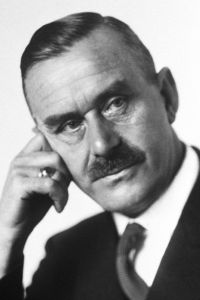
The immediate consequence of unguarded expression is often an unwelcome silence born of failure. Thomas Mann articulated the risk inherent in speaking with excessive emotional investment, warning that such outpourings frequently result in a 'complete fiasco' . When the heart beats too warmly for a subject, the expression can become sentimental, awkward, and ultimately tedious to an audience, leaving the speaker with nothing but 'disappointment and lamentation' . This kind of aftermath is not a chosen refuge but an imposed quiet, a direct response to the social or artistic failure of the utterance. The silence that follows is thick with the chagrin of having misjudged one's audience or one's own ability to convey meaning effectively, forcing an inward turn to reckon with the misstep.
Ultimately, the retreat into silence is a direct and often necessary consequence of the preceding speech act. Whether prompted by the moral condemnation that follows malicious gossip or the personal disappointment of a failed emotional appeal, silence becomes the unavoidable space for processing the fallout . The harm described by Leadbeater, whether done to others or to oneself, necessitates a pause, a cessation of the very behavior that caused the disturbance . This reactive silence serves as a buffer, a moment of reckoning where the speaker is compelled to confront the implications of their words. It is the beginning of a post-emotional landscape, shaped entirely by the character of the expression that came before it.
Silence as a Prison of the Mind
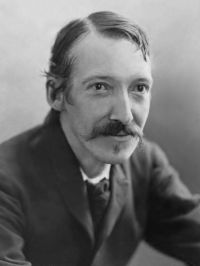
Beyond being a mere absence of sound, silence can be weaponized into a potent tool of psychological torment. Robert Louis Stevenson noted that it is the 'correction of silence' that truly 'kills,' an unspoken judgment from a friend that can make the heart quail far more than any verbal rebuke [5]. This concept is echoed by E. Lynn Linton, who described a particular form of 'obtrusive reticence' that flaunts itself as an intentional act of exclusion, a paralysis more insulting and maddening than sharp words because it leaves no room for complaint or response [6]. In these instances, silence is not passive but an active, oppressive force that communicates condemnation and asserts power without uttering a single syllable.
When this oppressive silence is turned inward, it becomes a source of profound and corrosive suffering. Richard Hurd cautioned that suppressed sentiments will 'fester and rankle,' transforming the mind into a raw, sensitive entity pained by its own imaginings . This internal landscape can become the stage for 'terrible romances' that unfold without witness, as Everard Meynell wrote of Francis Thompson, creating an intolerable anguish precisely because it passes in silence [8]. This hidden pain, which George Willis Cooke described as noiseless agonies and secret robberies of peace, often must be concealed from the world [9]. Mary Wollstonecraft Shelley captured the desperation of this state, the need to weave a 'veil of dazzling falsehood' to hide the consuming wretchedness, even from oneself, for fear of madness [10].
Among the most acute forms of silent suffering is remorse, a specific torment born from the memory of one's own wrongdoing. This feeling is often considered more enduring and deeply cutting than sorrow for misfortunes inflicted by others [13]. The silence surrounding a past transgression does not diminish its power; on the contrary, it allows the memory to grow and fester. Jean-Jacques Rousseau, writing from a distance of forty years, described a 'childish fault' that had become an 'insupportable weight of remorse,' a bitter recollection whose strength seemed to increase with age . This illustrates how silence can act as a vessel, preserving and amplifying the psychological burden of a past act, making it a source of lifelong, inescapable pain.
In its most extreme form, this inner torment takes on a monstrous life of its own. It is personified as a 'restless worm' that dwells deep within the heart, a 'living grief' that preys on the soul even while one feigns joy [15, 16]. The anarchist Alexander Berkman, writing from prison, felt silence as a living, pulsating monster, the physical embodiment of misery asleep [17]. This state can descend into a horror where reason itself becomes a source of torture and reflection a 'scorpion' [11]. The very lack of vocabulary to express such states, as noted by W. M. Flinders Petrie in his study of Egyptian language, where no word exists for repentance, highlights the profound isolation of this experience [12]. The silence becomes an all-consuming reality, a prelude to madness where all is dead but despair .
The Sanctuary of the Unsaid
In stark contrast to its capacity for torment, silence also serves as a powerful and necessary sanctuary. Henry David Thoreau celebrated it as the 'universal refuge' and a 'balm to our every chagrin,' an inviolable asylum where no indignity can assail the individual . This vision portrays silence not as a punishment but as a restorative background that remains pure, regardless of the foolish acts one may have committed in the foreground . This sentiment is shared by Orison Swett Marden, who pragmatically advocated for silence as a 'golden' strategy to navigate moments of irritation and vexation, suggesting it could save people from half the troubles of life [21]. Here, silence is a conscious choice, a tool for emotional regulation and a shelter from the storms of daily interaction.
Beyond being a mere refuge, silence is often conceived as a source of profound strength and inner balance. For Charles A. Eastman, interpreting the perspective of the Native American sage, silence represents a 'perfect equilibrium' of body, mind, and spirit—the ideal state of being, unshaken by the tempests of existence [23]. This is not an empty quietude but a dynamic poise, a sign of deep selfhood. Charles Wesley Emerson elevates this idea further, framing silence as 'divine' and the origin of all true strength, a stark contrast to the merely 'human' realm of speech [22]. In these views, silence is not an absence but a presence, a wellspring of power and stability available to those who can cultivate it.
This state of quiet equilibrium provides fertile ground for introspection and clarity. Joseph Conrad observed that it is in solitude and silence that one can think most clearly and profoundly, stripped of the usual self-deceptions and conventional hopes that cloud judgment [29]. This is the space where, as Maurice Maeterlinck puts it, 'slumbering truths spring to life' and the 'fruits of the soul' are allowed to ripen [27, 28]. This internal world is a place of great activity, a 'great tumult' of thought and conscience that occurs, in Victor Hugo's words, without breaking the 'external silence' [30]. It is a descent into a deep, personal interior where, according to Algernon Blackwood, ideas that have long lain coiled can rush forth into consciousness [18].
The transformative power of silence extends from the individual to the interpersonal, becoming the ultimate measure of authentic connection. It is not an anti-social force but one that can bring people closer by making them aware of the profound things they hold in common [20]. As Dorothy M. Richardson suggested, the true test of any relationship lies in the 'quality of the in-between silences' [24]. This is because, as James Huneker argued, silence is terrifyingly 'truth-telling,' and the willingness to be silent together is a daring act of mutual revelation [26]. True intimacy and self-knowledge are therefore found not in endless chatter but in protecting this deep, quiet space from intrusive noise, allowing for a connection that transcends mere words [25].
The journey from expressive act to its silent aftermath maps a vast and complex psychological landscape. Silence, far from being a simple void, emerges as a profoundly active state, capable of functioning as both a tormenting prison and a restorative sanctuary. The initial impulse to speak, whether through the communal bonding of gossip or the passionate overflow of emotion, often precipitates a necessary retreat into quiet . This subsequent silence becomes a crucible. In it, one may be haunted by the 'insupportable weight of remorse' or paralyzed by unspoken condemnation . Yet, it is also within this same quiet that one can find an 'inviolable asylum,' a space for clear thought, inner equilibrium, and the ripening of the soul .
The contradictory nature of silence ultimately reflects the inherent duality of the human condition—our profound need for both social connection and interior solitude. The challenge lies in learning to navigate this territory, to distinguish between a destructive quiet that masks festering wounds and a generative silence that fosters strength and authentic understanding . The art of living may therefore depend less on the mastery of speech and more on the wisdom to interpret the unspoken. In the end, the courage to face silence together, as James Huneker proposed, may be the most telling measure of our relationships and our own inner truths, revealing the magnificent mystery of a world that communicates most profoundly when the mouth is still .