AI-generated from sources
The poetic duality of Claude McKay: Where militant rhetoric meets sacred silence
In Brief
- Claude McKay's poetry operates in a profound tension between his assertive, militant voice used for political mobilization and a deep, introspective current of personal sorrow.
- The roots of his political fervor lie in the ancestral memory of slavery and the psychological burden of racial subjection, channeled into a powerful public cry for liberation.
- His private grief, particularly concerning maternal bereavement, is characterized by an 'eloquence of silence,' resisting articulation and revealing the inadequacy of language for profound pain.
- The synthesis of public protest and private suffering gives his work authentic human depth, ensuring its universal and enduring resonance.
Main authors
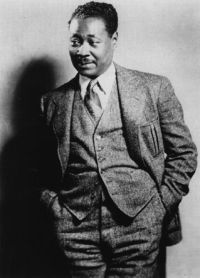

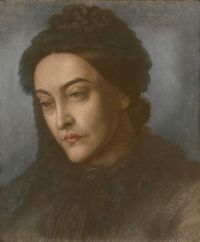
The poetic works of Claude McKay are a landscape of profound tension, defined by the juxtaposition of a powerful public voice and a deeply private sorrow. Forged in the crucible of racial subjection, his militant rhetoric served as a potent instrument of protest and a rallying cry for a people struggling for liberation [1, 2]. From his earliest works, which were filled with a rebellious love of freedom, to his celebrated calls to action, McKay's voice was consciously directed at articulating the collective hopes and sorrows of his race [3, 4]. This assertive, declarative mode of expression became a defining feature of his public literary persona, making his poetry a weapon in the fight for human dignity [5].
Yet, coexisting with this revolutionary fervor is a quieter, more introspective current of grief that runs through his work [6]. This sorrow is rooted not only in the ancestral memory of bondage passed down through his mother's lineage but also in the intensely personal experience of maternal bereavement [7, 8]. This creates the central conflict of his artistic output: the necessity of a loud, declarative voice for political struggle versus the often wordless, ineffable nature of profound personal loss [9, 10]. His poetry navigates the complex terrain between the roar of collective defiance and the sacred silence that accompanies inconsolable grief [11].
A Voice Forged in Resistance
The origins of Claude McKay's militant poetics can be traced to his family history and ancestral memory. He was acutely aware that his family on his mother's side descended from people who had been free in Madagascar before being violently captured and sold into slavery in Jamaica . This inherited narrative of injustice and lost freedom instilled in him an early and instinctual opposition to oppression, fueling his first creative efforts with a spirit of heresy and a "militant love of freedom" . This foundation provided the raw material for the powerful public voice that would later characterize his work, grounding his political convictions in a deeply felt historical reality.
This inherent sensibility was sharpened by his direct experience with racial subordination . The psychological burden of being born into a subjected race, constantly assailed by intimations of inferiority, can be a poisonous force at the very center of personal growth . While such pressures can lead some to develop compensatory and artificial modes of expression as a form of over-correction [12], for McKay, this environment seemed to clarify his purpose and strengthen his resolve. Rather than being diminished, his voice gained power and precision, becoming a finely honed instrument for the battle against injustice .
Consequently, McKay's poetry often transcended the realm of pure literature to become a functional tool for social and political mobilization. His famous sonnet, "If We Must Die," was not merely read but actively adopted by the Black community, recited from church pulpits and at mass meetings as an anthem of defiance . McKay understood his role as that of a troubadour, recognizing that his primary contribution to the cause of liberation was his "singing" [13]. His work was an explicit call to action, an urgent appeal for his people to awaken to a new dawn of consciousness and struggle [14].
The Eloquence of Silence
In stark contrast to the poet's revolutionary cry stands a profound, interior silence. This silence is not an absence of feeling but a vessel for sorrow so deep it resists articulation [15]. Grief, in this formulation, is not always a loud, performative act but can be a quiet, long-suffering state that withdraws into itself, away from the world . McKay gives voice to this wordless condition in his own poetry, describing a grief that manifests not in speech but in "chokin' sobs," where the mouth is unable to form a single word [16]. This muteness becomes an expressive state in itself, conveying a depth of pain that language cannot reach.
This profound and silent sorrow is inextricably linked to the figure of his mother. McKay’s body of work includes sacred sonnets dedicated to this maternal bond, suggesting that the experience of a child's bereavement was an inevitable and defining theme for him as a poet . The mother represents a primary source of love and a place of spiritual refuge, a "quiet home" for the heart [17]. This personal loss taps into a universal understanding of motherhood as a destiny of sacrifice and of mothers who often bear their suffering with a heroic silence [18, 19]. The unique, almost indivisible bond between mother and child makes the grief of separation particularly acute and difficult to vocalize [20].
McKay himself seemed keenly aware of the limitations of language when faced with overwhelming emotion. He expressed a creative frustration that the poetic "word" was too "tender" and the rhyming form too "slender" and fragile to bear the weight of his bitterness and his passionate soul . This sentiment suggests that the most profound human experiences, whether ecstatic love or devastating sorrow, can ultimately render a person mute [21, 22]. When the spirit is overcome by such powerful forces, it can lose its ability to create song, leaving only silence in its wake [23].
Where Public Cry Meets Private Grief
The militant rhetoric and the deep silence in McKay’s work are not contradictory impulses but are dialectically related. The public, political fight against systemic injustice is emotionally and historically fueled by the private, inherited pain of his ancestral past, a history passed down through his mother's line . The collective "sorrows of his race" that he so powerfully articulated were not abstract concepts but were experienced and processed through the intimate lens of personal, familial grief, lending his voice a rare authenticity and human depth [24, 25].
The very nature of grief is dual, capable of manifesting as both a quiet, interior collapse and a loud, external wailing . McKay's literary output masterfully embodies this duality. The same poet who penned the defiant, militant call for his people to fight back against their murderers is the one who also wrote with tender nostalgia of learning the alphabet as a child leaning on his mother's knee [26]. His ability to navigate both poles of human expression—the public cry and the private memory—is a testament to the complexity of his artistic vision.
It is this synthesis of the public and the private that gives McKay's poetry its enduring and universal resonance [27]. By exploring the intricate relationship between political struggle and personal suffering, he addresses the eternal questions of pain, loss, and the quest for dignity that confront all of humanity, regardless of race or era [28]. His work occupies the critical space between the loud, unavoidable imperative to protest injustice and the sacred, silent hours required by the grieving heart, in which death itself seems to have silenced the tongue [29].
Ultimately, Claude McKay's poetic legacy is defined by the powerful and persistent interplay between his militant, public voice and his profound, private silence. The revolutionary cry for justice, articulated in poems that became anthems of resistance, finds its deepest emotional and historical roots in a well of sorrow that is at once ancestral, racial, and intensely personal, with the memory of his mother at its very center . His work is a powerful demonstration that the most resonant calls for collective liberation can spring from the quietest and most wounded chambers of the individual heart.
McKay’s unique contribution lies in his unflinching exploration of this duality. He reveals that some sorrows are too immense for language, rendering the spirit mute and capable only of choked sobs , while simultaneously affirming that certain injustices demand the most forceful and articulate response possible. By navigating both these truths, McKay’s poetry provides a holistic testament to the human condition, one that honors both the political imperative to speak out against oppression and the soul's fundamental need for silent witness in the face of inconsolable loss .