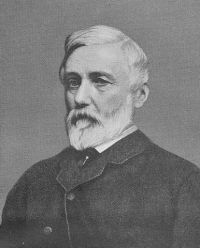
William Young Sellar

William Young Sellar

Summary

Portrait of William Young Sellar William Young Sellar Encyclopædia Britannica, Ninth Edition (1888)

The extraordinary result obtained by Terence is that, while he has left no trace in any of his comedies of one sketching from the life by which he was surrounded, there is perhaps no more truthful, natural, and delicate delineator of human nature, in its ordinary and more level moods, within the whole range of classical literature. His permanent position in literature is due, no doubt, to the art and genius of Menander, whose creations he has perpetuated, as a fine engraver may perpetuate the spirit of a great painter whose works have perished.
Source: Wikisource

Portrait of William Young Sellar William Young Sellar Encyclopædia Britannica, Ninth Edition (1888)

Love, in the form of pathetic sentiment rather than of irregular passion, is the chief motive of his pieces. His great characteristics are humanity and urbanity, and to this may be attributed the attraction which he had for the two chief representatives of these qualities in Roman literature,—Cicero and Horace. It was through the comedies of Terence that the finer influences of the Epicurean philosophy—the friendliness, the tolerance, the consideration for the feelings of others, inferiors as well as equals, inculcated by that philosophy—entered into Roman life and literature.
Source: Wikisource

Portrait of William Young Sellar William Young Sellar Encyclopædia Britannica, Ninth Edition (1888)

In the case of an author drawing originally from life, it might seem improbable that he should have written six comedies, so true in their apprehension and delineation of various phases of human nature, between the ages of nineteen and twenty-five. But the case of an imitative artist, reproducing impressions derived from literature, is different; and the circumstances of Terence's origin and early life may well have developed in him a precocity of talent.
Source: Wikisource

Get perspective with Kwize: daily news enlightened by great literature