Summary

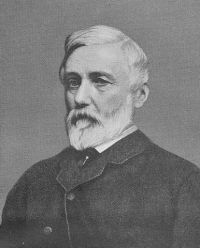
Portrait of William Young Sellar William Young Sellar 1911 Encyclopædia Britannica, Volume 17… (1911)

The combative energy, the sense of superiority, the spirit of satire, characteristic of him as a Roman, unite with his loyalty to Epicurus to render him not only polemical but intolerant and contemptuous in his tone toward the great antagonists of his system, the Stoics, whom, while constantly referring to them, he does not condescend even to name. With his admiration of the genius of others he combines a strong sense of his own power.
Source: Wikisource

Portrait of William Young Sellar William Young Sellar 1911 Encyclopædia Britannica, Volume 17… (1911)

Yet it is not too much to say that there is no work in any literature that produces a profounder impression of sincerity. No writer shows a juster scorn of all mere rhetoric and exaggeration. No one shows truer courage, not marred by irreverence, in confronting the great problems of human destiny, or greater strength in triumphing over human weakness.
Source: Wikisource

Portrait of William Young Sellar William Young Sellar 1911 Encyclopædia Britannica, Volume 17… (1911)

But his conception even of the ancient gods and of their indirect influence on human life is more worthy than the popular one. He conceives of them as living a life of eternal peace and exemption from passion, in a world of their own; and the highest ideal of man is, through the exercise of his reason, to realize an image of this life. Although they are conceived of as unconcerned with the interest of our world, yet influences are supposed to emanate from them which the human heart is capable of receiving and assimilating.
Source: Wikisource

Get perspective with Kwize: daily news enlightened by great literature