Summary

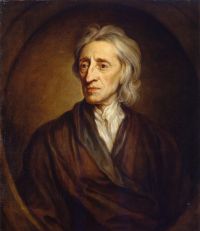
Portrait of John Locke John Locke,  An Essay Concerning Human Understanding…

“ But yet, upon a stricter inquiry, I am forced to conclude that good, the greater good, though apprehended and acknowledged to be so, does not determine the will, until our desire, raised proportionably to it, makes us uneasy in the want of it. Convince a man never so much, that plenty has its advantages over poverty ; make him see and own, that the handsome conveniences of life are better than nasty penury : yet, as long as he is content with the latter, and finds no uneasiness in it, he moves not ; his will never is determined to any action that shall bring him out of it. ”
Source: Wikisource

Portrait of John Locke John Locke,  An Essay Concerning Human Understanding…

“ A man on the rack is not at liberty to lay by the idea of pain, and divert himself with other contemplations : and sometimes a boisterous passion hurries our thoughts, as a hurricane does our bodies, without leaving us the liberty of thinking on other things, which we would rather choose. But as soon as the mind regains the power to stop or continue, begin or forbear, any of these motions of the body without, or thoughts within, according as it thinks fit to prefer either to the other, we then consider the man as a free agent again. ”
Source: Wikisource

Portrait of John Locke John Locke,  An Essay Concerning Human Understanding…

“ For how can we think any one freer, than to have the power to do what he will ? And so far as any one can, by preferring any action to its not being, or rest to any action, produce that action or rest, so far can he do what he will. For such a preferring of action to its absence, is the willing of it : and we can scarce tell how to imagine any being freer, than to be able to do what he wills. So that in respect of actions within the reach of such a power in him, a man seems as free as it is possible for freedom to make him. ”
Source: Wikisource

Get perspective with Kwize: daily news enlightened by great literature