Summary

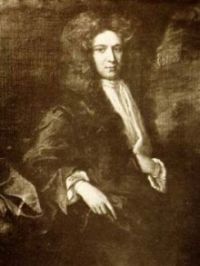
Portrait of Anthony Collins Anthony Collins,  A Philosophical Inquiry Concerning Human Liberty (1735)

“ For to ask, whether a man be at liberty to will either motion or rest, speaking or silence, which he pleases? is to ask, whether a man can will what he wills, or be pleas’d with what he is pleas’d with? A question that needs no answer.”
To suppose a sensible being capable of willing or preferring, (call it as you please) misery, and refusing good, is to deny it to be really sensible; for every man, while he has his senses, aims at pleasure and happiness, and avoids pain and misery; and this, in willing actions, which are suppos’d to be attended with the most terrible consequences.
”
Source: Wikisource

Portrait of Anthony Collins Anthony Collins,  A Philosophical Inquiry Concerning Human Liberty (1735)

“ And by consequence, that all persuasions, promises, reasonings and threats, would be as useless to a Man as to a stock or a stone.” This, he allows to be very plausible, and to have the appearance of probability; to be the common sentiment of the schools; to be the rock on which the ablest defenders of liberty have split, without being able to answer it; and to be the reason, or argument (or rather the matter of experience) which has made men in all ages, and not a few in this age, fall into the opinion of the fatal necessity of all things. ”
Source: Wikisource

Portrait of Anthony Collins Anthony Collins,  A Philosophical Inquiry Concerning Human Liberty (1735)

“ And indeed it seems strange that men should allow that God and Angels act more perfectly because they are determin'd by reason; and also allow, that clocks, watches, mills, and other artificial unintelligent beings are the better, the more they are determin'd to go right by weight and measure: and yet that they should deem it a perfection in man not to be determin'd by his reason, but to have liberty to go against it. Would it not be as reasonable to say, it would be a perfection in a clock not to be necessarily determin'd to go right, but to have its motions depend upon chance? ”
Source: Wikisource

Get perspective with Kwize: daily news enlightened by great literature