T. De Witt Talmage, New Tabernacle Sermons
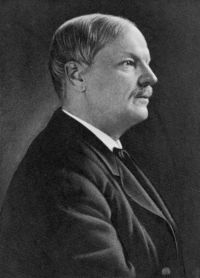
“ What a fuss we make about this little bit of a world, its existence only a short time between two spasms, the paroxysm by which it was hurled from chaos into order, and the paroxysm of its demolition. ”
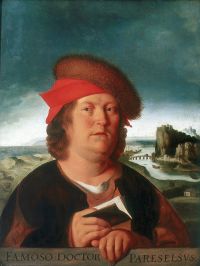
Paroxysm refers to a sudden, intense manifestation of a physical or spiritual phenomenon, often signifying a critical moment in transformation or crisis. From Paracelsus’s alchemical visions of bodily and cosmic division to T. De Witt Talmage’s theological depiction of existence as caught between creative and destructive convulsions, the theme extends across medical, philosophical, and religious contexts.
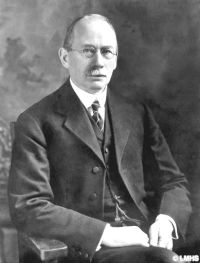
Henry M. Lyman characterizes it as an unconscious yet active mental state, while Paracelsus links it to nature’s restorative powers and the human microcosm. These diverse viewpoints highlight paroxysm as a liminal event—simultaneously disruption and rebirth—connecting material and metaphysical dimensions.
T. De Witt Talmage, New Tabernacle Sermons
“ What a fuss we make about this little bit of a world, its existence only a short time between two spasms, the paroxysm by which it was hurled from chaos into order, and the paroxysm of its demolition. ”
 Henry M. Lyman,
Insomnia; and Other Disorders of Sleep
Henry M. Lyman,
Insomnia; and Other Disorders of Sleep
“ In this form the functions of organic life are intact; motion and sensibility seem unchanged; the intellectual faculties display their usual activity; but the ordinary consciousness is never aroused. So far as the normal life of the subject is concerned, he is active, sensible, intelligent, but unconscious; and when the paroxysm is terminated memory contains no account of its events. Such paroxysms may occur but once in the life-time of an individual, or they may be repeated at stated intervals, constituting an alternate succession of mental states without connection in consciousness. ”
 Herbert Ernest Cushman,
A Beginner's History of Philosophy…
Herbert Ernest Cushman,
A Beginner's History of Philosophy…
“ But Paracelsus was a chemist, and the terrestrial nature of man was his peculiar interest. The theologian may prescribe for the human soul, and it is the duty of the astronomer to care for the human intellect; but the practical physician must understand the human body. Here is the Archæus imprisoned in the gross terrestrial body! It is in continual warfare with that body. What is the nature of that body which is so hostile to the human vital principle? Here Paracelsus introduces his strange chemical analysis which characterizes him as a Renaissance physician. ”