Summary

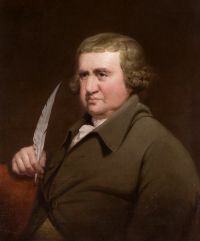
Portrait of Erasmus Darwin Erasmus Darwin Zoonomia, or, the Laws of Organic Life… (1796)

The impossibility of two bodies existing together in the same space cannot be deduced from our idea of solidity, or of figure. As soon as we perceive the motions of objects that surround us, and learn that we possess a power to move our own bodies, we experience, that those objects, which excite in us the idea of solidity and of figure, oppose this voluntary movement of our own organs; as whilst I endeavour to compress between my hands an ivory ball into a spheroid. And we are hence taught by experience, that our own body and those, which we touch, cannot exist in the same part of space.
Source: Wikisource

Portrait of Erasmus Darwin Erasmus Darwin Zoonomia, or, the Laws of Organic Life… (1796)

It is hence, that we are very slow in acquiring our tangible ideas, and very slow in recollecting them; for if I now think of the tangible idea of a cube, that is, if I think of its figure, and of the solidity of every part of that figure, I must conceive myself as passing my fingers over it, and seem in some measure to feel the idea, as I formerly did the impression, at the ends of them, and am thus very slow in distinctly recollecting it.
Source: Wikisource

Portrait of Erasmus Darwin Erasmus Darwin Zoonomia, or, the Laws of Organic Life… (1796)

Hence it appears, that beings may exist without possessing the property of solidity, as well as they can exist without possessing the properties, which excite our smell or taste, and can thence occupy space without detruding other bodies from it; but we cannot become acquainted with such beings by our sense of touch, any more than we can with odours or flavours without our senses of smell and taste.
But that any being can exist without existing in space, is to my ideas utterly incomprehensible.
Source: Wikisource

Get perspective with Kwize: daily news enlightened by great literature