Summary

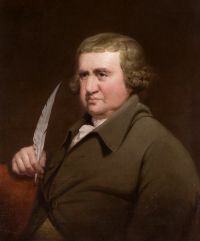
Portrait of Erasmus Darwin Erasmus Darwin Zoonomia, or, the Laws of Organic Life… (1796)

The snow, both in respect to its component parts, and to the air contained in its pores, is a bad conductor of heat, and will therefore well keep out the external cold; and as the water, when part of it dissolves, is attracted into the pores of the remainder of it, the situation of an animal beneath it is perfectly dry; and, if he is in contact with the earth, he is in a degree of heat between 48, the medium heat of the earth, and 32, the freezing point; that is, in 40 degrees of heat, in which a man thus covered will be as warm as in bed.
Source: Wikisource

Portrait of Erasmus Darwin Erasmus Darwin Zoonomia, or, the Laws of Organic Life… (1796)

Whence I conclude, that though heat is a fluid necessary to muscular motion, both perhaps by its stimulus, and by its keeping the minute component parts of the ultimate fibrils of the muscles or organs of sense at a proper distance from each other; yet that paralysis, properly so called, is the consequence of exhaustion of sensorial power by exertion.
Source: Wikisource

Portrait of Erasmus Darwin Erasmus Darwin Zoonomia, or, the Laws of Organic Life… (1796)

When the power of volition is abolished, the other sensorial actions are increased. In ordinary sleep this does not occasion increased frequency of the pulse; but where sleep takes place during the process of digestion, the digestion itself goes on with increased rapidity. Heat is excited in the system faster than it is expended; and operating on the sensitive actions, it carries them beyond the limitation of pleasure, producing, as is common in such cases, increased frequency of pulse.
Source: Wikisource

Get perspective with Kwize: daily news enlightened by great literature