Summary

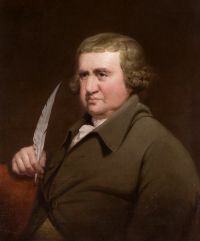
Portrait of Erasmus Darwin Erasmus Darwin Zoonomia, or, the Laws of Organic Life… (1796)

And as these irritative ideas make up a part of the chain of our waking thoughts, introducing other ideas that engage our attention, though themselves are unattended to, we find it very difficult to investigate by what steps many of our hourly trains of ideas gain their admittance.
It may appear paradoxical, that ideas can exist, and not be attended to; but all our perceptions are ideas excited by irritation, and succeeded by sensation. Now when these ideas excited by irritation give us neither pleasure nor pain, we cease to attend to them.
Source: Wikisource

Portrait of Erasmus Darwin Erasmus Darwin Zoonomia, or, the Laws of Organic Life… (1796)

In like manner the sensual motions, or ideas, that are excited by perpetual irritation, are nevertheless occasionally excited by sensation or volition; as in the night, when we listen under the influence of fear, or from voluntary attention, the motions excited in the organ of hearing by the whispering of the air in our room, the pulsation of our own arteries, or the faint beating of a distant watch, become objects of perception.
Source: Wikisource

Portrait of Erasmus Darwin Erasmus Darwin Zoonomia, or, the Laws of Organic Life… (1796)

Innumerable trains or tribes of other motions are associated with these muscular motions which are excited by irritation; as by the stimulus of the blood in the right chamber of the heart, the lungs are induced to expand themselves; and the pectoral and intercostal muscles, and the diaphragm, act at the same time by their associations with them. And when the pharinx is irritated by agreeable food, the muscles of deglutition are brought into action by association. Thus when a greater light falls on the eye, the iris is brought into action without our attention
Source: Wikisource

Get perspective with Kwize: daily news enlightened by great literature