
“ For what good can the just man have which is separated from pleasure? Shall we say that glory and fame, coming from Gods and men, though good and noble, are nevertheless unpleasant, and infamy pleasant? Certainly not, sweet legislator. Or shall we say that the not-doing of wrong and there being no wrong done is good and honourable, although there is no pleasure in it, and that the doing wrong is pleasant, but evil and base? ”
Verdigris
Definition and stakes
Verdigris, a green copper-based pigment with a complex chemical composition, has been used since antiquity in art, medicine, and industry. Its instability, arising from hydration and alkalinity, made it a challenging yet desirable material for painters, from Giotto to Raphael, who used it for vivid greens before its decline in the 19th century.
Though authors such as Thomas Gordon and Anatole France examined moral and philosophical themes in their works, the pigment’s historical role—as both a creative tool and a harmful substance—reflects its dual nature as a symbol of beauty and decay. Its legacy persists in art conservation and historical analysis, where its chemical variability continues to baffle and inspire.
Quotes about “verdigris”
Wilson's Tales of the Borders and of Scotland…
“ How many noble beings have we known, destroyed utterly by the disposition to what is vulgarly called good-fellowship!—in how many instances have we known splendid talents, high love of moral rectitude, nay, even strong religious principles, strangled by the social feelings! At first, doubtless, there was but a slight dereliction of duty, mourned for sincerely, and punished by severe remorse ”
John Cleland, Memoirs of Fanny Hill
“ The paths of Vice are sometimes strewed with roses, but then they are for ever infamous for many a thorn, for many a cankerworm: those of Virtue are strewed with roses purely, and those eternally unfading ones. If you do me then justice, you will esteem me perfectly consistent in the incense I burn to Virtue. If I have painted Vice in all its gayest colours, if I have decked it with flowers, it has been solely in order to make the worthier, the solemner sacrifice of it to Virtue. ”
Thomas Gordon, Cato's Letter No. 131 — Of Reverence true and false… (1723)
“ And if they be not, are we for the sake of God, to reverence those who belie him, and are our enemies? Or, am I to reverence the men, though I detest their actions and qualities which constitute the characters of men? Can I love or hate men, but for what they are, and for what they do? We ought to reverence that which is good, and the men that are good: Are we therefore to reverence wickedness and folly, and those who commit them? ”
 Anatole France,
The Queen Pedauque
Anatole France,
The Queen Pedauque
“ In what part of her enchanting body could she lodge a grain of virtue? There is no room for it; everything is so firm, so juicy, solid, and plump! Virtue, like the raven, nests in ruins. Her dwellings are the cavities and wrinkles of the human body. I myself, sir, who, since my childhood, have meditated over the austere principles of religion and philosophy, could not insinuate into myself a minimum of virtue otherwise than by means of constitutional flaws produced by sufferings and age. ”
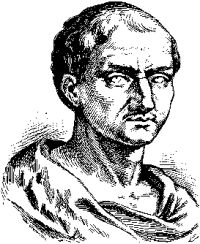 Anicius Manlius Severinus Boethius,
The Consolation of Philosophy
(1897)
Anicius Manlius Severinus Boethius,
The Consolation of Philosophy
(1897)
“ For whenever a man by proclaiming his good deeds receives the recompense of fame, he diminishes in a measure the secret reward of a good conscience. What issues have overtaken my innocency thou seest. Instead of reaping the rewards of true virtue, I undergo the penalties of a guilt falsely laid to my charge—nay, more than this; never did an open confession of guilt cause such unanimous severity among the assessors, but that some consideration, either of the mere frailty of human nature, or of fortune's universal instability, availed to soften the verdict of some few. ”
John Colin Dunlop, History of Roman Literature from its Earliest Period to the Augustan Age…
“ At other times, they have found arguments in the unequal distribution of rewards and punishments; and in our sighs over the misfortunes of virtue, they have recognized a principle, which points to a future state of things, where that shall be discovered to be good which we now lament as evil, and where the consequences of vice and virtue shall be more fully and regularly unfolded, than in this inharmonious scene. ”
 Hannah More,
The Shepherd of Salisbury Plain…
Hannah More,
The Shepherd of Salisbury Plain…
“ Vice is set off with every ornament which can make it pleasing and amiable; while virtue and piety are made ridiculous, by tacking to them something that is silly or absurd. Crimes which would be considered as hanging matter at our county assizes—at least if I were a juryman, I should bring in the whole train of heroes, Guilty—Death—are here made to the appearance of virtue, by being mixed with some wild flight of unnatural generosity. ”
 Vernon Lee,
Euphorion - Vol. II
Vernon Lee,
Euphorion - Vol. II
“ Viewed in one way, there is a kind of nobility in the very fact that such realistic art can make us pardon, can redeem, nay almost sanctify, so much. But is it right thus to pardon, redeem, and sanctify; thus to bring the inferior on to the level of the superior? Nay, is it not rather wrong to teach us to endure so much meanness and ugliness in creatures, on account of the nobility with which they are represented? Is this not vitiating our feelings, blunting our desire for the better, our repugnance for the worse? ”
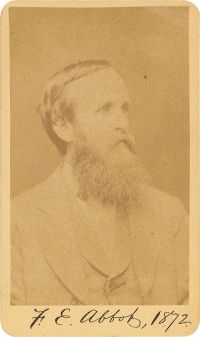 Francis Ellingwood Abbot,
Professor Royce's Libel
Francis Ellingwood Abbot,
Professor Royce's Libel
“ A decent modesty, a self-respectful reserve, a manly humility in presence of the unattainable ideal of either moral or intellectual perfection, a speechless reverence in the presence of either infinite goodness or infinite truth,—these are virtues which belong to the very warp and woof of all noble, elevated, and justly estimable character; and wherever their absence is conspicuously shown, there is just ground for moral condemnation and the contempt of mankind. ”
“ What afflicted and terrified him far more than all this, was the perversion of all ideas, this fearful evil, the corrupting of all notions; vice, in truth, is taken for virtue, virtue counted for vice. ”
 Guglielmo Ferrero,
The Women of the Caesars — Chapter 6
(1911)
Guglielmo Ferrero,
The Women of the Caesars — Chapter 6
(1911)
“ In such periods when one world is dying and another coming to birth, all conceptions become confused, and all attempts bring forth bizarre results. He who wishes to preserve, often destroys, so that virtue seems vice, and vice seems virtue. ”
William O. Blake, The History of Slavery and the Slave Trade (1861)
“ From my earliest years I have adored nobility of soul, and detested dishonor and treachery. I have passed through scenes which will be hereafter told, that the world may qualify by harsh names; yet I have striven to conduct myself throughout them, not only with the ideas of fairness current among reckless men, but with the truth that, under all circumstances, characterizes an honorable nature. ”
Vernon Lee,
Proteus
(1925)
“ In proportion, likewise, as it will have learned to value its own virtues as they can minister to man’s prosperity and betterment. Nay, more: the time will come when we shall turn with disgust and wrath at their cultivation for any other purpose; and when pleasure in virtue and in heroism for its own sake may come to be accounted so much æsthetic dilettantism, questionable and well-nigh obsolete. ”
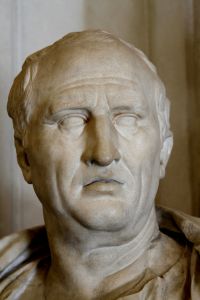 Marcus Tullius Cicero,
Cicero's Tusculan Disputations
(1888)
Marcus Tullius Cicero,
Cicero's Tusculan Disputations
(1888)
“ The seeds of virtues are natural to our constitutions, and, were they suffered to come to maturity, would naturally conduct us to a happy life; but now, as soon as we are born and received into the world, we are instantly familiarized with all kinds of depravity and perversity of opinions ”
 F. Max Müller,
India: What can it teach us?
F. Max Müller,
India: What can it teach us?
“ The sinful transgressor, who lives according to the rules of heretical systems, obtains no esteem from good men. It is good conduct that marks a man to be noble or ignoble, heroic or a pretender to manliness, pure or impure. Truth and mercy are immemorial characteristics of a king's conduct. ”
Thomas Gordon, Cato's Letter No. 131 — Of Reverence true and false… (1723)
“ It signifies a solemn regard paid the persons of men of gravity, of religion, and of authority. By these qualifications men are entitled to it. But when the pride and craft of men who have no real gravity, no real religion, or a foolish one, and only a pretended or an absurd authority, would annex reverence only to grave or grotesque names, it becomes as ridiculous to men of good sense, as it seems awful to such as have none. Reverence belongs only to reverend qualities and reverend actions. ”
“ Can you pretend that what you call the happiness of virtue is exempt from troubles, and crosses, and cares? By what name will you designate the dungeon, the rack, the inflections and tortures of tyrants? Will you say with the Mystics [1] that the soul derives pleasure from the torments of the body? You are not bold enough to hold such a doctrine—a paradox not to be maintained. ”
 Justin Martyr,
The Second Apology
(1867)
Justin Martyr,
The Second Apology
(1867)
“ And we are persuaded that every one who flees those things that seem to be good, and follows hard after what are reckoned difficult and strange, enters into blessedness. For Vice, when by imitation of what is incorruptible (for what is really incorruptible she neither has nor can produce) she has thrown around her own actions, as a disguise, the properties of Virtue, and qualities which are really excellent, leads captive earthly-minded men, attaching to Virtue her own evil properties. ”
 Lydia Sigourney,
Moral Pieces in Prose and Verse
(1815)
Lydia Sigourney,
Moral Pieces in Prose and Verse
(1815)
“ Moderate abilities, habitually exerted on the side of virtue, often gain the highest esteem and veneration; while great talents perverted, enhance the future misery of the possessor and give melancholy proof of the depravity of man. But perhaps you enquire, how are we to judge of mankind, if neither their stations in society, their personal accomplishments, or mental qualifications, are an allowed criterion? ”
King of Navarre consort of Henry II Queen Marguerite, The Tales of the Heptameron, Vol… (1894)
“ It will, nevertheless, teach you to acknowledge that the nature of men and women is of itself prone to vice if it be not preserved by Him to whom the honour of every victory is due. And to abate the pride that you display when a story is told to your honour, I will tell you one of a different kind that is strictly true. ”
Baron Edward Bulwer Lytton Lytton, The Disowned — Complete
“ Who that has glowed over this exalted picture will tell us that we must make Virtue prosperous in order to allure to it, or clothe Vice with misery in order to revolt us from its image? Oh! who, on the contrary, would not learn to adore Virtue, from the bitterest sufferings of such a votary, a hundredfold more than he would learn to love Vice from the gaudiest triumphs of its most fortunate disciples? ”
Ælfric, The Homilies of the Anglo-Saxon Church (1844)
“ He casts down pride, and rears up humility. He casts down libidinousness, and rears up chastity. And all wickedness he casts down in his chosen men, and rears up all goodness. Good cannot be built up unless evil be previously cast down. ”
Baron Edward Bulwer Lytton Lytton, The Disowned — Complete
“ In that one maxim is concentrated whatever is noble in morality, sublime in religion, or unanswerable in truth. In that pursuit we have all scope for whatever is excellent in our hearts, and none for the petty passions which our nature is heir to. Thus engaged, whatever be our errors, there will be nobility, not weakness, in our remorse; whatever our failure, virtue, not selfishness, in our regret; and, in success, vanity itself will become holy and triumph eternal. ”
Caroline B. Le Row, Practical recitations (1886)
“ P. Gently, Diogenes. Anger not thy mind with quick speech that is void of wisdom. Let us inquire into this matter with the calmness and deliberation befitting the dignity of philosophy. Is not pride self-respect, and is not self-respect an admirable virtue?D. Nay, nay, Plato. Thou art surely in the wrong here. Pride is vanity, and it leadeth to contempt for the merits of thy fellows. Thus is aristocracy fostered. ”
Marcus Tullius Cicero,
The Orations of Marcus Tullius Cicero…
“ For who ever seeks for honour, or glory, or praise, or any kind of credit as earnestly as he flees from ignominy, infamy, contumely, and disgrace? For these things are attended with great pain. There is a class of men born for honour, not corrupted by evil training and perverted opinions—on which account, when exhorting or persuading, we must keep in view the object of teaching them by what means we may be able to arrive at what is good, and to avoid what is evil. ”
Juvenal, The Satires of Juvenal, Persius…
“ For these each general, Roman, or Greek, or Barbarian, strains as his prize! Full compensation for his dangers and his toils he sees in these! So much greater is the thirst after fame than virtue. For who would embrace [610] virtue herself, if you took away the rewards of virtue? And yet, ere now, the glory of a few has been the ruin of their native land; that longing for renown, and those inscriptions that are to live on the marble that guards their ashes ”
 Friedrich Nietzsche,
The Genealogy of Morals
(1921 (for translation))
Friedrich Nietzsche,
The Genealogy of Morals
(1921 (for translation))
“ But that pride is the reason why it is now almost impossible for us to feel in sympathy with those immense periods of the 'Morality of Custom,' which lie at the beginning of the 'world's history,' constituting as they do the real decisive historical principle which has fixed the character of humanity; those periods, I repeat, when throughout the world suffering passed for virtue, cruelty for virtue, deceit for virtue, revenge for virtue, repudiation of the reason for virtue ”
 Mark Antony Lower,
The Curiosities of Heraldry
Mark Antony Lower,
The Curiosities of Heraldry
“ Yet, at the same time be most jealously on your guard lest this lawful satisfaction degenerate into arrogance, or a fancied superiority over those nobles of God’s creation, who, endowed in other respects with every exalted quality, cannot point to a long line of ancestry. Pride is of all sins the most hateful in the sight of God; and of the proud, who is so mean, who so despicable as he who values himself on the merits of others? And were they all so meritorious, these boasted ancestors? ”
Thomas Gordon, Cato's Letter No. 131 — Of Reverence true and false… (1723)
“ Are we to be told, that though we [are] to worship no god but the good and true God, yet we are to pay reverence, which is human worship, to wicked men, provided they be great men, and to honour the false servants of the true God, whom they dishonour? Or, that any sort of men can be his servants or deputies in any sense, but a good and sanctified sense? ”
 Jean-Baptiste Massillon,
Sermons
(1879)
Jean-Baptiste Massillon,
Sermons
(1879)
“ I speak not of the prejudices which you perpetuate in the world against virtue; of those lamentable discourses against the godly, which your authority confirms; which pass from you to the people, and keep up, in all stations, those ancient prepossessions against piety, and those continual derisions of the righteous, which deprive virtue of all its dignity, and harden sinners in vice. ”
 Lydia Maria Child,
Philothea: A Grecian Romance
Lydia Maria Child,
Philothea: A Grecian Romance
“ But when the teachers of the populace hear their vulgar pupils boldly declare that vice is as good as virtue, provided a man can follow it with success, pride prevents them from seeing that this maxim is one of their own doctrines stripped of its equestrian robes, and shown in democratic plainness. They did not venture to deride the gods, or even to assert that they took no cognizance of human affairs ”
 James Lane Allen,
Out from the heart
(1900)
James Lane Allen,
Out from the heart
(1900)
“ When respect towards others and the giving of reverence where reverence is due are abandoned, Virtue is abandoned. When modesty, gravity, and dignity are eliminated from speech and behavior, Truth is lost, yea, even its entrance gate is hidden away and forgotten. ”
Thomas Gordon, Cato's Letter No. 131 — Of Reverence true and false… (1723)
“ It is impudence and imposture to demand singular and vast respect to small and common things. Superior virtue and capacity, publick actions and services done to mankind; a generous and benevolent heart, and greatness of mind, are the true objects and sources of reverence. But to claim reverence to prating, to cuts, and colours, and postures, is stupid, ridiculous and saucy. ”
 Luís de Camões,
The Lusiad; Or, The Discovery of India…
Luís de Camões,
The Lusiad; Or, The Discovery of India…
“ If the intercourse of mankind in some instances be introductive of vice, the want of it as certainly excludes the exertion of the noblest virtues; and, if the seeds of virtue are indeed in the heart, they often lie dormant, and even unknown to the savage possessor. ”
 Albert Taylor Bledsoe,
A Theodicy, or, Vindication of the Divine Glory
Albert Taylor Bledsoe,
A Theodicy, or, Vindication of the Divine Glory
“ In other words, the production of virtue by any extraneous agency, is one of those impossible conceits, those inherent absurdities, which lie quite beyond the sphere of light in which the divine omnipotence moves, and has no existence except in the outer darkness of a lawless imagination, or in the dim regions of error, in which the true nature of moral goodness has never been seen. ”
 Friedrich Schiller,
Aesthetical Essays of Friedrich Schiller
Friedrich Schiller,
Aesthetical Essays of Friedrich Schiller
“ Because strongly impure inclinations often usurp the name of virtue, was it a reason for disinterested inclinations in the noblest heart to be also rendered suspicious? Because the moral epicurean had willingly relaxed the law of reason, in order to fit it as a plaything to his customs, was it a reason to thus exaggerate harshness, and to make the fulfilment of duty, which is the most powerful manifestation of moral freedom, another kind of decorated servitude of a more specious name? ”
J. De Lancey Ferguson, Pride and Passion: Robert Burns… (1939)
“ That there is a real and eternal distinction between virtue and vice, and, consequently, that I am an accountable creature; that from the seeming nature of the human mind, as well as from the evident imperfection, nay, positive injustice, in the administration of affairs both in the natural and moral worlds, there must be a retributive scene of justice beyond the grave ”
